India is no China. Its domestic politics, the depth and scale of its industries, and capacity for innovation differ starkly from China’s. Yet India may be quietly building an alternative to Chinese power.
On 15 November 2024, electricity from Nepal began flowing to Bangladesh through India’s grid. The arrangement allowed exports of up to 40 megawatts, a modest capacity with a larger strategic significance. India was enabling two neighbours to trade with each other, extending their options beyond separate bilateral relationships with New Delhi.
This offers a useful starting point for understanding India’s competition with China. Matching Beijing project for project would make Chinese spending the measure of Indian success. Instead, India’s opportunity lies in connecting markets, infrastructure and partners in ways that reduce dependence on a single supplier or financier. Its influence would grow precisely because other countries gained choices.
A Regional Network
Smaller Asian states have reasons to welcome competing offers of finance and infrastructure. Their engagement with China need not imply hostility towards India. Governments seeking investment also want bargaining power and room to manoeuvre. Treating every Chinese-backed project as an Indian defeat obscures those interests and risks turning cooperation into a demand for loyalty.
India should therefore concentrate on making its neighbourhood easier to trade within. Electricity networks are a practical place to begin. Nepal gains an additional market for hydropower; Bangladesh gains another electricity supplier; India earns a role in enabling the exchange. The value lies in the relationship between these markets, which a standalone power station cannot create by itself.
The World Bank’s case for regional electricity integration argues that greater exchange could lower costs and improve the resilience of power systems. But transmission lines alone do not establish a functioning market. Governments must settle access conditions, transmission charges, payment arrangements and procedures for resolving disputes. These rules determine whether a connection is commercially usable and politically dependable.
This is also where India’s responsibilities become greater. A country that provides the transit route must convince its neighbours that access will remain predictable when diplomatic relations deteriorate. Smaller states need a meaningful role in setting the terms. Without that confidence, integration can look like another form of dependence.
The Industrial Challenge
The same problem appears in clean energy manufacturing. China’s influence rests on interconnected industries that supply materials, equipment and components as well as finished products. The International Energy Agency’s 2026 assessment estimates that China held 95 percent of global solar wafer manufacturing capacity in 2024. Opening factories elsewhere does little to diversify supply if they still rely on an upstream capacity concentrated in China.
India illustrates this struggle to diversify. Its solar manufacturing ambitions have expanded, but in March 2026 its renewable energy ministry acknowledged substantial reliance on imported wafers. Domestic assembly can create jobs while leaving a strategic vulnerability intact. The relevant test is whether firms acquire additional sources of essential inputs and the expertise to use them.
India’s partnerships could help address this wider dependence on upstream inputs. In 2023, the Australia–India Critical Minerals Investment Partnership identified two lithium and three cobalt projects for due diligence, with the aim of supplying minerals processed in Australia to Indian manufacturing. These battery minerals illustrate a parallel opportunity to diversify upstream supply, rather than a solution to solar-wafer dependence. Linking such projects to battery-grade refining and purchasing agreements with Indian manufacturers could create viable alternatives. A mine, refinery, and factory become a supply chain only when their products, standards and purchasing agreements fit together.
Diversification will also cost money. Governments should be explicit about which vulnerabilities justify public support and how that support will end. The IEA’s analysis shows that tariffs and other trade measures raise clean-technology costs. Open-ended protection for uncompetitive production therefore risks making the energy transition more expensive. Selective investment should expand viable suppliers while preserving access to affordable technology.
Public funding could be tied to verified production, approval by prospective customers and a timetable for reducing costs. Buyers would then have a basis for judging whether an alternative supplier can deliver, while taxpayers could assess the security benefit they are purchasing. This would give industrial cooperation a clearer purpose than simply relocating the final stage of manufacturing.
A Practical Role for Australia
For Canberra, this means treating India as an economic partner whose capabilities can benefit third countries. Australia’s Critical Minerals Strategy identifies the India-Australia Critical Minerals Investment Partnership as an existing basis for cooperation. The next task is to turn such arrangements into projects with credible buyers, financing and delivery schedules.
Two priorities follow. Australia and India could jointly fund feasibility studies and regulatory assistance for South Asian electricity interconnections, working with neighbouring governments and multilateral lenders. This would help resolve risks that discourage investment before construction begins. In critical minerals, support should connect processing projects with manufacturers prepared to enter long-term purchasing agreements. Technical cooperation should address product quality and qualification requirements, so alternative suppliers can actually reach customers.
Both priorities require discipline. Projects should demonstrate demand and publish clear milestones; participating governments should be able to scrutinise their terms. Progress should be judged through reliable electricity deliveries, completed processing capacity and additional qualified suppliers. Diplomatic announcements are useful only when businesses and households eventually receive those benefits.
India’s alternative to Chinese power remains a proposition under construction. It will be persuasive if neighbours gain reliable access to markets and industries gain credible options when supplies are disrupted. The Nepal–Bangladesh transaction shows what this can look like on a small scale. Expanding that logic would allow India to shape Asia’s future while giving other countries greater control over their own.
Dr Simran Keshwani is founder and principal research lead at IndiaForth, a Sydney-based strategic advisory firm focused on India’s global engagement. A political economist and author, she researches industrial strategy, economic security and clean-energy transitions, with particular expertise on the Australia-India relationship and the Indo-Pacific.
This article is published under a Creative Commons Licence and may be republished with attribution.
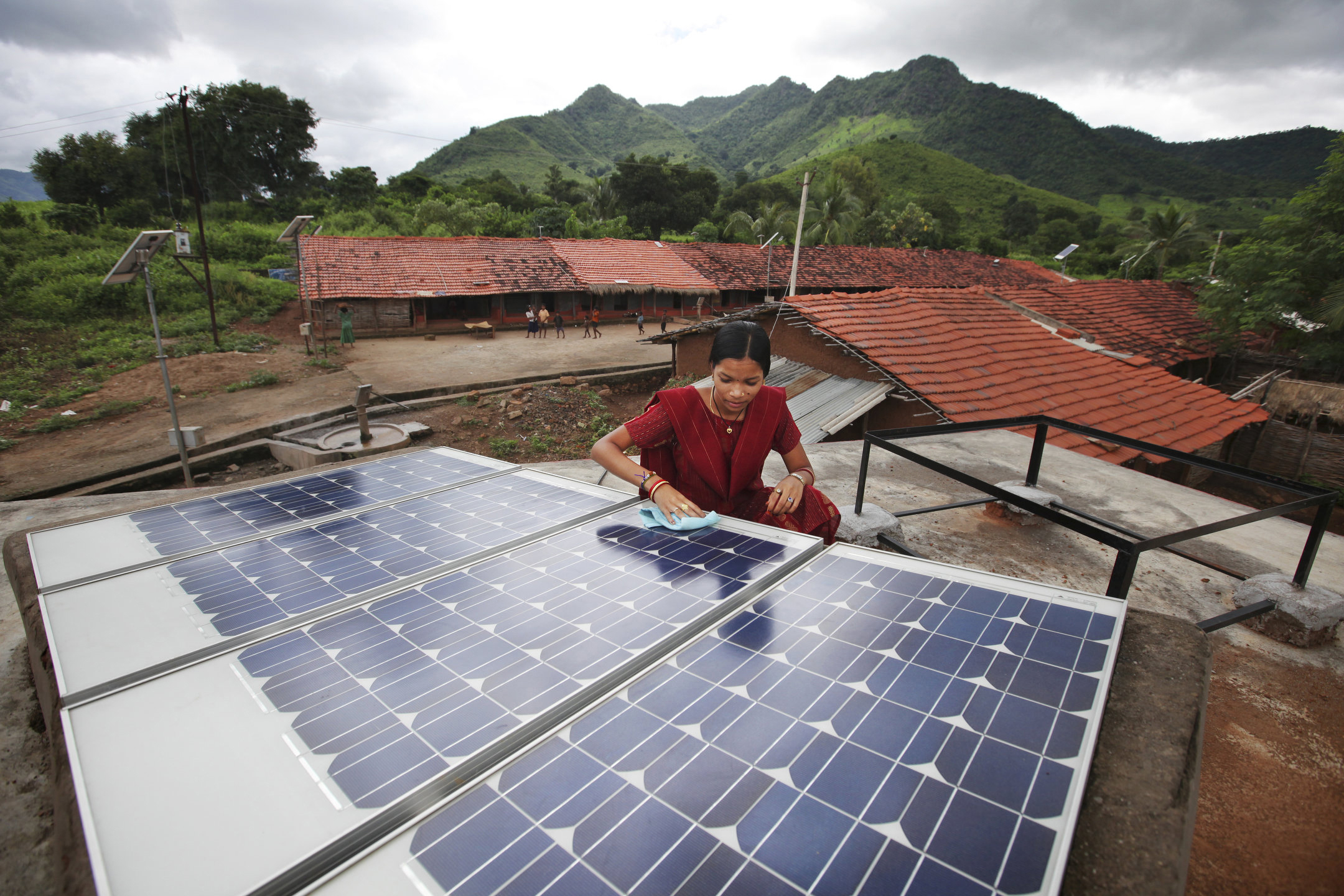
Photo: “Local climates, global impacts” by DFID – UK Department for International Development, CC BY-NC-ND 2.0