As Brazil votes, Washington’s revived Monroe Doctrine leans on coercion and transnational digital campaigning, exposing the limits of US influence and international law.
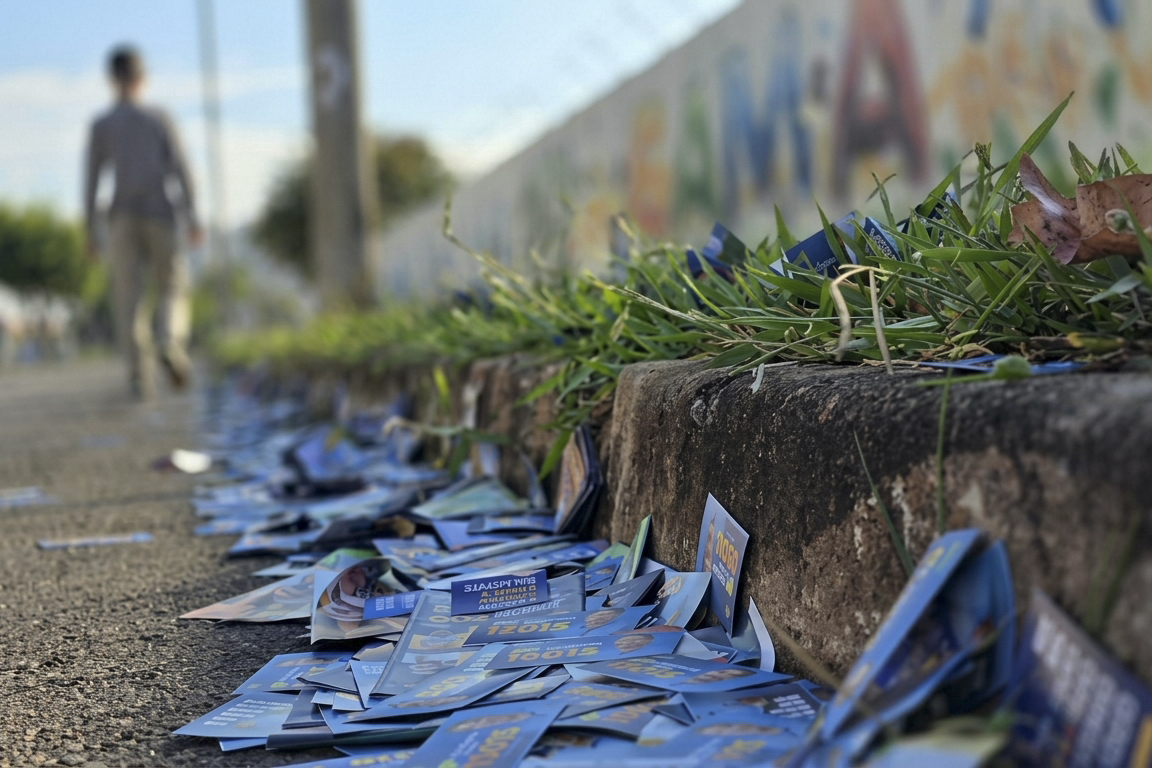
Brazilians vote today in an election whose stakes reach far beyond Brazil. President Lula narrowly leads Flávio Bolsonaro, son of a former president convicted of plotting a coup, and a run-off is likely. A Bolsonaro victory would complete a regional swing to the right. Ecuador, Bolivia, Honduras and Chile elected right-wing presidents in 2025. Abelardo de la Espriella then took Colombia, and Keiko Fujimori, daughter of a president jailed for human rights abuses, won Peru with Trump administration backing. In Venezuela, US forces imposed change at gunpoint, seizing President Nicolás Maduro in January.
The tight race is revealing. Under Lula, 8.7 million Brazilians left poverty in 2023 alone, and in 2025 the country left the UN Hunger Map again. Yet Latin America remains, by income measures, the world’s most unequal region, which the UN Development Programme attributes partly to the “concentration of power in the hands of a few who defend their private interests”. In Brazil, two forces shape the conditions in which voters choose: Washington’s coercion and transnational digital campaigning.
Historical Precedent
In the years after Kennedy, South America’s democracies fell one after another: Brazil in 1964, with Washington readying naval support for the coup plotters; Argentina in 1966 and again in 1976; Uruguay and Chile in 1973. By the late 1970s most of the continent was under military rule, much of it with US support. The instruments ranged from aid cut-offs and covert operations to open invasion, as US troops landed in the Dominican Republic in 1965 and Grenada in 1983. Today’s run more through markets and platforms, but the objective, governments aligned with Washington across its hemisphere, is recognisably the same.
When Brazil’s foreign minister, San Tiago Dantas, argued in 1962 that “the door should be left open” for Cuba, US aid was steered to President João Goulart’s opponents and the CIA spent about US$5 million backing conservative candidates through business-funded groups.
Monroe Doctrine 2.0 and the Limits of Hegemony
The Monroe Doctrine of 1823 warned European powers off further colonisation in the Americas. Roosevelt’s 1904 corollary turned it into a licence for US “international police power”. The 2025 US National Security Strategy revives the doctrine with a “Trump Corollary”. The rival is now China rather than Europe, and the tools are tariffs, terrorist designations, finance and platforms. Force is among them: US forces have struck more than 60 alleged drug boats, killings UN human rights experts call “extrajudicial executions”, and are widening military access and joint operations, even in Ecuador, where nearly two-thirds of voters rejected foreign bases in 2025.
Washington’s economic pull has faded. China took 28 per cent of Brazil’s exports in 2024, the United States 12 per cent, and the Strategy concedes that “non-Hemispheric competitors have made major inroads into our Hemisphere”.
Venezuela shows the method. Washington designated the “Cartel de los Soles”, which it said Maduro led, a terrorist organisation weeks before the raid on Caracas. Afterwards, the revised US indictment recast the cartel as a “patronage system”. Maduro’s vice-president, Delcy Rodríguez, was delisted in April and hailed by Trump as a “Highly Respected Interim President” when he announced “the biggest oil deal in world history”, putting 65 billion barrels under majority US control. “To the victor belong the spoils,” Trump told the UN General Assembly.
Cuba, relisted as a state sponsor of terrorism, has endured at least six nationwide blackouts under a US oil blockade. Colombia’s then president, Gustavo Petro, was sanctioned under a counter-narcotics order, while his successor, De la Espriella, who as a lawyer advised the paramilitary AUC, won Trump’s “complete and total endorsement”. Argentina’s financial rescue was made conditional on Javier Milei’s party winning the midterms. Add Trump’s pardon of Honduras’s former president Juan Orlando Hernández, jailed in New York for cocaine trafficking, and counter-narcotics looks less like policy than an instrument of political alignment.
Brazil in Washington’s Sights
Washington has already acted for the Bolsonaros. In 2025 Trump imposed 50 per cent tariffs on Brazil, calling Jair Bolsonaro’s trial a “Witch Hunt”, and sanctioned the judge overseeing it. In May, at Flávio’s urging, Washington designated Brazil’s two largest gangs terrorist groups, the label that preceded the raid on Caracas. Lula warned it could penalise banks and even extortion victims. Flávio also asked Washington to “apply diplomatic pressure” on Brazil’s institutions; his brother Eduardo was convicted of courting US interference.
Two days before the vote, Washington suspended consular services, citing “security concerns”. Australia’s ambassador closed the embassy in Brasília the same day, citing the US alert. Brazil’s Federal Police, acting on foreign intelligence, found “no evidence corroborating the initially reported threat”. Canberra had amplified an unsubstantiated warning. The Workers’ Party president called the closures “unprecedented” and “one of Trump’s ways of trying to influence Brazilian public opinion”.
Transnational Campaigning and Electoral Integrity
Alongside state coercion runs a second force: transnational campaigning. In 2022 Trump’s former strategist Steve Bannon amplified unfounded fraud claims about Brazil’s count.
A transnational consultancy market links these campaigns. The Argentine strategist Fernando Cerimedo ran communications for Milei’s 2023 campaign and says he worked for Jair Bolsonaro in 2018. After Bolsonaro’s 2022 defeat, he hosted a livestream titled “Brazil was stolen”. He was central to Rodrigo Paz’s victory in Bolivia, where he is now in prison, charged with the attempted femicide of a former partner who was shot three times; he denies involvement.
Bolivia’s attorney-general, Roger Mariaca, was also investigating Cerimedo for illicit enrichment and bribes linked to drug flights. Washington then revoked Mariaca’s visa for alleged bribe-taking. Days later Bolivian police arrested Mariaca, reportedly without a judicial order, with what Bolivia’s government called the “cooperation of the U.S. government”. US Secretary of State Marco Rubio declared that the Trump administration “stands firmly with President” Paz. Authorities cite seized cash and alleged drug-trafficking links; Mariaca’s office calls the arrest “a kidnapping”. The prosecutor investigating the president’s former strategist is now in prison.
The International Legal Framework
International law is uneven here. The Universal Declaration of Human Rights holds that “the will of the people shall be the basis of the authority of government”. The UN Human Rights Committee, interpreting article 25 of the International Covenant on Civil and Political Rights, says voters should form opinions free of “manipulative interference of any kind”. The International Court of Justice held in Nicaragua v United States that intervention is wrongful when it uses “methods of coercion” in matters, such as the choice of a political system, “which must remain free ones”.
State coercion aimed at a country’s judiciary or electoral choices falls within that principle, though its threshold is contested; armed force, as in Caracas, breaches the UN Charter outright. Digital manipulation is harder to reach: the non-intervention rule binds states, and private consultants, platforms and influencers are rarely attributable to any government. Domestic courts have been left to fill the gap, as Brazil’s electoral court did by banning deepfakes in campaigns.
Policy Implications
First, Latin American states need common rules on political advertising, foreign money and consultants; Brazil’s deepfake rules offer CELAC and Mercosur a baseline.
Second, judges and prosecutors who investigate the powerful deserve international protection; US measures against them in Brazil and Bolivia undermine the rule of law Washington claims to defend.
Third, the Human Rights Committee’s 1996 guidance should address cross-border digital manipulation, and platform obligations belong at the UN, not with the platforms’ home states, chiefly the United States.
Fourth, Australia, which legislated against foreign interference in 2018 and seeks a region “where no country dominates and no country is dominated”, should hold its closest ally to that standard.
What “hangs in the balance” in Brazil, as Chatham House’s Christopher Sabatini writes, is “the Global South’s voice in the global order”.
Dr Juan Zahir Naranjo Cáceres is a scholar based at the University of the Sunshine Coast. He holds a PhD in International Relations and Political Science, working at the intersection of international relations, international law, and constitutional politics.
Dr Shannon Brincat is a Senior Lecturer in Politics and International Relations at the University of the Sunshine Coast.
This article is published under a Creative Commons Licence and may be republished with attribution.
Photo: “Eleições 2026 – Primeiro turno” Agência Senado, CC BY-SA 4.0