Jakarta’s attempts to mediate between Washington and Tehran, as well as between the two Koreas, went unanswered. This lack of response serves as a reminder to Jakarta that while neutrality and impartiality, as guided by the “free and active” principle, are important, they are insufficient for mediating between conflicting parties without having significant leverage over them.
On 28 February 2026, Indonesia offered to help mediate the newly erupted conflict between Iran and the United States. The Ministry of Foreign Affairs stated that President Prabowo Subianto stood ready to facilitate the mediation process and would fly to Tehran. In the end, no mediation process involving Indonesia ever took place. Although the Iranian government expressed its appreciation for the initiative, it was Pakistan that emerged as the key mediator in a series of talks between the two warring parties.
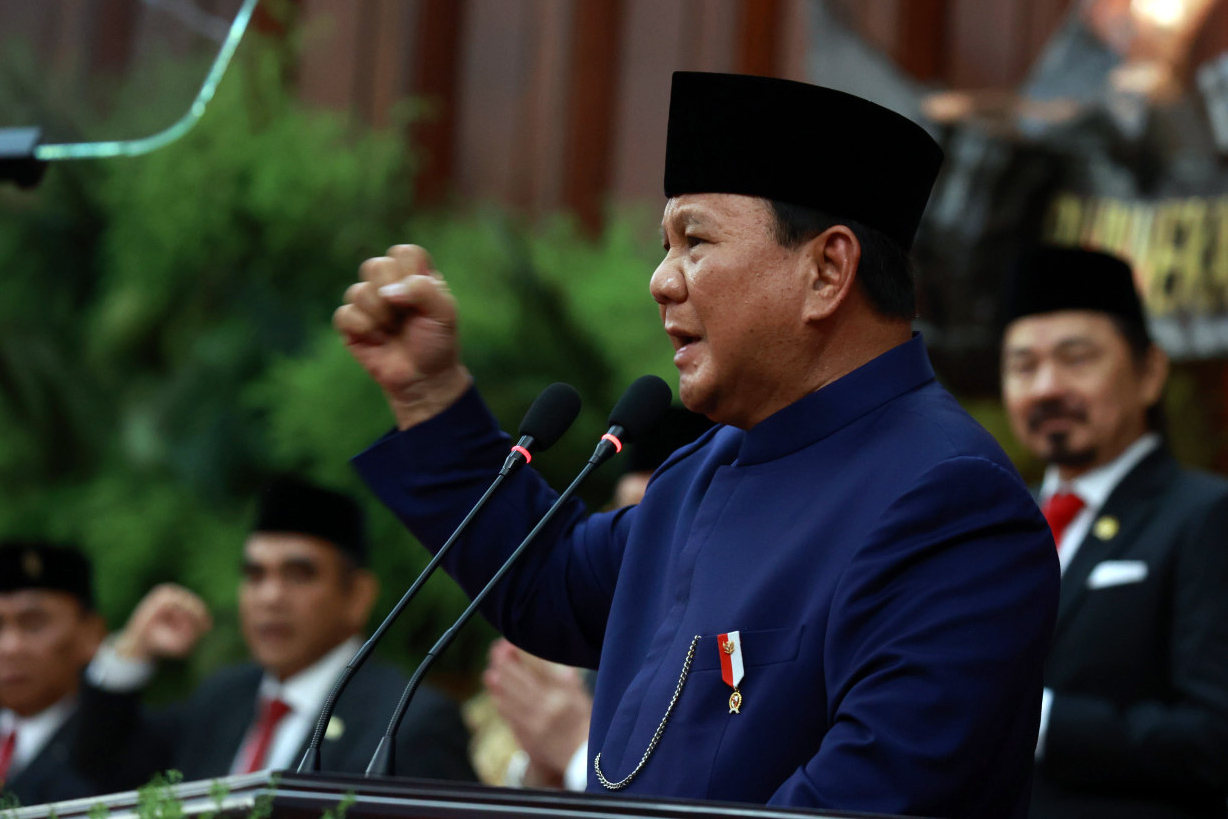
Five months later, on July 31, 2026, President Prabowo, in a speech, revealed that South Korean President Lee Jae-myung had requested that he initiate a dialogue with North Korea. While he expressed his willingness to mediate, recent media reports suggest that North Korea did not respond to this proposal at all.
These failures to facilitate a mediating role should remind Jakarta that maintaining a neutral foreign policy stance between two opposing factions, along with a desire to mediate, is insufficient. If Indonesia aims to take on a mediating role, it must have the necessary leverage to bring both sides to the negotiating table. Having been excluded from efforts to resolve the disputes involving Iran and the United States, as well as the tensions between the two Koreas, the Indonesian government must adopt a more realistic perspective about its capabilities as an intermediary in global conflicts.
Indonesia’s ‘Impartial’ Foreign Policy: Rowing Between Two Reefs
Indeed, Indonesia has occupied a distinctive position in international affairs. In the early years of independence, Vice President Mohammad Hatta formulated the country’s guiding foreign policy concept, “Rowing Between Two Reefs,” premised on the idea that Indonesia should maintain balanced relations with all states rather than fall under the sway of the geopolitical blocs. The concept gave rise to the principle of a bebas dan aktif (free and active) foreign policy, under which Indonesia is free to engage with any country in pursuit of its national interest, and active in the promotion of world peace.
This principle has since served as the rails guiding Indonesian foreign policy, characterised by the maintenance of cordial relations with all states regardless of bloc or alliance, and by an unwillingness to join any geopolitical alliance. Successive administrations have remained broadly consistent in upholding the principle, albeit with differing interpretations.
This position is, admittedly, an important asset for a country seeking a role as mediator. Between the two Koreas, for instance, Indonesia maintains strategic ties with both Pyongyang and Seoul. It has embassies in both capitals. Several Indonesian presidents have made bilateral visits to both Koreas, and each has concluded numerous strategic agreements with Indonesia across a range of sectors—diplomatic, commercial, and defence. Indonesia is, in short, a country well received by both Koreas, occupying an equal footing in a potential trilateral relationship.
The same holds true in the context of the US–Iran war. Both Iran and the United States are designated “strategic partners” of Indonesia, a status explicitly affirmed by the Ministry of Foreign Affairs. Tehran signed a preferential trade agreement with Jakarta in 2023, elevating their economic partnership and confirming their strategic status. The relationship between Jakarta and Washington is also elevated after the signing of Major Defense Partnership in 2026. Moreover, Indonesia has declared its neutrality in the conflict while calling on both sides to de-escalate in the hope of positioning itself as a mediator.
Yet good and balanced relations with the parties to a conflict, together with the good intentions to mediate, are not enough. Mediation is a demand-driven process, one that materialises only when both sides ask for it. If Indonesia lacks concrete modalities and fails to generate structural dependency on the part of the warring parties, those parties will be reluctant to accept Indonesia as a mediator.
What Makes a Good Mediator?
Consider Pakistan, which has served as an active mediator in the US–Iran war. Unlike Indonesia, which explicitly proclaims its non-alignment with any single country or political bloc, Pakistan cultivates close relations with several blocs simultaneously. It has cultivated a close relationship with US President Donald Trump and, at the same time, is a close defence partner of China. More recently, Pakistan just signed a defence pact with Saudi Arabia and Türkiye. It also shares a very long border and deep history with Iran, giving Tehran every reason to maintain good relations with Islamabad. This positioning has made both Iran and the United States feel it necessary to involve Pakistan in peace efforts, given the weight of its bargaining position in the dynamics of the conflict.
Indonesia, by contrast, has not built comparable standing or modalities in relation to either the US–Iran or the inter-Korean conflict. It appears merely to be waiting for the parties to name it as mediator. Absent real modalities and a long-standing initiative to build dialogue, Indonesia’s ostensibly “neutral” and “impartial” foreign policy posture has yielded little advantage in the mediation of global conflicts.
Indonesia needs to be more realistic in offering itself as a mediator. Rather than making grand claims about mediating global conflicts far beyond Jakarta’s reach, Indonesia should focus on regional disputes of genuine consequence to its national interest. The South China Sea dispute is a case in point. For over a decade, Indonesia has built diplomatic initiatives aimed at containing the conflict, such as the Six-Point Principles in the South China Sea (2012) and the ASEAN Outlook on the Indo-Pacific (AOIP) (2020). As the largest country in ASEAN, Indonesia already commands significant leverage and positions itself as an ‘honest broker‘.
Indonesia’s exclusion from mediation between the United States and Iran, and between the two Koreas, ought to prompt public reflection. Indonesia should more effectively leverage its strong, yet impartial ties with conflicting countries, rather than relying solely on neutrality as the primary basis for its role as a mediator.
Alfin Febrian Basundoro is a junior lecturer in the Department of International Relations at Universitas Airlangga.
This article is published under a Creative Commons License and may be republished with attribution.