Indonesia and the Philippines dominate global nickel production, while Australia brings mining expertise, technology, and investment networks. By working together, the three countries could turn their complementary strengths into greater bargaining power, more resilient supply chains, and a fairer distribution of value across the electric vehicle industry.
Indonesia has become a major force in the global nickel industry. However, production dominance does not automatically give producing countries control over prices, markets, or the distribution of profits in the electric vehicle value chain. This challenge should encourage Indonesia, the Philippines, and Australia to build a more strategic partnership.
According to 2026 United States Geological Survey (USGS) data, Indonesia produced approximately 2.6 million tonnes of nickel in 2025, while the Philippines produced around 270,000 tonnes. Combined, they accounted for approximately 73.6% of global mined nickel production. Meanwhile, Australia has mining experience, technological capabilities, and an important position in the Indo-Pacific critical minerals agenda.
The three countries have different strengths. The question is not simply how to increase production, but how to translate these advantages into greater bargaining power vis-à-vis processing companies, battery manufacturers, and the global electric vehicle industry.
Production Dominance Does Not Mean Market Power
A large share of global production does not necessarily give a country the power to influence prices. Commodity prices are still shaped by supply and demand, inventory levels, alternative raw materials, and the bargaining power of buyers. Recent developments illustrate this challenge. Reuters reported on 19 October 2026 that India’s NMDC had put its plans to enter the nickel business on hold amid concerns about global oversupply, particularly in the context of Indonesia’s expanding production. This shows that even a dominant producer may struggle to influence prices when supply exceeds demand.
Indonesia’s experience in developing smelters shows that downstream industrial policies can attract investment and increase domestic processing. The Indonesian government reported that exports of processed nickel products reached US$9.73 billion in 2025. However, this export figure alone does not answer how much profit domestic workers and companies receive, how much technology is controlled domestically, or how much added value ultimately flows to capital owners and global buyers.
This is the difference between industrial growth and improvements in economic welfare. Global value chain theory emphasises that a country’s position is determined not only by raw material production, but also by control over technology, financing, product design, standards, distribution, and market access.
Electric Vehicles and Nickel Demand
The transition to electric vehicles offers long-term prospects for critical minerals. The International Energy Agency (IEA), in its Global Critical Minerals Outlook 2026, estimates that global nickel demand could increase by approximately 50–90% by 2040, depending on the scenario. However, this long-term projection does not guarantee that all producers will benefit equally from demand growth. Battery technology composition, mineral prices, raw material efficiency, and the pace of electric vehicle adoption will influence nickel requirements.
Lithium iron phosphate (LFP) batteries, for example, do not use nickel as a primary cathode material. If their adoption increases, growth in electric vehicles will not necessarily translate into an equivalent percentage increase in nickel demand. Meanwhile, excessive expansion of processing capacity can increase the risk of oversupply. The IEA notes that the refining of critical minerals is concentrated in a small number of countries, with Indonesia playing a leading role in refined nickel supply. Indonesia’s challenge, therefore, is not simply to expand production, but to ensure that new industrial capacity grows in line with market demand and the ability of global markets to absorb additional output.
The Importance of Cooperation Between Indonesia, the Philippines, and Australia
Cooperation among the three countries could provide an answer to these challenges. Indonesia and the Philippines have taken an initial step through a strategic nickel industry cooperation memorandum of understanding signed by mining associations from both countries in May 2026. The proposed Indonesia–Philippines Nickel Corridor aims to connect Indonesia’s processing capacity with the Philippines’ nickel ore supplies.
Australia could become an important partner in developing a broader agenda. The country has a mineral resource base, mining experience, research capabilities, and access to international financing and industrial networks. Trilateral cooperation could cover processing research and technology, environmental standards, raw material traceability, workforce development, battery recycling, and investment partnerships.
For Australia, this approach offers an opportunity to connect its mining and technological strengths with Indonesia’s processing ecosystem and the Philippines’ ore supplies. For Indonesia, the partnership could help improve productivity, sustainability standards, and domestic technological capabilities. The Philippines could strengthen its bargaining position through more integrated supply relationships and access to processing investment.
This approach is consistent with the IEA’s perspective on diversifying critical mineral supply chains. Industrial development needs to balance upstream production with processing capacity and downstream manufacturing. Cross-border cooperation can bring together resources, technology, capital, and markets that are not always available within a single country.
From Production Cooperation to Value-Added Distribution
Cooperation between Indonesia and the Philippines could strengthen both countries’ bargaining positions in the global nickel industry. By sharing market information, coordinating investment, developing long-term supply agreements, conducting joint research, and adopting credible sustainability standards, the two countries could improve their competitiveness and attract investment. This does not mean forming a cartel or coordinating prices. Rather, the aim is to build stronger industries through higher productivity, innovation, diversified buyers, and greater domestic value addition, while ensuring compliance with competition law and principles and strengthening supply-chain resilience, as highlighted in the IEA’s Global Critical Minerals Outlook 2025.
Ultimately, success must be measured by more than export values or the number of smelters. Indicators should include improvements in workers’ skills, the growth of domestic suppliers, technology transfer, job quality, fiscal benefits, and the ability of local companies to enter higher-margin segments of the industry.
Indonesia, the Philippines, and Australia do not need to have identical interests to cooperate. Their different industrial structures can, in fact, become a source of collective strength. For Australian policymakers and media, the strategic question is whether competition among producers will continue to depress industry profits, or whether regional partnerships can create more resilient supply chains and distribute economic benefits more broadly.
Nickel is an important resource, but resources alone are not enough. Genuine bargaining power emerges when producing countries can connect production with technology, markets, and control over value creation. Cooperation between Indonesia, the Philippines, and Australia could be a step towards that goal.
Dr Eko Setiobudi is an economist, lecturer at STIES Mitra Karya Bekasi, Indonesia, and business practitioner. His interests include international trade, industrial policy, critical minerals, economic development, and Indo-Pacific economic cooperation. He writes on Indonesia’s role in the regional and global economy.
This article is published under a Creative Commons Licence and may be republished with attribution.
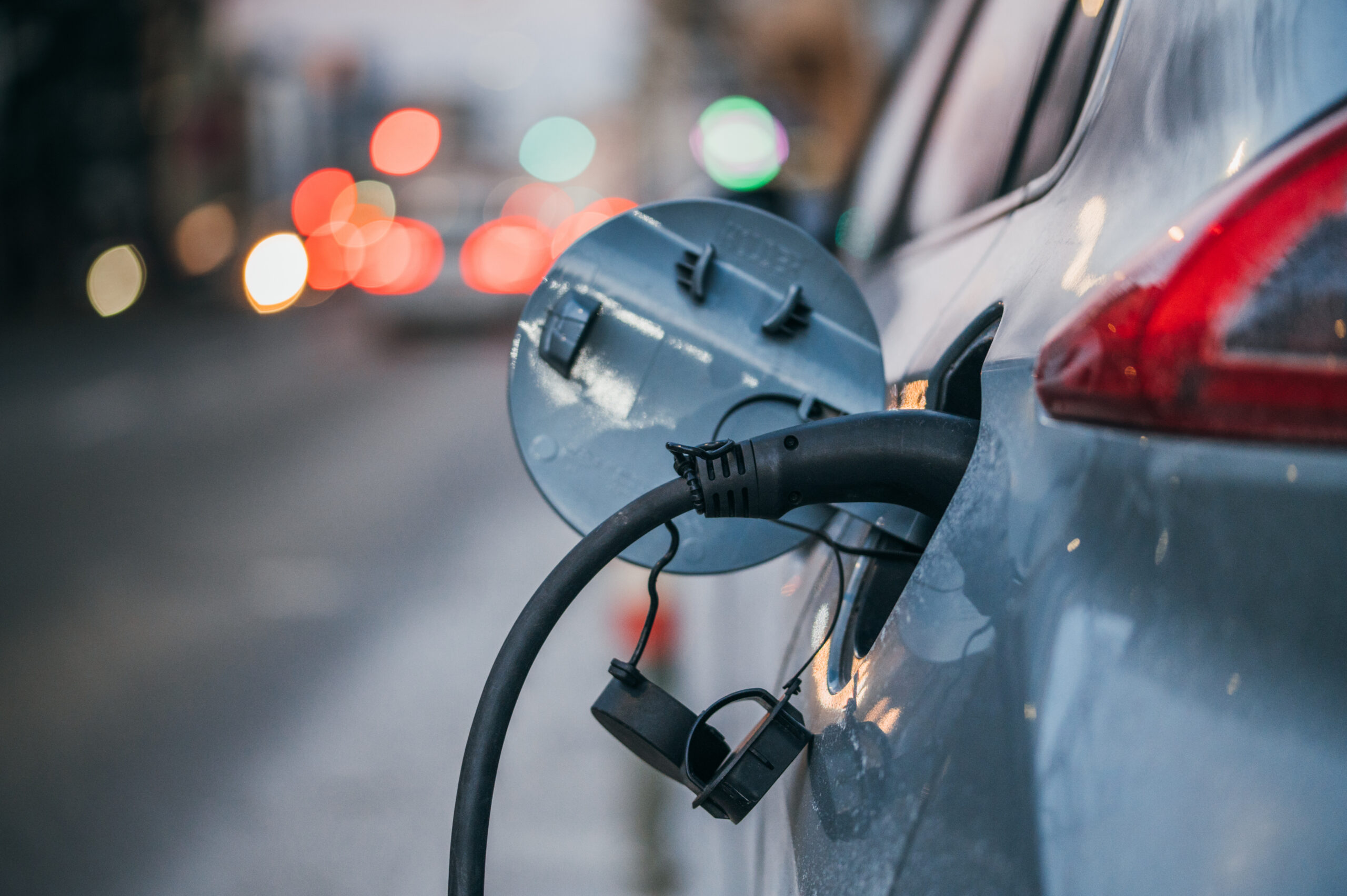
Photo: “Close-up of an electric car charging. Traffic lights in a blurry background” by Ivan Radic, CC BY 2.0