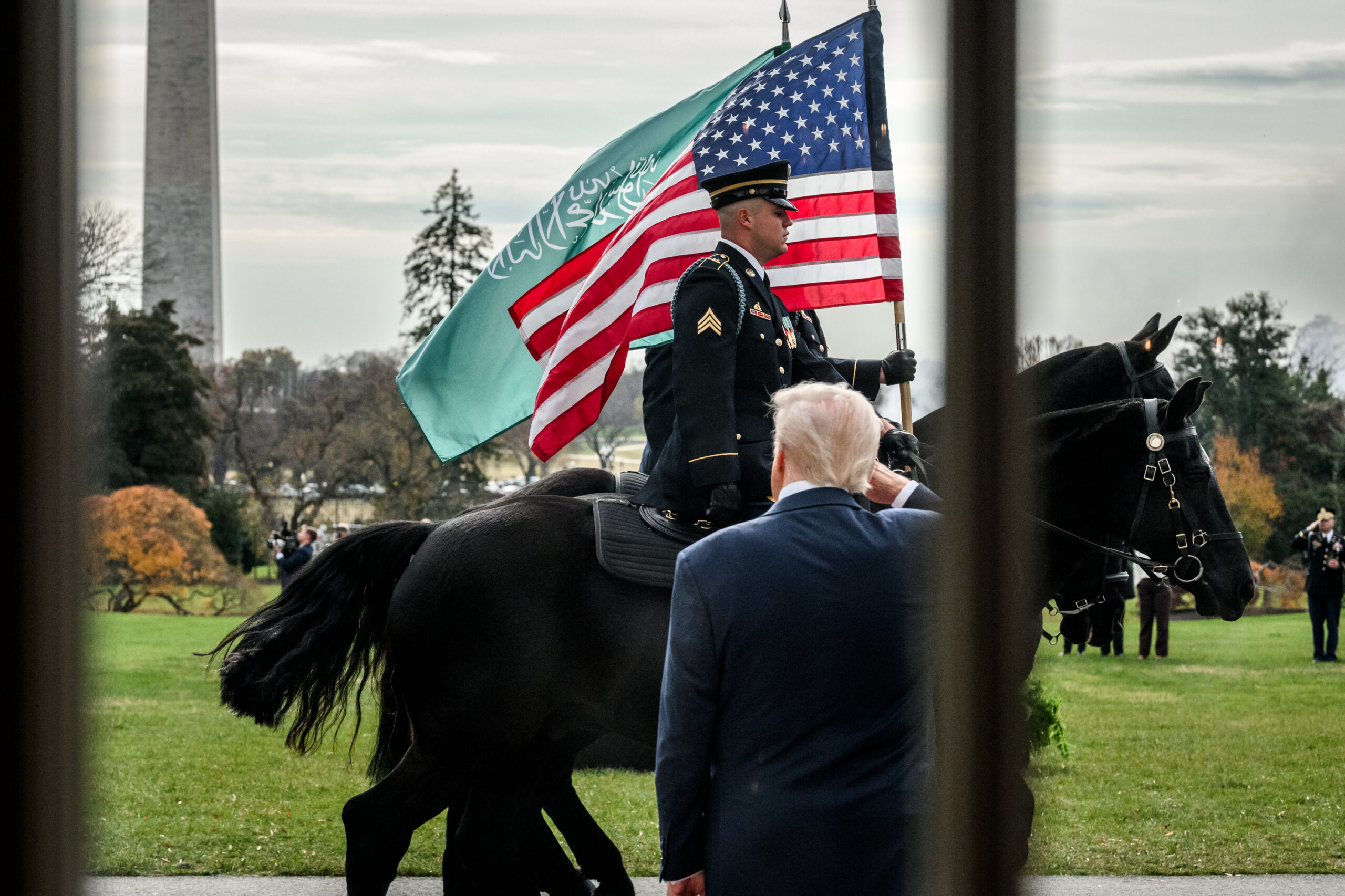
The US-Saudi nuclear agreement places Riyadh’s facilities under American bilateral oversight rather than the International Atomic Energy Agency’s intrusive inspections regime. That asymmetry may prove costly in Vienna, where Washington is simultaneously demanding that Tehran accept exactly what it has just spared its ally.
The United States and Saudi Arabia have concluded a historic nuclear cooperation accord on July 22, which will allow Riyadh to pursue a nuclear power programme under American supervision. Under the 123-type agreement, American nuclear energy firms are expected to make massive commercial gains and develop the Kingdom’s nuclear infrastructure for power generation. The deal runs for 30 years and further builds technical and commercial partnerships between the two sides expected to last several decades. But the timing of the deal coincides with Washington’s continued coercive pressure against Iran vis-à-vis its nuclear programme.
Commercial Viability
The agreement reportedly defers the enrichment question rather than settling it. The deal does not permit Saudi domestic enrichment of uranium outright, but rather a joint two-year study would first assess whether domestic enrichment is commercially justified. Only then would American firms build and operate an enrichment facility within the Kingdom. Reported accounts also indicate that Riyadh will get full access to the nuclear fuel cycle and looser safeguards and controls will be in place than Washington has historically permitted in other 123-type deals.
A day after the agreement was signed, President Trump clarified via a post on Truth Social that the nuclear deal remained strictly contingent on Riyadh joining the Abraham Accords and recognising the State of Israel. Earlier, the Biden administration stalled the deal on same grounds indicating a bipartisan alignment in Washington’s negotiating strategy. In light of Israel’s overwhelming use of military force in Gaza and the absence of a clear roadmap or pathway to Palestinian sovereignty, Riyadh has refused to sign a diplomatic pact recognising Israel.
Saudi Arabia considers developing nuclear power capacity essential to realising its Vision 2030 strategy, diversifying away from oil and toward renewable and low-carbon sources. A burgeoning Saudi economy and population as well as large scale investments in development of data centres and A.I infrastructure have led to rapid increase in domestic consumption levels. Joining the nuclear power club also accords prestige and recognition on the Kingdom’s nuclear power status while retaining the future option to become a nuclear weapons state should Iran also become one.
Safeguards & Enrichment
Weaker safeguards, Israeli contentions, and the risk of regional nuclear will complicate and constrain the deal’s implementation. The rationale is that Saudi Arabia’s nuclear power ambitions do not depend on Washington’s participation. Riyadh has discussed civil nuclear cooperation with other partners- South Korea, France, Russia and China- and American opposition will not indefinitely stop it from procuring fuel, equipment and technical expertise elsewhere. A bilateral nuclear cooperation accord permits Washington to influence and regulate Riyadh’s nuclear decision-making bottom up.
This shifts Washington’s longstanding policy on civil nuclear cooperation which has rested on a gold standard, where no domestic enrichment of uranium or reprocessing of spent fuel is permitted for states that do not already possess such a capability. 123 type-deals with the U.A.E and Turkey reflected this principle and excluded domestic enrichment and reprocessing outright. Non-proliferation experts argue that a Saudi nuclear programme will allow the kingdom to develop the necessary domestic expertise and infrastructure while significantly reducing the future timeline, costs, and obstacles to acquiring nuclear weapons. The deal proposes that Saudi Arabia’s nuclear facilities be placed under the oversight of an American led bilateral safeguards framework rather than the International Atomic Energy Agency (IAEA)’s more intrusive and ad-hoc verification structures. The nuclear deal awaits Congressional review but carries serious implications for Middle East’s evolving security order. This marks a more transactional turn in U.S. nuclear diplomacy, one that departs from stringent multilateral safeguards and export control requirements to a bilateral inspections system outside of IAEA oversight. During civil nuclear deal negotiations with India two decades ago, Washington successfully persuaded New Delhi to conclude an IAEA safeguards agreement and implement the Additional Protocol (AP) on its civilian facilities in exchange for nuclear cooperation. Riyadh, despite being a non-nuclear weapons state to the NPT, has refused to sign the AP and commit itself to forgoing domestic enrichment, indicating that its strategic calculus runs well beyond the peaceful applications of nuclear power.
Middle East & Nuclear Energy
Israeli strategic calculus demands that it remains the sole nuclear weapons state in the Middle East and thwart any possible attempts from regional and neighbouring states to acquire enrichment and reprocessing capabilities. Former Prime Minister and Chairman of the Together coalition in Israel, Naftali Bennett, called the emerging agreement “a severe strategic failure that endangers our security”, warning that uranium enrichment on Saudi soil “could lead to a regional arms race and dangerous loss of control”.
Beyond the political optics, Israeli distrust around domestic enrichment is supplemented by the Saudi-Pakistan mutual defence pact. Islamabad and Riyadh enjoy a robust defence and security relationship, one that includes understandings on security guarantees and supposed nuclear burden sharing. Even if the Saudi nuclear deal bars domestic enrichment, Israeli concerns about Islamabad assisting Riyadh in developing an indigenous nuclear weapons capacity will persist and only become stronger moving forward. Israeli decisionmakers are likely to point to Pakistan’s past track record in horizontal proliferation vis-à-vis A.Q. Khan network, having supplied sensitive enrichment and centrifuge technology to Iran, Libya, and North Korea.
The notion that the Gulf lobby in Washington emerged considerably stronger in the aftermath of the U.S-Israel war against Iran can be misleading. Trump 2.0’s personal and business relationships with Gulf partners may have led Riyadh to believe that Washington is willing to adjust policy preferences to favour some partners. While Netanyahu’s personal rapport with Trump has not yielded any long-term strategic gains for Israel in the security domain, the Israel lobby retains substantial influence and leverage in Washington’s political and lobbying circles to ensure that a Saudi-Israel normalisation pact is achieved as a precondition to the nuclear deal. But diplomatic recognition alone offers no guarantee that Israel will accept a Saudi nuclear power programme.
Future Implications
The Saudi-US nuclear deal risks destabilising the larger existing nuclear order in the region and will encourage more states with regional leadership ambitions to develop near threshold nuclear capabilities: where states possess the necessary capacity and means to divert to develop nuclear weapons but don’t actually develop them. Abu Dhabi, Ankara, Cairo and other states may decide to enact the Saudi model, leading to more nuclear hedging and proliferation of advanced nuclear capabilities in the region.
In the meantime, Abu Dhabi can renegotiate the terms of its nuclear agreement with Washington. Alternatively, the Emiratis may side-line American technical expertise altogether and pursue civil nuclear cooperation with France or Russia to build out its programme independent of U.S terms and conditions.
Egypt and Turkey will not look favourably on a regional balance where Israel maintains an opaque nuclear weapons programme while Iran and Saudi Arabia have domestic enrichment capabilities. Both have a robust scientific and technological base, capabilities and talent pipelines and may in the future stake their own claim to having domestic enrichment rights.
The Saudi deal may also embolden Tehran and harden its negotiating position over the selective bias in targeting Iran vis-a-vis domestic enrichment. Any practical and pragmatic pathway toward a revised nuclear deal with Tehran requires robust IAEA inspection and monitoring mechanisms. However, Iran will be far less willing to accept intrusive inspections if Saudi Arabia is not subject to the same gold standard of IAEA verification procedures. By its own example, Washington may be handing Iran a stronger position at the negotiating table.
Moksh Suri holds an MSc in Global Affairs from King’s College London and an MA in International Relations from Leiden University.
This article is published under Creative Commons License and may be republished with attribution.