Nigeria’s economic reforms under President Bola Ahmed Tinubu represent a decisive shift toward market-oriented policy at a time of deep fiscal, economic, and social crisis. While these reforms have delivered some notable macroeconomic gains, their limited impact on poverty and living standards raises a fundamental question: can neoliberalism deliver inclusive development for Nigeria?
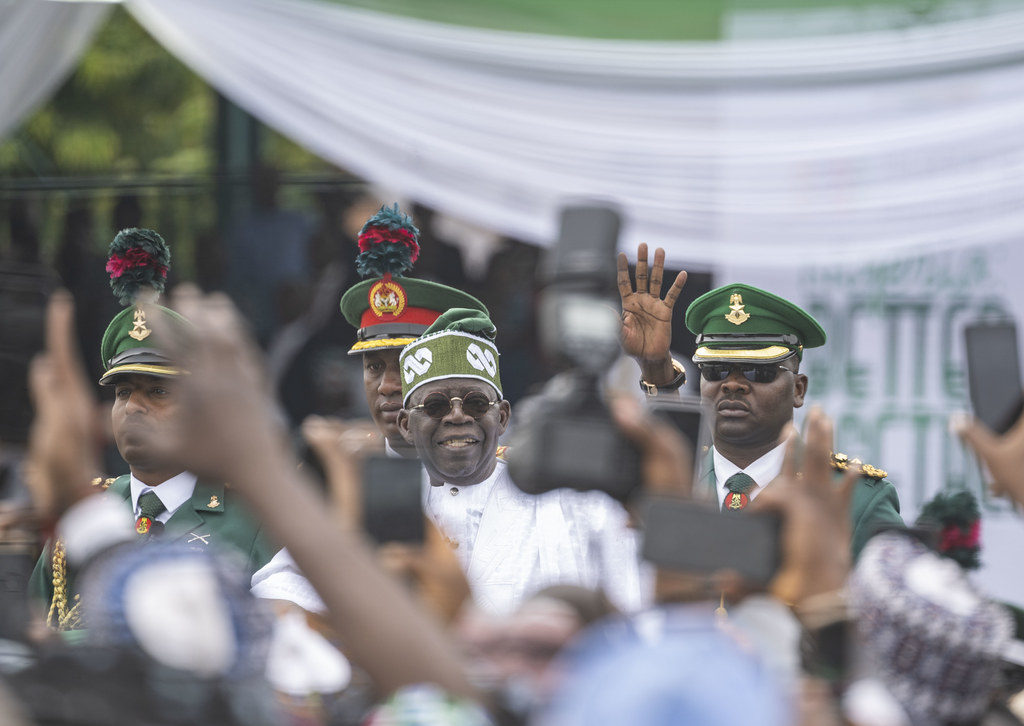
Nigeria’s President, Bola Ahmed Tinubu, inherited a struggling economy characterised by macroeconomic instability, high levels of insecurity, and a disillusioned citizenry when he assumed power in May 2023. Reeling from the disruptive effects of COVID-19, Nigeria’s weak economic growth rate has been insufficient for generating employment opportunities, resulting in an unemployment rate of about 32 percent in 2023. Today, Nigeria’s poverty rate is 52.5 percent, and the number of poor people is expected to increase to 53.2 percent in 2026.
When President Tinubu was sworn in as president in May 2023, he announced that he would embrace neoliberalism—economic policies designed to allow free markets to allocate resources and determine prices, including foreign exchange and interest rates—and abandon the statist economic philosophy of the previous administration. Since then, the Tinubu administration has implemented three key neoliberal economic policies. The first policy removed the country’s longstanding fuel subsidy, which previously cost the government 10 billion USD annually and was hampered by corrupt practices. The administration expects to channel savings from the fuel subsidy removal to productive sectors of the economy, particularly infrastructure, renewable energy, and poverty alleviation programs. Second, the Tinubu administration liberalised the foreign exchange market. By liberalising the foreign exchange market, the government believes the market will be more transparent and freer of the rent-seeking activities that have characterised it in the past. This change is expected to boost investor confidence and attract capital and foreign exchange inflows, making the capital and foreign exchange markets more liquid. Finally, the Tinubu administration enacted tax reform laws designed to boost economic growth, increase revenue generation, enhance the business environment, and foster an effective tax administration. The tax laws are meant to create new sources of tax revenue, streamline the process of revenue collection, and make the system more equitable.
Neoliberalism in Nigeria is predicated on three core goals: stabilise, sustain, and empower. Stabilisation involves reigning in inflation, preventing exchange rate fluctuations, and reducing fiscal deficits and debt. Once the policies are sustained in the long term, the next task will be to empower the people by ensuring that the gains from neoliberalism are broadly shared through cash transfer programs, job creation, and poverty alleviation. Proponents of neoliberalism such as Matthew Hoddie and Caroline Hartzell admit that the policies can be harsh in the short term, but that the gains are substantial when they materialise. This article discusses the rationale for neoliberalism in Nigeria, and its prospects and obstacles for revitalising the Nigerian economy. More importantly, however, it looks beyond neoliberalism and offers an alternative strategy for fostering a more inclusive economic development that centres on a state-active redistributive approach.
Neoliberalism and the New World Order
The emergence of a multipolar world has seen the rise of new economic thinking and challenges to western economic orthodoxy. The new economic thinking manifests in the “China Model,” where the state assumes the role as driver of economic development. This model is characterised by massive state subsidies to business enterprises, huge infrastructure investment, and an intentional strategy to become a technology leader in frontier industries. Public-Private Partnerships (PPP) have also become a new economic mantra across the world, challenging the notion that only a purely market-driven economy can succeed in promoting structural transformation.
Such domestic economic policy also has an international counterpart: anti-orthodoxy has resulted in the establishment of new global institutions and economic power centres. Prominent amongst these institutions is the emergence of the BRICS, established in 2006 to act as a counterweight to western dominance in the global economy and multilateral financial institutions. Given that developing countries now have alternative channels for mobilising development finance beyond the western financial institutions, why, then, has Nigeria chosen to embrace Western-inspired economic orthodoxy and neoliberalism?
The answer may be found in the severe fiscal challenges that have plagued Nigeria for years. The Tinubu administration came to power when Nigeria’s fiscal quandary had reached its peak, thereby limiting the government’s ability to pursue alternative development paradigms. Nigeria has been at the crosshairs of steeply rising expenditures amidst dwindling government revenue. The country’s revenue as a percentage of GDP declined precipitously, from 20.5 percent in 2000 to 6.8 percent in 2023. About 65 percent of government revenue and over 90 percent of foreign exchange earnings in Nigeria come from the oil sector. However, budget deficits, financed by domestic and external debt, have become the fiscal norm for the country. Nigeria’s growing deficits have pushed up its external debt, from 17.5 percent of GDP to 48.7 percent in 2023.
The country’s fiscal constraints have prevented urgently needed investments, especially in infrastructure. With an infrastructure stock of only 30 percent of GDP, well below the World Bank’s 80 percent benchmark, Nigeria’s infrastructure gap is estimated to grow to approximately 878 billion USD by 2040. Tax reforms, which are key components of Nigeria’s neoliberalism, are expected to boost government revenue and provide funds for infrastructural development.
Can Neoliberalism Save Nigeria?
The World Bank and IMF believe that countries that consistently implement neoliberal policies are more likely to reap economic gains. Indeed, there have been some gains from neoliberalism in Nigeria, such as an increase in foreign reserves, a credit rating upgrade (which has helped attract foreign capital), stability in the foreign exchange market, falling inflation rates, and more robust economic growth of about 4 percent in 2025. Stability in Nigeria’s foreign exchange market is particularly noteworthy, considering the volatility and unpredictability that characterised the market prior to neoliberal reforms. For instance, the Nigerian Naira fluctuated by as much as 105 percent between June 2023 and March 2024, compared with 13 percent during March 2024 to March 2026. Relative stability in the foreign exchange market has attracted portfolio investment and boosted the country’s foreign reserves, from 35 billion USD in May 2023 to 49.5 billion USD in February 2026. These macroeconomic improvements are important because they enable the government to focus on policies and development programs that improve the living conditions of the people.
However, the government has not yet succeeded in making sure that macroeconomic improvementsAthe living conditions of many Nigerians, who remain unemployed, poor, and food insecure. Unemployment and poverty have worsened since the implementation of neoliberalism. According to the World Bank, 139 million Nigerians (out of a population of about 238 million) were living below the International Poverty Line as of October 2025, despite reforms. Nigeria is one of the few oil-rich countries in the world without institutionalised safety nets, which has left many Nigerians impoverished and uninsured from policy shocks and natural disasters. A missing component in Nigeria’s neoliberal tripod of stabilise, sustain, and empower has been the utter lack of visible welfare gains for most Nigerians.
Conclusion
These shortcomings emphasise the need for Nigeria to move beyond a narrow focus on market-led reforms and macroeconomic stabilisation toward a more state-active, redistributive development strategy centred on labour-intensive industrialisation, rural transformation, manufacturing, and human development. For instance, the savings from fuel subsidy removal should be used to provide low interest loans to enterprises (both new and old) in the manufacturing and agro-processing sectors. This will have the effect of creating high-paying jobs and alleviating poverty. Start-up firms in the ICT sector, which usually employs the youth, can also benefit from increased access to seed capital. The state should prioritise investment in relevant human capital, so that Nigerians would gain the skills needed for employment in the growing frontier industries (artificial intelligence, internet of things, blockchain, big data, data analytics, drones, robotics, etc.). Cash transfers to impoverished and vulnerable Nigerians should be institutionalised to cushion the negative effects of neoliberal economic policies. While President Tinubu’s economic reforms are necessary and appear to be yielding some positive macroeconomic results, his administration should recognise that development is about people’s well-being.
Dr Steve Onyeiwu is Professor of Economics, Allegheny College, Meadville, Pennsylvania, USA.
This article is published under a Creative Commons License and may be republished with attribution.