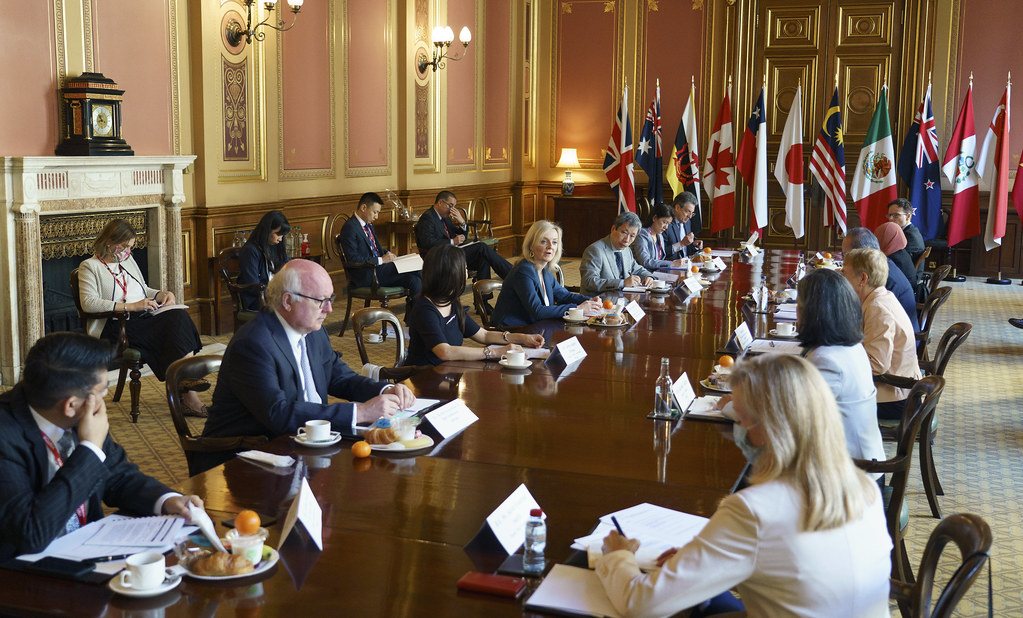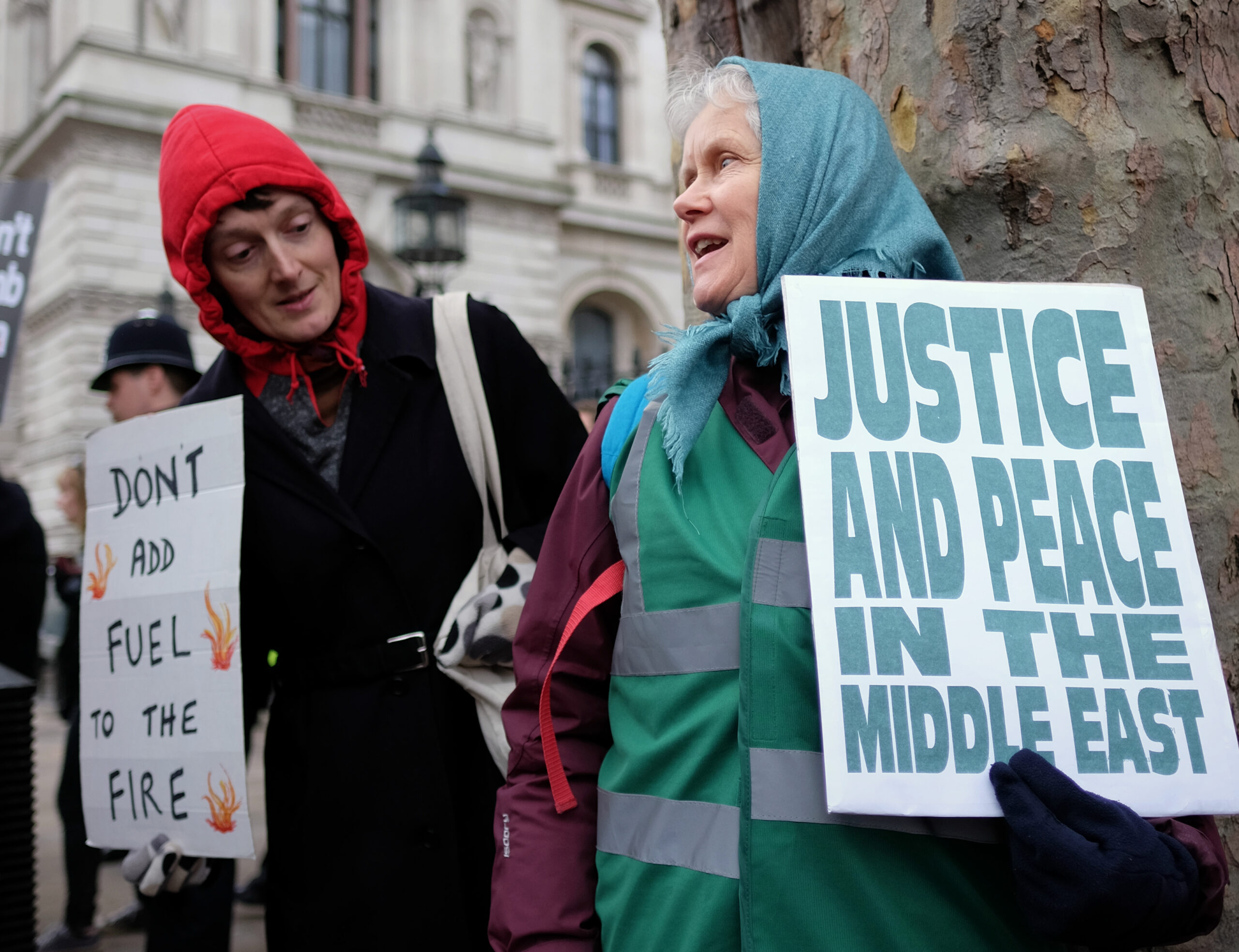
In September 2025, ten countries, including Australia, the UK, Canada coordinated their recognition of Palestine’s statehood to support a ceasefire to the bitter war in Gaza, and give momentum to the Israel-Palestine two-state solution as the most direct means of progressing peace and stability across the Middle East. That momentum receded with the relative downturn of violence in Gaza, but the latest flare-up in regional conflict sends a clear message that the peace process needs new momentum.
The two-state solution resolutely recognises the right of Israel and Palestine to exist within internationally respected sovereign and secure borders. Israel, Palestine, Iran and the US are the key actors for progressing this momentum. Concurrent outreach to motivate and involve other stakeholders, especially Saudi Arabia, is also essential for a two-state solution.
The next four months especially, offer unique opportunities to place the two states back on the political agenda. These include the UN General Assembly in September, the Israeli national elections in October, US mid-term and Palestine Legislative Council (PLC) elections in November. Iran’s national elections are not due until 2028, but action on all above fronts will ensure Iran’s involvement.
The complexities of re-launching and sustaining implementation of the two-state agenda are multifaceted. Issues include deep distrust, egos, domestic politics, financial interests, alliances, ideology, religion and race, overlaid by territorial disputes and wider strategic interests.
They will also involve enormous challenges of the widespread resettlement of significant numbers of the Israeli and Palestine populations. The states’ combined population totals some 17.5 million people, with the population of Israeli Jews, mostly of East-Central European and Russian origin, and Palestinians, mostly Arab Muslims, about equal at 7.5 million each. Of the latter, 5.5 million live in West Bank, and 2 million in Gaza.
Compounding this mix are an additional 2.5 million Arab Muslims living in Israel, some 750,000 Israelis living in Occupied Palestinian Territories (about 500,000 in West Bank and 250,000 in East Jerusalem), and Israel’s annexation program which includes Palestine’s proclaimed capital, East Jerusalem, annexed in 1967.
Notably also since 2023, about 80,000 to 96,000 Israelis living along Lebanon’s southern border have been displaced due to Hezbollah’s actions, and most of Gaza’s two million population and up to one million Lebanese in southern Lebanon have been displaced due to Israeli Defence Force (IDF) action.
Challenges will also include the interrelated issues of resolving Palestine-Israel state borders and capitals, and annexed territories in Lebanon and Syria. Key issues include the relevance of the 1967 boundaries, whether all Palestinian territory should be contiguous, and, if so, what happens to Gaza and US President Donald Trump’s January 2026 Board of Peace, border control and security arrangements, the rights of residents in each state inclusive of citizenship, voting rights and rights of return, and who pays reconstruction costs.
Because of these complexities, processing a two-state solution certainly will have to be implemented in stages. This will take time, and most importantly, progress will demand capable, committed and courageous leadership.
Politically, Israel’s Prime Minister, Benjamin Netanyahu is the most difficult actor. He is highly experienced, skilled, hard-line, combative, opportunistic, and focused on personal political survival. He views himself as Israel’s Churchill.
All five parties in Netanyahu’s coalition government formally oppose Palestinian statehood. Three of the parties, Netanyahu’s Likud party, the Orthodox Otzma Yehudit (Jewish Power) party and Religious Zionist party, support a one-state “Greater Israel” based on the biblical Promised Land. What’s unclear, however, is the precise extent to which each party embraces the Promised Land’s broader borders which comprise parts of Lebanon, Iraq, Jordan, Saudi Arabia and Egypt, depending on biblical interpretations. The remaining two coalition members, the ultra-Orthodox Shas party and New Hope party confine their one-state vision within existing Israel-Palestine borders.
Netanyahu also claims the security threat to Israel from Iran and its proxies, especially Gaza-based Hamas, as a further reason for opposing Palestinian statehood. Israel, as do all states under international norms, has a right to self defence. Hamas constitutes a continuing threat to the nation’s security. However, the overwhelming disproportionate and brutal response by the IDF to Hamas’ horrific attack against Israel on 7 October 2023, is consistent with Netanyahu’s agenda for Palestine.
These policies shut the door on a two-state solution, until or unless there is change to a sympathetic government. Meantime, Netanyahu needs to be publicly challenged during his visit to the UNGA about his reasons for opposing Palestinian statehood, and his commitment to Greater Israel.
Palestine requires total resuscitation politically, economically and administratively to attain domestic and international credibility, meet Board of Peace requirements, and gain admission to the UN as a full-member state. This will require very strong leadership to take over the Palestinian Authority (PA), and unify the mainstream and Gaza factions. Palestinian contacts have provided me with their expertise and opinion that those with the required skills exist, the issue is enabling their election or appointment.
PA President Mahmoud Abbas’s support for a two-state solution dates back to the 1993 Oslo Accords, and he has reaffirmed it on multiple occasions since, including prior to Australia’s recognition of Palestine’s statehood in September 2025. PA support is not a problem, but Hamas’s opposition to a two-state solution is.
One condition insisted on by Australia and others, is that Hamas must disarm and have no role in the future Palestinian government; how that works out remains to be seen. But what if Hamas did disband, hand over its arms to the Palestinian police force, and some ex-members join the PA or create a new political party that endorses PA’s two-state policy? Irgun, a Jewish terrorist organisation that supported the creation of Israel during the 1930s-40s, disarmed, disbanded and created the Herut political party in 1948, which merged with Likud in 1988. An acceptable precedent?
Iran does not support a two-state solution. It instead supports a one-state Palestinian democratic republic. It opposes two states because it would validate the existence of Israel. Iran is the only country now known to publicly oppose Israel’s existence, along with its non-state proxies including Hamas, Hezbollah and the Houthis.
Iran’s one-state policy is outdated, unrealistic and unworkable. If Iran wants credibility as a positive influential partner in the peace process, it must change its policy, and be seen to bring, or try to bring, its proxies with it. The foundations are there for such policy change: Mojtaba Khamenei’s election as the new Supreme Leader, the reportedly younger and more pragmatic regime leadership generally, as well as PA and other Arab recognition of Israel as a reality and support for a two-state solution, provides a basis for Iran also to adopt the two-state policy, and press its proxies accordingly. Iran has everything to gain by being an active part of this peace initiative.
The US remains nominally the ringmaster, but its policies are erratic. The US must identify its support for the two-state solution, and therefore whether it is part of the solution or the problem. If the solution, it must bring Israel into the rules-based ring, and limit the Israeli script of exceptionalism, including nuclear issues. President Trump must also accept that an enduring peace needs more soft than hard power in negotiations.
Are the prospects for a two-state solution too idealistic? Perhaps, but the option, a one state solution, is unworkable and a formula for forever wars. Facilitating acceptance and implementation of the two-state solution will require highly skilled, intense and sensitive negotiations, and lots of patience and time to get all governments on board. Australia, with other states, can play a leading role in this process.
Ian Dudgeon is a former president of AIIA’s ACT Branch.
This article is published under a Creative Commons License and may be republished with attribution.