The current war in the Middle East has triggered yet another global energy crisis. This only aggravates a long‑standing challenge for South Pacific Island Nations: access to cheap and reliable energy. This article analyses how satellites offer opportunities to improve energy security but also challenges.
Energy Supply is a Major Geostrategic Risk for the South Pacific Region
The extreme geographical dispersion of South Pacific Island Nations makes electric‑grid expansion across these countries (and across the many islands that compose them) extremely difficult. Cyclones, volcanic eruptions, and earthquakes also make renewable‑energy infrastructure, including wind turbines and solar panels, highly vulnerable. In addition, these nations often lack the land required to host large solar farms to generate electricty.
These geographic realities mean that many islands in the South Pacific depend on expensive and highly polluting fossil‑fuel power stations, especially diesel. Importing fossil fuels for transport and electricity generation can consume 5% to 25% of their GDP. These costs drive up food prices, affect transportation and healthcare systems, and make electricity generation extremely expensive. Price volatility, supply insecurity, and strategic dependence on countries that produce or refine fossil fuels make energy supply a major geostrategic and sovereignty challenge for the entire South Pacific region, including New Zealand and Australia, as the current energy crisis demonstrates.
Space‑Based Solar Power: A Technology Aiming to Reshape Energy Supply on Earth
For several years, a recurring technological headline has appeared in the media: Space‑Based Solar Power. Scientific experiments have shown that it is possible to collect solar energy in space using photovoltaic arrays, beam that energy to Earth via microwaves, capture it, and convert it back into electricity for the local grid. This may sound like science fiction, but it also appears to offer a potential lifeline for island nations.
Space-Based Solar Power could allow these countries to bypass traditional energy‑infrastructure bottlenecks (pipelines, refineries, ports) and diversify their energy supply. Countries such as the UK, the US, Japan, and China are already testing this technology. Even a New Zealand company demonstrated a prototype to the European Space Agency in 2022. If successful, these systems could strengthen energy diplomacy and potentially reduce energy costs.
Moreover, the energy would be clean, available 24/7, and (at least on paper) more energy‑dense, as solar energy can be converted more efficiently in outer space.
Miracles May Come From Heaven, But Not Yet From Outer Space
However, although technological breakthroughs have been achieved and major powers continue to invest, beaming energy from space is not yet a realistic solution for powering operating rooms or fish processing facilities in the South Pacific. It may become feasible in the future for specialised infrastructure in space, but it is far from being a practical or affordable replacement for current energy systems.
Several reports, including NASA´s Space Solar Power Feasability Study, question the economic viability of this technology in the near future. First, converting sunlight into electricity, then into microwaves, and then back into electricity results in significant energy losses. Current nations with leading technologies, do not have the required energy input to facilitate this process, let alone South Pacific countries. Second, and most importantly, generating just 1 megawatt of electricity in space for use on Earth would require a constellation of solar arrays at least the size of a rugby field. Such structures would weigh thousands of tonnes. Deployment, maintenance, and protection from space debris would make this infrastructure extremely expensive, as would the construction of the large microwave receiving stations required on Earth, making this another challenge for the South Pacific.
Current Satellites are a Powerful Tool for Renewable Energy Planning
However, this does not mean that space technology cannot help South Pacific Island Nations improve their energy security. In fact, satellites are already essential for expanding renewable, and sovereign, energy supply across the region.
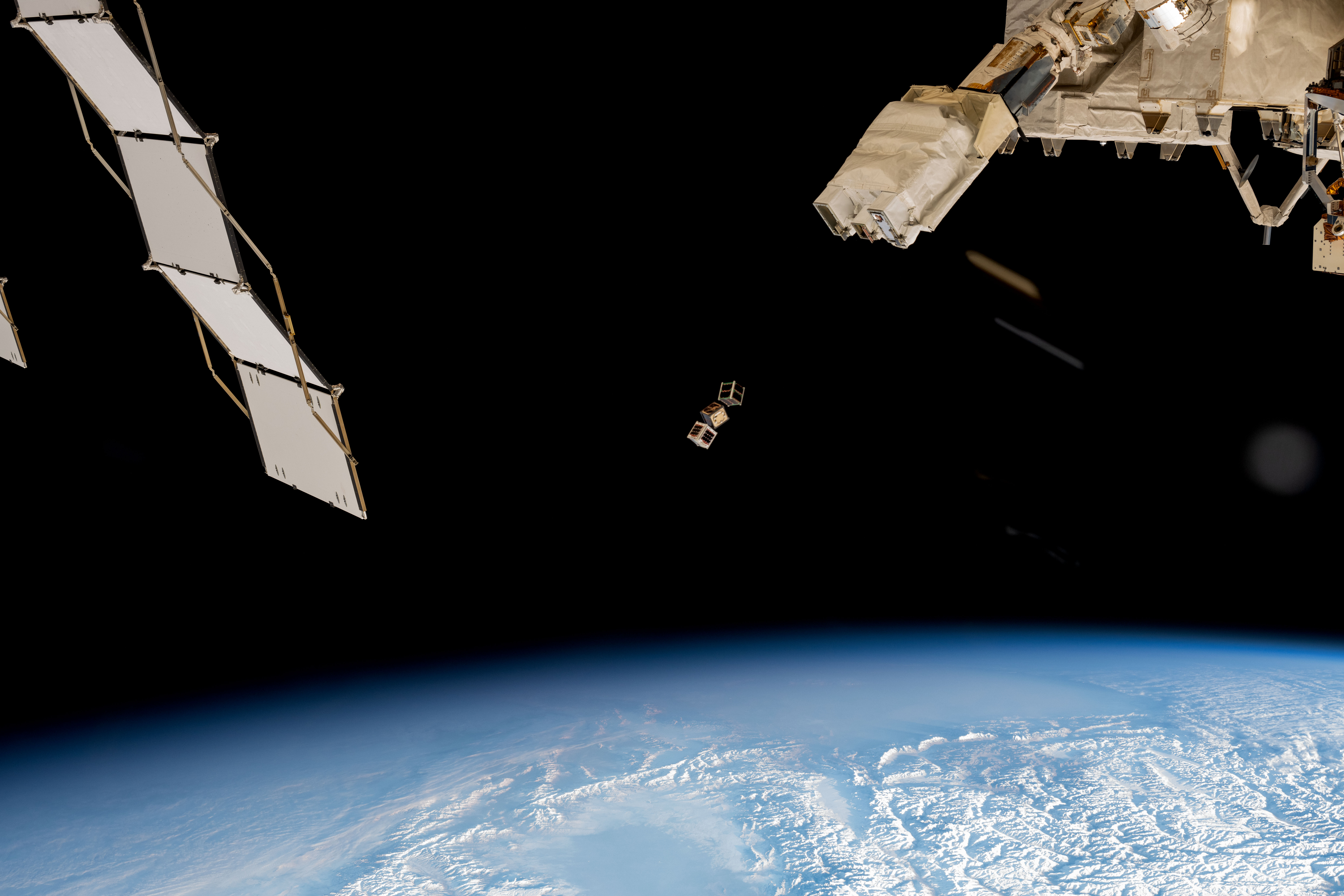
Earth observation satellites can track cloud cover, storms, and solar irradiance, helping optimise solar panel placement for both performance and protection from natural hazards. Low Earth Orbit constellations can support remote grid diagnostics, demand management, and predictive maintenance.
This is why, in 2018, the government of Tonga formed an international partnership with the United Kingdom Space Agency and the British Renewable Energy Space Analytics Tool (RE-SAT) to support its transition from fossil fuels to renewable energy. Five other countries in the region have since joined.
This is not an isolated case. Regional organisations, including initiatives under the Pacific Islands Forum’s energy goals, are exploring how satellite imagery can improve renewable energy outcomes. Better data, better forecasting, and better investment planning are essential to achieving renewable energy targets, and satellite imagery is central to all three.
Geopolitical Competition: an Opportunity and a Challenge
The war involving Israel, the United States, and Iran has increased fossil fuel prices, raised shipping insurance premiums, and rerouted tanker traffic, causing delivery delays. For South Pacific nations, whose economies and societies are fundamentally maritime, this has disrupted trade, food supply, disaster response, and access to education and healthcare. As electricity grids become more expensive to operate, governments have been forced to subsidise electricity bills, placing additional pressure on already strained national budgets.
These pressures explain why, despite the geographic challenges of deploying renewable energy, Pacific Island countries are intensifying their efforts. Their goals are not only to reduce emissions and confront climate change (their primary security concern) but also to increase capacity. Energy self-sufficiency can decrease the power bill but also create a buffer against geopolitical shocks, whether from the Middle East or from strategic competition in their own region.
The South Pacific has become a frontline of dual use infrastructure diplomacy. The ongoing China–US/Western competition for influence in the region is creating new opportunities for space-based technology deployment. Satellite partnerships, ground stations, and energy related infrastructure are increasingly part of the geopolitical toolkit used to shape regional influence.
While China has sought access to satellite ground stations in Kiribati and Fiji as part of its Belt and Road infrastructure initiative, Western partners have doubled down on transparent access to satellite data and open access modelling tools. In the case of the aforementioned RE‑SAT platform, the UK provides the analytics system, but the partner countries retain ownership of the data, the modelling capacity, and the planning autonomy. Japan, for its part, has engaged in satellite diplomacy for decades through its Himawari‑8/9 meteorological satellites, offering not only imagery that supports energy transition but also long-term training and capacity building.
Still, it is reasonable to assume that whoever builds energy related infrastructure will have influence over the recipient country’s energy mix. This applies not only to satellites and ground stations, but also to the data they generate, and the analytical tools used to interpret it.
The link between energy, digital, and space capabilities is a double-edged sword. These technologies create opportunities for political bargaining and greater sovereignty, but they also carry the risk of long‑term dependencies once agreements are signed and systems are embedded.
Marçal Sanmartí is a researcher doing analysis about the geopolitics of outer space, or Astropolitics, for a variety of think tanks and media including the New Zealand Institute of International Affairs, the Catalonian Global Institute and Access Hub Space among others.
This article is published under a Creative Commons License and may be republished with attribution.