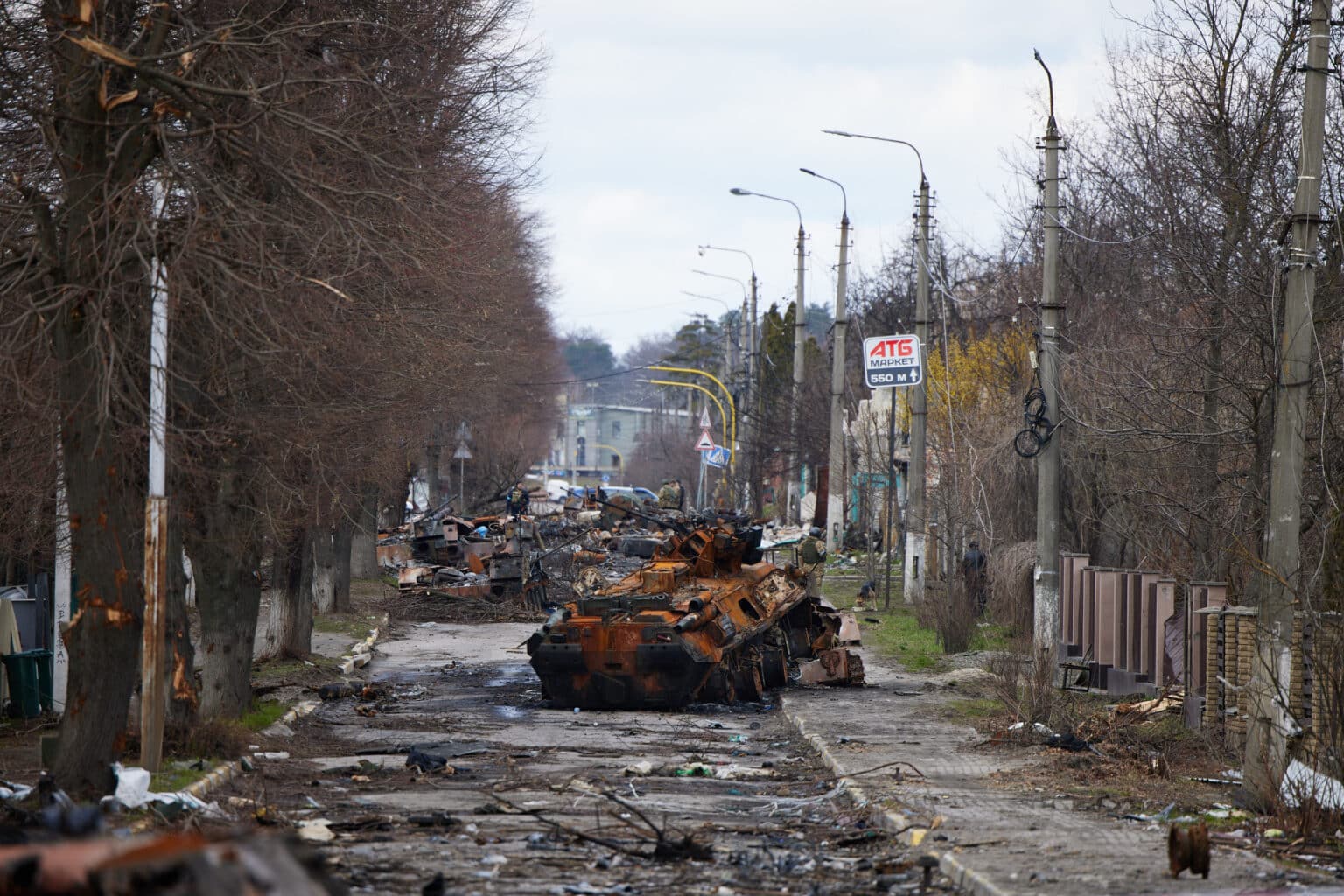
The Ukraine conflict has left Russia in a very uncomfortable position. Originally envisaged as a means to deter future wars, Russian “strategic deterrence” has boomeranged.
Not only have more bordering states, such as Finland and Sweden, integrated into the North Atlantic Treaty Organisation (NATO), Ukraine has also shown no signs of capitulation. This leaves an already exasperated Russia, which is far from achieving the goals of the Special Military Operation (SMO), with even less choice.
The Crisis
The Ukrainian conflict is now fought well inside the Russian territory. Major cities in Russia, from Moscow to St. Petersburg, and several bordering regions, such as Belgorod, Bryansk, and Kursk, are being infiltrated with Ukrainian attack Unmanned Aerial Vehicles (UAVs). Recently, Ukrainian drone strikes on several oil refineries, from St. Petersburg, Moscow, to as far as Western Siberia, have upped the ante by fuelling severe fuel shortages within Russia. The fuel crisis is so dire that India, one of the largest buyers of Russian crude oil, began supplying gasoline to Russia.
Externally, NATO’s military support to Ukraine and European rearmament plans are becoming a nightmare for Russia. Germany’s plan to make itself the strongest conventional force in Europe, the French decision to increase the number of nuclear warheads and attain extended nuclear deterrence for Europe, and the discussion in Poland, Lithuania, and Finland on supporting or the possible hosting of NATO’s nuclear weapons are shrinking Russia’s flexibility in escalation management.
Until recently, Russia reserved the nuclear option to manage large-scale wars and the later phases of a regional war that threatened Russia’s survival. Despite scholars claiming significant continuity compared to earlier documents, Russia’s updated nuclear strategy in 2024 has indeed lowered the nuclear threshold in response to “large-scale hostilities” and the “mixed performance of Russia’s conventional weapons” in the Ukraine conflict. Before 2024, Russian scholars debated revising the nuclear doctrine due to changing realities in the Ukraine war. States invest significant time and resources in formulating or reinventing their nuclear doctrines, which guide them during a crisis and signal potential red lines to adversaries. Thus, doctrinal amendments cannot be taken lightly as “nuclear bluffs” if a state has hitherto refrained from using nuclear weapons despite its nuclear lines being crossed.
Eroding Local-Regional Divide
While scholars, strictly basing their analysis on the Russian doctrinal positions, argue that Ukraine is not the kind of war where nuclear use would be imaginable, they overlook that the ongoing war is not getting strictly operationalised as per the Russian military doctrines. While, as per the military doctrines, Russia should have been able to prevail in a local war using only non-nuclear forces, it has not been able to do so in the ongoing Ukraine war. While scholars, de jure, may categorise the Ukraine conflict as “local,” ground realities qualify it as more than a local war. It is no surprise that recently the Russian Presidential spokesman, Dmitry Peskov, argued that, owing to Western support and involvement, the conflict is no longer an SMO, but a “full-scale war.”
Russia envisages a range of non-nuclear options, including the use of conventional precision-strike missiles, to demonstrate its willingness to climb the escalation ladder before resorting to nuclear use. However, the current conflict has proven the ineffectiveness of conventional precision strikes in signalling adversaries of Russia’s resolve to climb the ladder. These Russian strikes are instead prompting greater defence spending by Ukraine and Europe.
This war is instead challenging Russian expectations of using conventional strikes in a “dosed” manner– where conventional strikes are used in an increasing order of damage, from single demonstrative strikes to massive strikes on critical infrastructures, before resorting to nuclear use. Contrary to the expectations of Russian military thought, a large number of Russian missile strikes have been intercepted by Ukraine after the introduction of Western air defence systems, thereby requiring unimaginable quantities of missiles to suppress even critical targets across Europe– should a larger direct Russia-Europe war commence. This higher-than-expected number of missiles could exacerbate Russia’s vulnerability not only in a regional conflict but also in a local one. Given the growing air defence capabilities of NATO and Russia’s inability to manufacture the “required” number of strike missiles (largely due to financial constraints), the non-nuclear window before actual nuclear use appears to be shrinking.
Beyond the Official Stance
On top of a revised nuclear doctrine, Russia may be compelled to resort to nuclear use early in a direct conflict with NATO, should this course of development remain unaltered. While several analyses may find this line of argument premature, the “Fall Crisis” is indicative of ground realities that challenge analyses grounded solely in doctrinal positions. It is claimed that Russia was closer to using nuclear weapons against Ukraine during the fall owing to battlefield setbacks. Among several factors, such as NATO’s threat of conventional retaliation or the prohibitive nuclear taboo, dissuasion from China and India–Russia’s partners, whose support is quite critical–likely played the most significant role. The recent statement by the Polish Deputy Foreign Minister on India’s role in preventing Russia’s possible use of nuclear weapons during the fall of 2022 serves as an affirmation.
Analyses based solely on Russia’s military doctrinal positions overlook the erosion of the local-regional divide in the levels of conflict. The escalation path from local to large-scale conflict “need not be linear.” Unsuccessful efforts to “localise” a conflict could escalate into a regional war. When Russian leaders interpret Western actions—such as attempts at internal weakening or regime change—as “critical” or strategically decisive, they may escalate directly into a larger conflict without waiting for smaller clashes to unfold. Sergei Karaganov, one of the most outspoken proponents of Russian nuclear use, contended that Russia would refuse to accept a “strategic defeat,” degradation, or disintegration, and, if required, would resort to nuclear weapons. Such refusal to accept a “strategic defeat” has also been stressed by other Russian officials, from Sergei Lavrov to Vladimir Putin.
Future of Escalation
Recently, Ukrainian President Volodymyr Zelenskyy claimed that China gave a warning to Russia not to even think of resorting to nuclear weapons in response to the recent upsurge in Ukrainian drone strikes– a claim, if true, that may support arguments in favour of the dynamic escalation pathways borne out of the attritional Ukraine conflict. European forecasts about a possible Russian attack on NATO vary: some warn of an imminent strike within months, others project it within years, while still others dismiss the prospect altogether, citing Russia’s degraded conventional and economic capabilities. While a cost-benefit analysis renders a direct Russian assault on NATO highly implausible, state behaviour does not invariably conform to rational calculation. Equally important is assessing the duration for which Russia’s partners could constrain its resort to nuclear escalation. A “tied” Russia may choose “demonstrative” conventional strikes on a NATO country. However, if a regional war ensues, things may go nuclear soon.
Russia will have to choose between escalating the conflict and completely degrading its society to the point of becoming a Chinese lackey. However, escalation is not a determinative path; finally, depending on other factors that may “miraculously” allay Russian grief. For the time being, however, Russia is struggling even to ward off Ukrainian drone strikes, let alone readily occupy Ukrainian territories. Deterrence and escalation management are not one-actor tasks. To manage this conflict without invoking nuclear use or a regional war would require both sides to understand each other’s deterrent signalling and concerns correctly.
Anshu Kumar is a Junior Research Fellow at the Centre for Russian and Central Asian Studies, School of International Studies, Jawaharlal Nehru University, New Delhi. He frequently writes on Russia, deterrence, and matters of international security. His latest work, Russia’s “preventive deterrence” and the Ukraine war, appeared in Defense & Security Analysis.
This article is published under a Creative Commons License and may be republished with attribution.