Growing up Afghan, even before leaving my country, I learned that the world often decides which girls are seen and which are not. Now, living in Australia, I study, advocate, and speak in spaces where Afghan girls back home are systematically silenced.
Every classroom I enter, every panel I join, I carry the knowledge that millions of girls in Afghanistan are barred from the same opportunities not because of ability, ambition, or will, but because of laws that erase them from public life. My education and voice are not just for me; they are acts of resistance in a system built to make girls invisible.
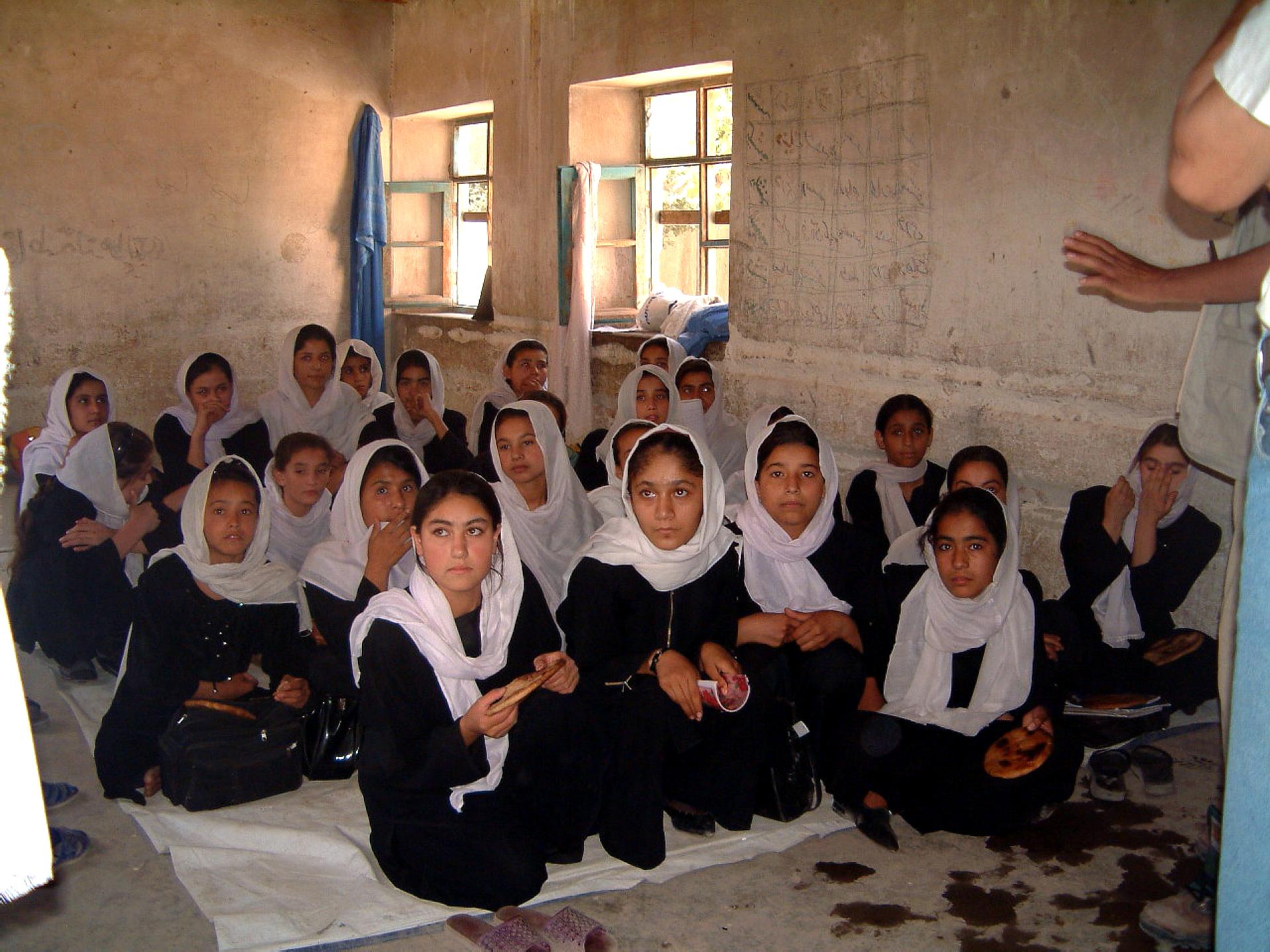
Today, Afghanistan is the only country in the world where girls and women are banned from secondary and tertiary education. This isn’t a gradual restriction; it is a blanket prohibition that shuts off intellectual and economic futures for an entire generation. For girls above roughly sixth grade, schools remain closed not because of pandemics or resource shortages, but because of policy decisions that place gender above learning. These restrictions aren’t temporary. They are entrenched.
Across Afghanistan, the barriers imposed on women go far beyond classrooms. Laws now require women to be accompanied by a male mahram (guardian) to travel more than a short distance. In many regions, women are effectively barred from workplaces, universities, NGOs, public institutions, and even community spaces. Reports indicate that women are prevented from praying at mosques, cutting them off from critical cultural and spiritual life. There are checkpoints and regulations that intimidate, harass, and control women’s movement and participation in any arena that requires visibility or independence.
These policies reflect a coercive ideology that demands women be invisible in public life. The consequences are profound: young women who once dreamed of becoming doctors, engineers, teachers, or policymakers find themselves legally excluded from these paths. Women who once provided essential healthcare, education, or leadership are instead confined to the margins.
For girls in Afghanistan, resilience is a condition of survival. From the moment they are born, they are trained to navigate a world that constantly tells them their presence should be limited, controlled, or denied. Every day becomes a negotiation with oppressive structures: showing up in public, accessing basic services, or even walking down a street can require a careful calculus of risk, permission, and justification. This is a lifetime of endurance in the face of systematic erasure.
Global Attention Without Action
And yet, much of the international response feels disturbingly comfortable with the status quo. Official condemnations, reports, and periodic news coverage are treated as benchmarks of attention, but they rarely translate into sustained, coordinated action. Afghan girls cannot “move on”; their lives are on pause while the world quietly turns its gaze elsewhere.
This is where youth across the globe, including young Afghan voices in the diaspora, must step in not just to witness, but to act. Youth voice matters because they understand how systems of exclusion shape futures. We are inheriting a world shaped by inequities, and we can choose to challenge them.
Youth as Agents of Sustained Pressure
Young people can help amplify Afghan girls’ voices by sharing credible stories and testimonies on social media, in school networks, and on community platforms. It is essential to centre consent and privacy in all storytelling, ensuring that the girls themselves retain agency over how their experiences are represented. Support can also take the form of backing organisations that provide safe alternatives, remote education, and resources for Afghan women who are excluded from public life. Fundraisers, partnerships, and resource-sharing initiatives led by young people can make a tangible difference in sustaining these efforts. Additionally, engaging peers and wider communities through discussions, school forums, and youth panels helps turn awareness into responsibility. Advocacy for policy accountability, such as contacting representatives, joining petitions, and participating in international coalitions, reminds the world that the exclusion of Afghan girls is not acceptable and that governments and institutions must be held responsible.
Each of these actions may seem small in isolation, but collectively, they push back against complacency. Afghan women are not passive victims; they are living resistance. Their resilience is born from generations of navigating exclusion, of asserting dignity in spaces that refuse to acknowledge them, and of persisting even when the world only half-listens. This is more than “youth-led change”; it is a testament to the strength of women whose very existence challenges systems designed to erase them.
The fight for Afghan girls’ rights is an urgent human struggle playing out in classrooms that remain closed, in workplaces that no longer allow women, and in communities where girls are told their potential has limits imposed by law. But this reality also reminds us that change is possible not through passive observation, but through collective, sustained action.
If we raise our voices, if we refuse to let this crisis fade from headlines, and if we anchor activism in solidarity rather than saviorism, then the world will know that Afghan girls are not invisible. Their dreams are still alive, and we must ensure that the world protects not just their futures, but their right to exist, to learn, to contribute, and to be heard.
Lena Nabizada is a Bachelor of International Relations student at the University of Melbourne, a youth advocate, and the founder of Strive Connecting, an initiative addressing racism and supporting refugee and migrant youth. She has contributed to national and international forums on gender equity, youth representation, and climate change and has been featured in media, including Women’s Agenda, The Chronicle, ABC and SBS. Lena is passionate about amplifying the voices of marginalised communities and using storytelling as a tool for change.
This article is published under a Creative Commons License and may be republished with attribution.