The “CNN effect” emerged in the 1990s to describe how real-time media coverage could shape foreign policy. Scholars and policymakers observed that graphic reporting, particularly during crises in places like Somalia and Bosnia, appeared to pressure governments into humanitarian intervention. However, even at its peak, the “CNN effect” was never uncontested.
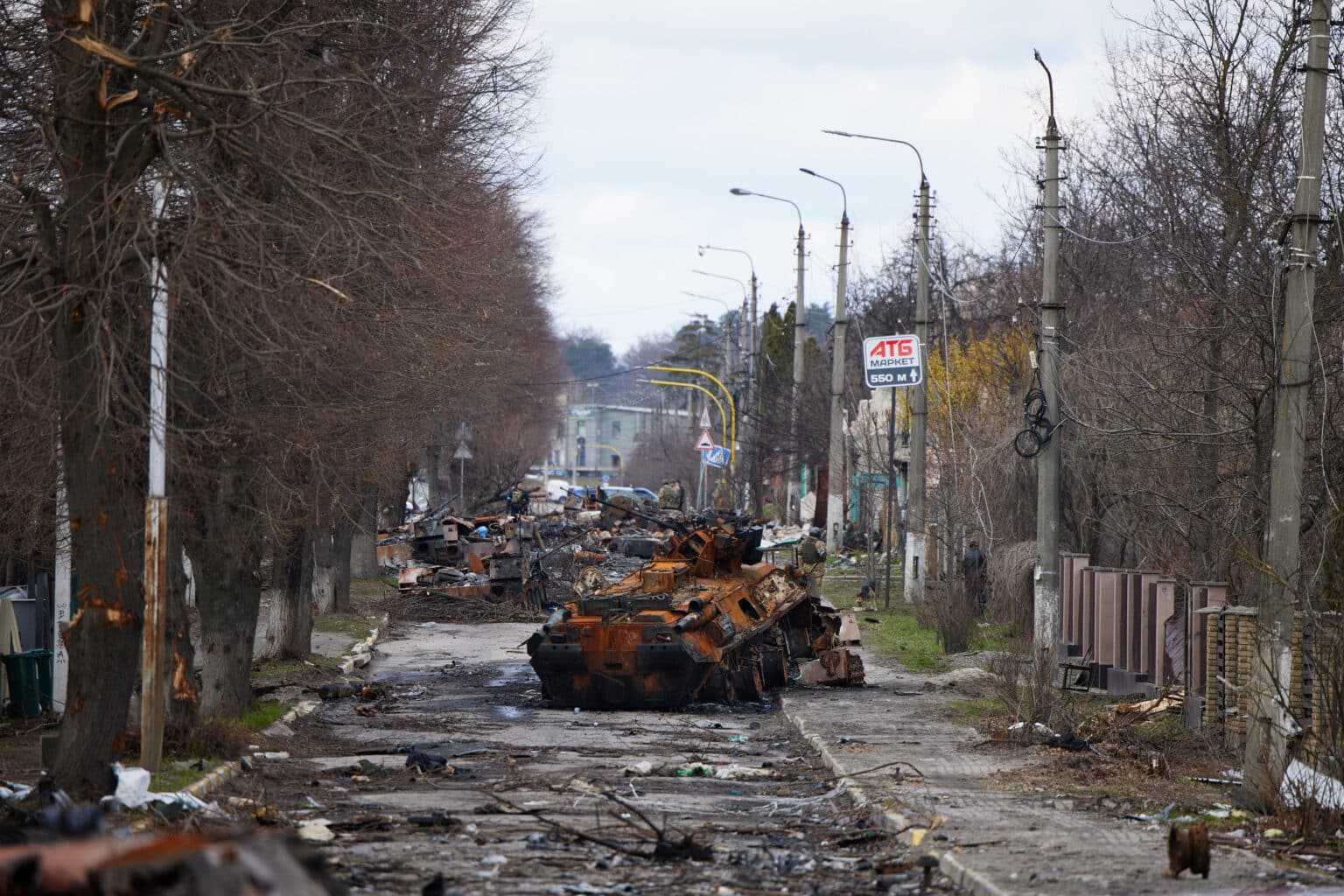
The war in Ukraine has been one of the most extensively documented conflicts in modern history. Images of missile strikes on cities, families sheltering in subway stations, and enduring winter without electricity have circulated globally in real time. The UN Human Rights Monitoring Mission in Ukraine (HRMMU) said that 2025 was the deadliest year for civilians in Ukraine since 2022, according to its monthly update on civilian harm.
Yet despite this constant visibility and the emotional force of these images and data, the war has not been meaningfully constrained. Instead, it continues to escalate and adapt in response to changing battlefield conditions, with drones now accounting, according to Ukrainian officials, for around 70 per cent of casualties. If the so-called “CNN effect” once suggested that media exposure could compel political action or restrain violence, the case of Ukraine points to a more uncomfortable reality: visibility no longer has the constraining power it is often assumed to hold.
Limits of the “CNN effect”
The “CNN effect” emerged in the 1990s to describe how real-time media coverage could shape foreign policy. Scholars and policymakers observed that graphic reporting, particularly during crises in places like Somalia and Bosnia, appeared to pressure governments into humanitarian intervention. However, even at its peak, the “CNN effect” was never uncontested. Subsequent research showed that media influence depended heavily on political context. It was most likely to matter when policymakers were uncertain or divided, and far less influential when governments had clear strategic interests. In such cases, media coverage tended not to drive policy but to reinforce it.
The war in Ukraine reveals these limitations with striking clarity. By any standard, it is a highly visible conflict. The United Nations Office of the High Commissioner for Human Rights has recorded more than 56,000 civilian casualties in Ukraine since February 2022, including over 15,000 deaths, while noting that the true toll is likely higher. At the same time, systematic attacks on energy infrastructure have disrupted electricity, heating, and water supplies across the country, affecting millions of civilians. In many areas, power outages have left households with electricity for only a few hours a day, or none at all, while damage to district heating systems has left residential buildings without heat in sub-zero winter conditions. Journalists have reported extensively from the ground, and the war has dominated headlines across Europe and North America. The human cost has been repeatedly and vividly laid bare.
Visibility Still Shapes Outcomes
At the same time, media visibility has also generated significant, albeit more limited, effects. In Ukraine, sustained international coverage has helped keep the war highly prominent in global public discourse. Research indicates that intensive media reporting has made these concerns more cognitively accessible and normatively significant for audiences, affecting how responsibility and justice are perceived. This visibility has consequently supported ongoing international engagement, including humanitarian efforts and sustained involvement by international organisations, even if media attention alone cannot fully account for the scale of political or material support.
Media reporting has also played a vital role in documenting the human cost of the war, with journalists and human rights defenders collecting evidence of war crimes and maintaining the factual record necessary for future accountability processes. Ongoing coverage ensures that attacks on civilians and infrastructure, as well as patterns of displacement, remain subject to sustained international scrutiny. At the same time, the information environment has become a battleground, where these documented realities are challenged by coordinated disinformation campaigns, and where independent journalism, such as that of Bellingcat, is essential in verifying claims, safeguarding the credibility of evidence, and shaping public understanding of the war.
If the Ukraine war demonstrates anything, it is that the traditional “CNN effect” no longer operates as a reliable mechanism for constraining violence or compelling political action. The question, then, is not simply whether the effect is weakening, but what, if anything, can replace it. The uncomfortable answer is that there is no single substitute. The original “CNN effect” rested on a relatively simple chain: media exposure – public outrage – political pressure – policy change. That chain has fractured. Today’s information environment is more saturated, more fragmented, and more strategically manipulated. Visibility is abundant, but attention is scarce and uneven, and an emotional shock no longer guarantees political consequence. A more sufficient model must therefore move beyond visibility alone and instead combine three reinforcing elements: verification, institutionalisation, and strategic alignment.
Beyond the “CNN Effect”: What Comes Next?
In an era of disinformation and competing narratives, raw images are no longer enough. What matters increasingly is credible verification. Organisations in Bellingcat demonstrate how open-source intelligence can transform scattered images into legally and politically actionable evidence. This shift is significant because while emotional imagery can capture attention, policymakers are more likely to act on verified and actionable evidence, particularly when it aligns with existing political priorities and decision-making timelines. Verification creates durability; it allows information to move beyond the volatility of the news cycle and into courtrooms, sanctions regimes, and diplomatic negotiations. In this sense, the successor to the CNN effect is not faster media, but more authoritative media.
At the same time, influence depends not only on credibility but on institutional integration. Media exposure on its own remains fleeting, spiking during moments of crisis before fading as attention shifts elsewhere. What has proven more consequential in Ukraine is the embedding of documented evidence into institutional processes, whether through the International Criminal Court, UN investigations, or coordinated sanctions frameworks. Media influence becomes effective only when it is absorbed into decision-making structures. A reimagined model would therefore prioritise stronger pipelines between journalists, investigators, and legal institutions, ensuring that visibility translates into enforceable consequences rather than moral outrage alone.
Yet even credible, institutionalised information does not operate in a vacuum. The war in Ukraine shows that media influence remains contingent on strategic alignment. Where states have clear geopolitical interests—as in the case of both Russia and Western support for Ukraine—media coverage tends to reinforce existing policy positions rather than redirect them, particularly when there is elite consensus. Public pressure is most effective when it complements, rather than contradicts, state interests. For policymakers and advocates, this requires a shift in approach: instead of assuming that exposure alone will generate action, humanitarian concerns must be framed in ways that intersect with security, economic, or reputational incentives. Without such alignment, even the most graphic and widely circulated coverage is unlikely to alter state behaviour. Journalistic reporting must not only describe standalone events but also link them to broader patterns and explicitly identify the actors involved to compel action or intervention.
Finally, the erosion of the “CNN effect” reflects a broader problem of outrage fatigue. Continuous exposure to suffering risks normalising it, dulling the very emotional responses that once drove public engagement. What is needed is mechanisms that sustain attention over time, through follow-up reporting, narrative continuity, and systematic tracking of policy responses. In this context, long-form journalism, investigative reporting, and “solutions journalism” become essential. The challenge is no longer to make audiences look, but to ensure that they keep looking, and, more importantly, keep understanding. The “CNN effect”, therefore, might have its limitations. However, the underlying principle of highlighting visuals of crises and events remains fundamentally essential to initiate a call for change.
Akshit Tyagi is an intern at Australian Outlook at the Australian Institute of International Affairs. He is a postgraduate student in International Relations at the Australian National University in Canberra and holds a Bachelor’s degree in Business Administration and a Postgraduate Diploma in Journalism. He previously worked as a business reporter in New Delhi and has written for The Canberra Times, Woroni (ANU student media), The Hill, and other publications.
This article is published under a Creative Commons License and may be republished with attribution.