At the close of COP30, Denmark did something unusual for a small state. It set a target to cut emissions by at least 82 per cent by 2035, placing it ahead of the United Kingdom and most of Europe. Many observers saw the pledge as bold. In reality, it reflects a deeper strategic move: Denmark is using its food sector as a platform for climate security.
This matters because food systems now sit inside geopolitics in a way many states still overlook. For years, governments treated farming as a domestic field shaped by markets, rainfall and consumer trends. That frame no longer holds. Climate shocks hit farms fast and hard. The effects then spread into trade, prices and even politics. Food security has shifted from a rural issue to a strategic one.
Denmark is a clear example of this change. It is one of the European Union’s smallest states, yet it produces about three times as much food as it consumes. Its export strength once rested on predictable seasons and a livestock-heavy model designed for older economic cycles. Those conditions are fading. Extreme weather now hits fields first. Emissions rules tighten. Trade partners are paying closer attention to supply reliability.
Against this backdrop, Denmark launched the world’s first national strategy for plant-based food production earlier this year. In short, the policy funds new crops, products and public meals to cut farm emissions and grow exports, while keeping meat exports and giving farmers an added pathway rather than replacing current ones.
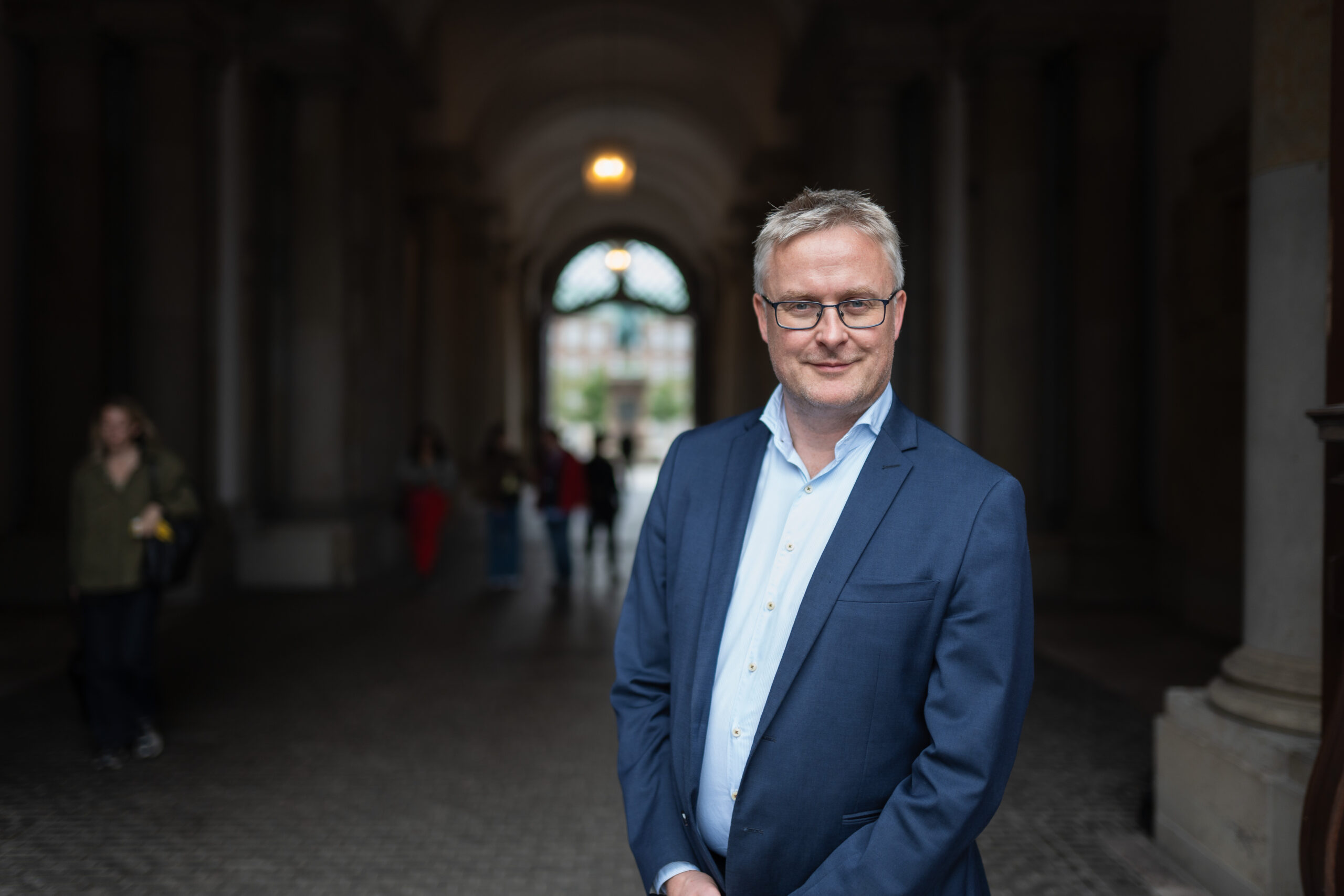
In our coverage of COP30, we spoke with Denmark’s Minister for Food, Agriculture and Fisheries, Jacob Jensen, to understand how the country views this strategy and what it signals about the next phase of climate politics.
Europe’s Turbulence Makes Denmark’s Approach Stand Out
Denmark’s food-sector strategy lands at a time when Europe’s broader climate ambitions are slipping. Several EU governments have pushed back against key parts of the Green Deal. At the same time, the European Parliament has weakened elements of its sustainability rules, raising doubts about the bloc’s capacity to act coherently at COP30.
For Denmark, these political shifts sit within a broader global context of volatility. As Minister Jacob Jensen puts it, “We live in unstable times. We are at war in Europe. We have tariffs coming from the U.S.” They signal Denmark’s understanding that climate policy will be judged through a geopolitical lens: which states can remain stable suppliers, maintain export reliability and absorb price shocks during conflict or trade disputes.
Yet this framing raises questions. Denmark presents itself as a stable supplier at a time when its EU partners are retreating from climate ambition. There is a risk that Denmark becomes an outlier. If Copenhagen wants to push an EU-wide plant-based food plan, as Jensen notes during Denmark’s presidency, it faces resistance from member states that are already pushing back on green obligations.
Climate Exposure as a Strategic Risk
Jensen frames climate change as an immediate security problem rather than a long-term environmental one. He stresses that farmers are “the first ones to be hit” by droughts and heavy rain across Europe, which disrupts production and ripples directly into food prices, export commitments, and political stability. In his view, food security and climate security “go hand in hand,” and states that fail to adapt their food sectors become more vulnerable in geopolitical crises.
This is where Denmark departs from the broader European pattern of climate retrenchment. By treating agricultural emissions reductions as a structural requirement rather than an optional green add-on, Copenhagen is positioning itself as a more dependable food supplier in an unstable external environment.
Diversification, Not Cultural Divide
A central point in Jensen’s argument is that Denmark’s policy is not a cultural intervention but a strategic diversification measure. “People can eat whatever they want,” he says, emphasising that plant-based production is designed to provide “alternative income streams” for farmers, not to displace the meat sector. Farmers, he adds, “will do whatever they can… to make a buck” if stable markets exist.
This is notably different from the polarised debate in Australia, where plant-based approaches are often framed in all-or-nothing terms rather than as commercial risk management, as we have seen recently in the net-zero debate.
Implications for Australia
· Climate-aligned agriculture is becoming a tool of statecraft.
Denmark’s strategy shows how food systems are now used to signal reliability amid geopolitical volatility. As climate shocks disrupt production across regions, import-dependent partners in Southeast Asia, the Gulf and Europe increasingly assess suppliers through a security lens, not only on price or volume.
· EU regulatory trends may shift faster than Australia anticipates.
Denmark’s push for an EU-level plant-based agenda sits alongside broader European sustainability measures, including stricter environmental reporting and carbon border mechanisms. If these norms advance, Australian exporters may face a standards environment in which climate-aligned production becomes a de facto requirement for market access.
· Denmark is reframing “reliability” in ways Australia cannot ignore.
By developing a parallel plant-based industry while maintaining livestock exports, Denmark is signalling that it can absorb production shocks without jeopardising supply. Australia’s exposure to droughts, floods and China-related trade volatility raises the question of whether Canberra can credibly project the same stability.
Denmark’s approach points to a broader change in how food policy is gradually being treated by governments. With climate pressures, tariffs and threats of war dominating geopolitics, food no longer sits outside politics. Government using agriculture as a strategic asset are better placed to absorb shocks. For Australia, the point is not to replicate Denmark, but to understand what its choices signal. Food security is moving closer to energy and defence as a test of national resilience. The question for Canberra is whether it responds while policy options are still its own, or later, when pressure from markets and partners leaves less scope to choose.
Adil Cader is the Founder of Talking Foreign Affairs, which has collaborated with the United Nations on celebrity diplomacy and advocacy initiatives supporting the Sustainable Development Goals, featuring figures such as Bindi Irwin and Josh Groban. He also hosts a foreign affairs podcast that has featured over forty heads of state, including five Australian Prime Ministers and a United Nations Secretary-General. He holds master’s degrees in International Relations and International Law from UWA.
This article is published under a Creative Commons License and may be republished with attribution