Military force can destroy facilities, but it cannot destroy knowledge or intent. If the Trump administration settles for maritime stability without a robust nuclear deal, will today’s victory become tomorrow’s proliferation crisis?
Between the ongoing US-Israel military campaign against Iran since February 2026 and decades of deep intelligence, Iran’s nuclear facilities have been dealt irreparable damage. Tehran’s military infrastructures has also been severely degraded through strikes on key facilities, targeted killings of scientists and commanders, and attacks on bases and research-linked assets. This ongoing war has substantially degraded Iran’s operational and mobilisation capacity and has also placed severe strain on its economy through the reverse blockade of the Hormuz Strait. However, many analysts suggest that while strikes have severely damaged Iran’s critical infrastructure, they have not eliminated its technical knowledge, enrichment capability, and long-term intent.
The core objective of this war is Iran must not be able to rebuild a nuclear weapon for decades to come. Therefore, if the US-Israeli relationship ends the conflict without securing a strong and favourable nuclear agreement, all military gains would quickly lose their value. Reports suggest Iran offered multiple proposals to de-escalate tensions in the Strait of Hormuz, sidelining the contentious nuclear discussions for later.
This creates a serious strategic risk of trading immediate economic relief for long-term nuclear enrichment threat. If Washington accepts peace without a binding nuclear settlement, it may win economic and military war but would fail in the very objective for which this war started, i.e., permanently preventing Iran from becoming a nuclear state. This war has also made the Gulf countries pay a price for hosting US military stations while also absorbing economic shocks due to disrupted energy supply, threat to shipping lanes, and infrastructural damage.
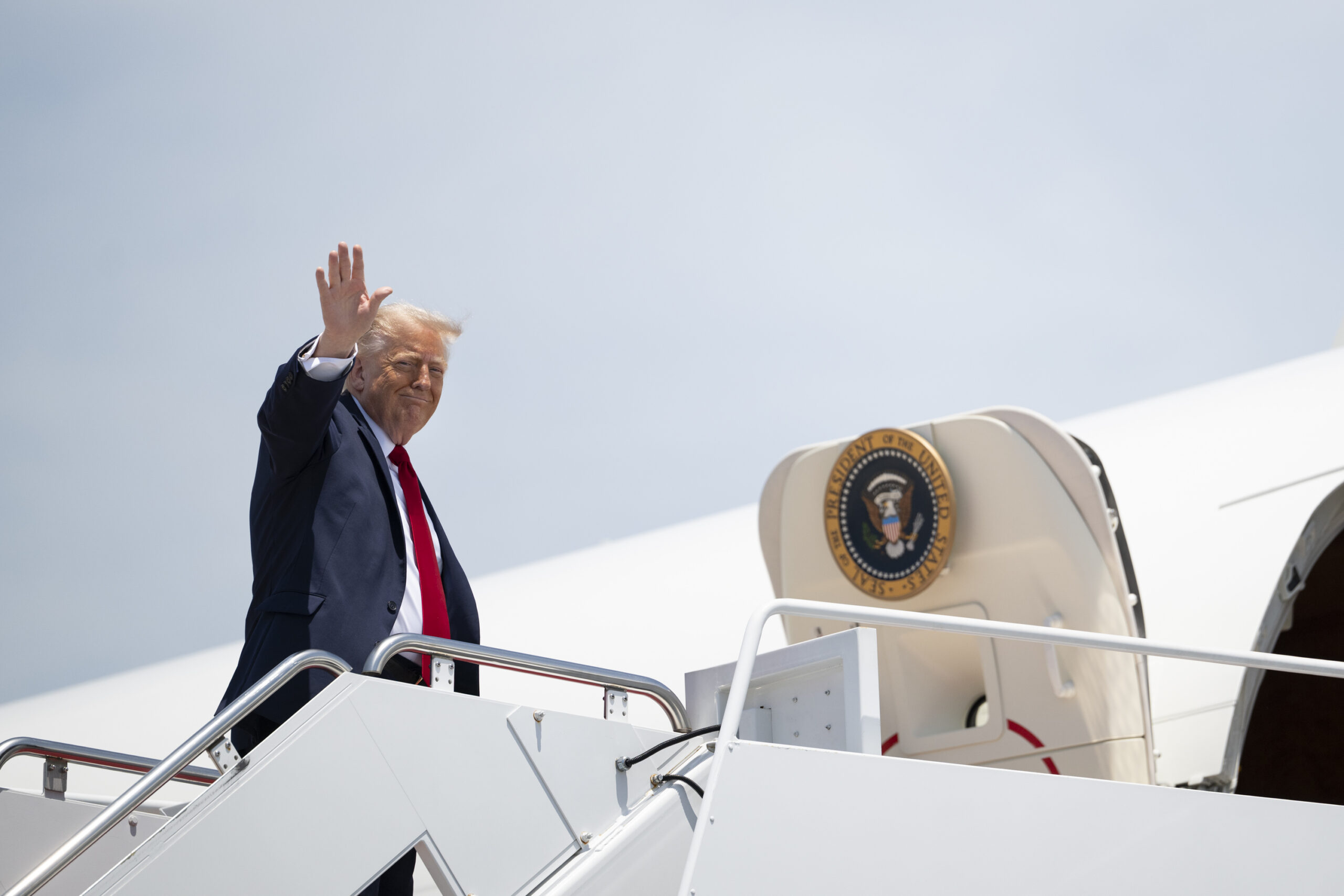
President Trump must not walk away without a nuclear deal. The US-Israel scientific-military ecosystem’s superiority might delay Tehran’s nuclear program, but only tough coercive diplomacy can prevent its return. The present moment has opened a very narrow strategic window in which military gains must be converted into binding political outcomes.
Hard Power Alone Cannot End Iran’s Nuclear Ambition
The aforementioned attacks, killings and sanction pressures have all weakened Iran’s capabilities, but they have not eliminated the political and ideological ambition behind its nuclear ambitions. This is the central problem the US-Israel faces in relying only on hard power success.
Tehran’s desire for nuclear weapons is a strategic and regime-survival decision. Iranian leaders have already observed how even a small state like North Korea protects itself against foreign intervention simply because it is a nuclear state. This perception was strengthened by recent military raids, where regimes, such as Libya, Iraq and now, Iran itself, without nuclear deterrence remain vulnerable to foreign interventions. When a state is under constant threat, the need for deterrence often becomes stronger and more desirable. This means that despite enormous losses Tehran may have suffered, it is even more determined to preserve its nuclear ambitions than to give up or surrender in hard negotiations. In this context, nuclear capability is a necessity and sufficient to deter foreign intervention and an essential guarantee of regime survival.
If history is of any guide, Iraq after the Gulf war, North Korea after years of degrading sanctions, and Iran itself after years of sanctions and intermittent military raids all show that hard power without a political settlement will only make states clandestine, well-networked, more supportive, sympathetic and most importantly more committed to regime survival at any cost. Such pressure only results in underground proliferation which makes monitoring and detection even more difficult. A damaged Iran without a nuclear submission is not a defeated Iran, but a more dangerous Iran.
After achieving major military and economic dominance over Tehran, if the US stops now without an officially binding nuclear deal, Iran has everything to build back slowly. Nuclear facilities can be repaired, new scientists will be promoted, deep and entrenched, hard to detect underground tunnels will be built. While everything is falling apart, for Iranian political elites, the desire to enrich uranium to nuclear weapon-grade is ever more than ever before for the deterrence it will create, especially against US-Israel’s overwhelming show force in this war against them. Therefore, the US-Israel have severely damaged Iranian infrastructures, but what has not shaken a bit is their elites’ spirit, determination and consensus in pursuit of nuclear weapon regardless of the cost to achieve it.
This is why military success is insufficient, however necessary. While it does the necessary damage and coerces adversary to negotiate, it still requires precision in diplomacy that can turn the opportunity into lasting strategic gain. For Gulf actors, who remain within the range of Iranian retaliation and nuclear risks, the failure to translate military gains into a binding agreement would only make the region more insecure and vulnerable.
The Strategic Mistake of a Hormuz-Deal First
Iran’s collapsing economy due to the reverse blocking of the Strait of Hormuz by US naval forces compelled Tehran to offer proposals which prioritises to open the Strait of Hormuz first and leave nuclear issue for latter. This appears attractive to many for it stabilises the global energy prices, shipping cost, and restore maritime security bring immediate relief to global markets but risks serious strategic losses, for US-Israel, gained through hard power and economic coercion. It also provides quick security and economic relief to Gulf as well, whose economies and critical infrastructures are highly exposed to this war. Reopening the Strait of Hormuz is important, but it should not come at the cost of Washington’s larger objective of preventing Iran from rebuilding its nuclear programme which has already reached a threshold level of being called as nuclear-capable state. From strategic perspective, this is a sequencing dilemma, whether to prioritise short-term stabilisation need against long-term non-proliferation threat.
If Washington accepts Tehran’s Hormuz deal without making Tehran commit to nuclear agreements of surrendering enriched uranium and postponing nuclear enrichment for next two decades, Iran will earn time. This will also ease the immense international pressure, normalise and open diplomacy, ease sanctions discussions, and end military confrontation. This will allow Tehran to survive the near-death crisis without giving up on the core issue. In simple terms, Tehran would trade maritime stability in Hormuz for long-term nuclear freedom. Such an outcome would considerably undermine the strategic objective of the war but also weaken the credibility of coercive diplomacy as an instrument of non-proliferation. That would be a historic blunder for Washington.
The US and Israel currently have significant leverage because Iran is militarily weakened and economically strained. This is exactly the moment to demand serious nuclear commitments rather than postpone the issue. Such leverage is rare and time-sensitive; if Washington fails to act decisively, Tehran may gradually recover and rebuild its nuclear position.
Conclusion
Military action has severely damaged Iran’s nuclear infrastructure, but it has not compelled Iranian leaders to abandon their ambitions. Strikes can destroy facilities, but not scientific knowledge, strategic intent, or the political understanding of deterrence. This war has reduced Iran’s capabilities, not its motivation. That is why Trump must not leave without a binding nuclear agreement.
If the US ends the war with only a Hormuz arrangement or a weak diplomatic outcome, Iran may conclude that only nuclear weapons can guarantee regime survival. That would set a dangerous precedent, encourage proliferation, and unsettle the Middle East as regional powers reconsider their security choices. The purpose of this war is to secure a political settlement that delivers long-term stability and firm nuclear guarantees. Trump now holds rare leverage: Iran is weakened, under intense pressure, and negotiating from a position of weakness. Walking away would squander that advantage and turn tactical success into strategic failure. For Gulf states already hit by economic disruption and security risks, such a failure would mean renewed instability.
The Trump administration must insist that war termination, maritime security, regional stability, and easing sanctions are all directly linked to nuclear commitments, which Tehran must make. A serious agreement should include strict inspections, limits on advanced enrichment, control or removal of highly enriched uranium stockpiles, and clear restrictions on weaponisation. Hormuz de-escalation should be part of the package, not a substitute for it. A comprehensive settlement should weave maritime time security with enforceable nuclear agreement, ensuring short-term stability and economic relief do not come at the cost of long-term nuclear risk. Washington must either secure a concrete nuclear settlement with Tehran now or face the unquestionable return of a much stronger, determined nuclear ambition in the future from political elites. History will not only take cognizance of US-Israel military superiority, but it will also account for whether Iran’s nuclear program was successfully blocked or not. The credibility of future non-proliferation efforts will depend on the outcome of this moment. This is why President Trump must not walk away.
Dr Amit Kumar is an incoming Visiting Research Fellow at the University of South Wales, Cardiff, UK. He is also a Research Fellow at Rabdan Academy, UAE, and serves as a Security Expert at the Centre for Joint Warfare Studies, New Delhi, India.
Dr John Harrison is an Associate Professor at Rabdan Academy, UAE. He is an internationally recognised expert on terrorism, aviation security, and political violence.
This article is published under a Creative Commons license and may be republished with attribution.