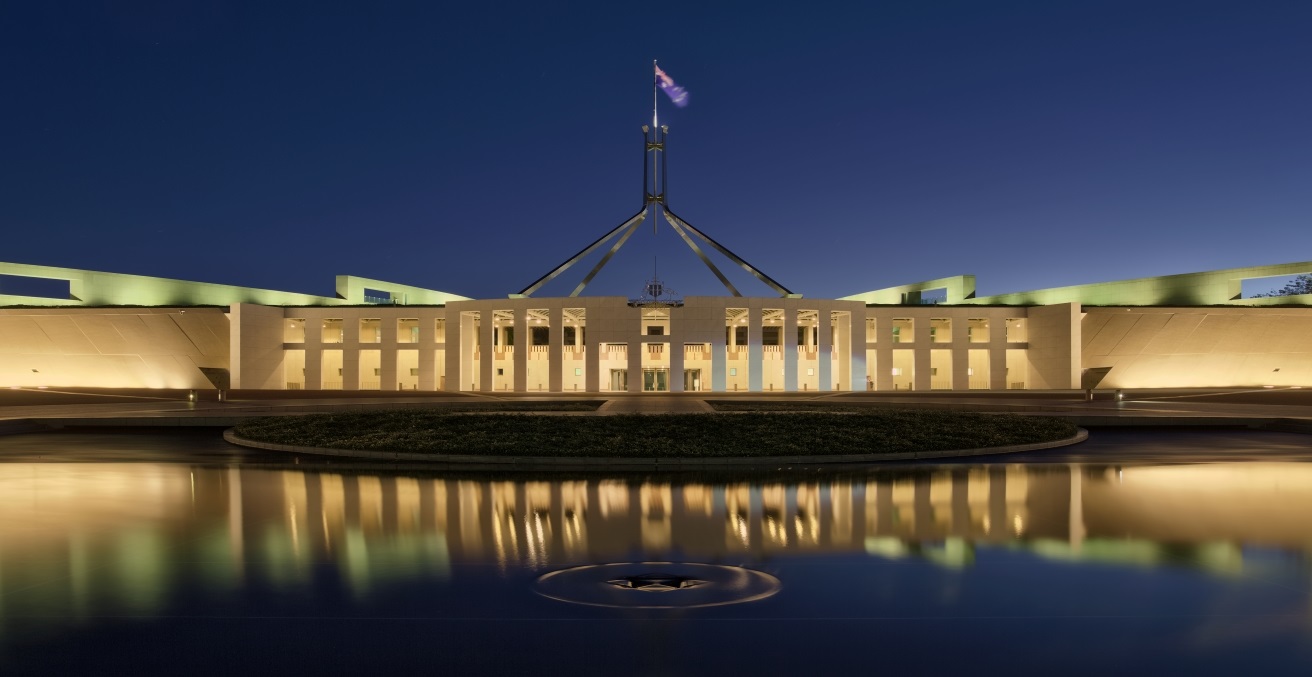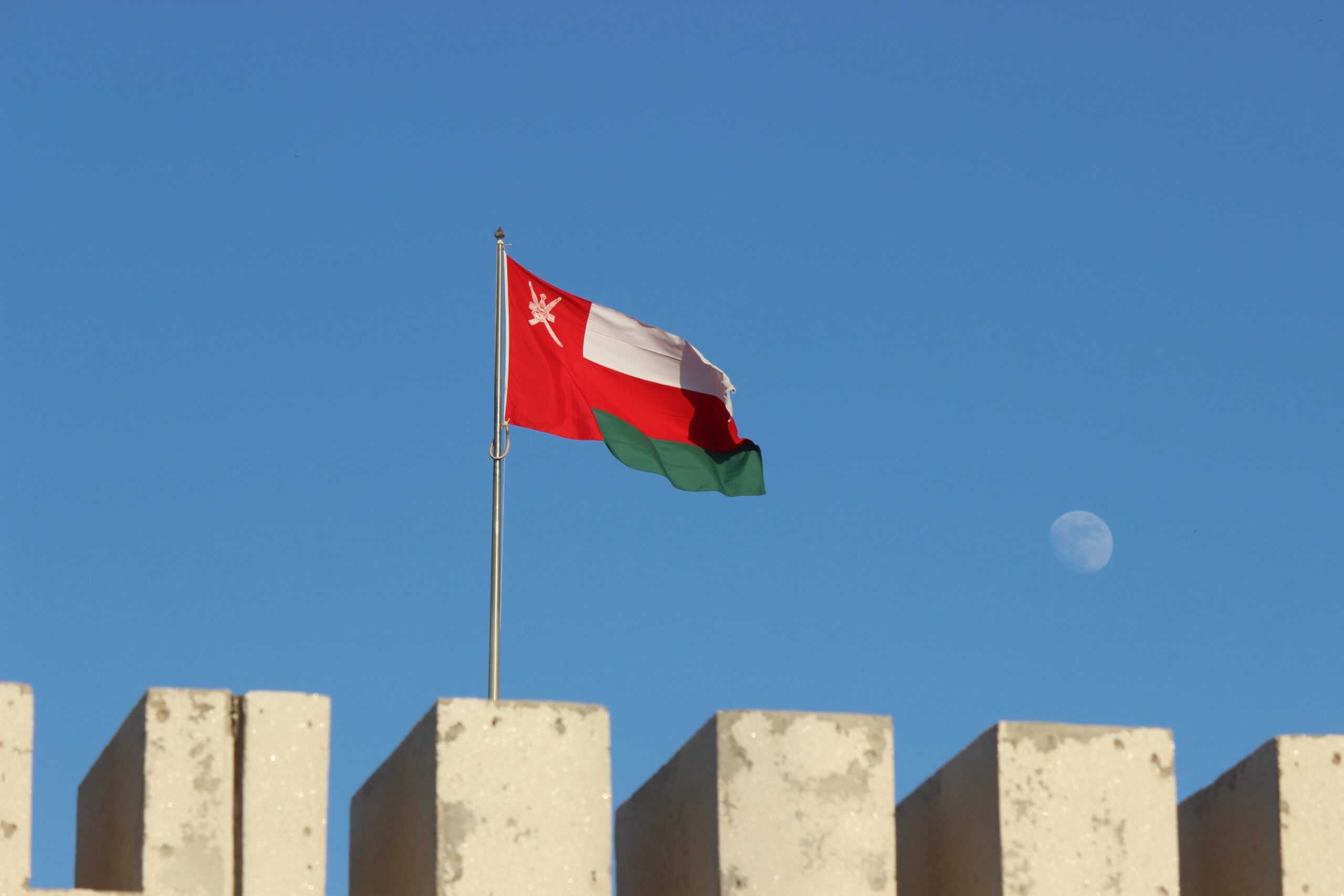
Australia has built a substantial diplomatic network across the countries of the Gulf Cooperation Council (GCC), but one of its most important states still lacks a mission of its own. The Sultanate of Oman, sitting on the Strait of Hormuz and playing an outsized role in regional diplomacy, remains the responsibility of the Australian Embassy in Riyadh. That arrangement is increasingly outdated, and it is time for Australia to open an embassy in Muscat.
Australia’s Gulf diplomatic presence was built gradually since the 1970s. Canberra appointed its first ambassador to Saudi Arabia in 1974, initially in Jeddah, before moving the embassy to Riyadh in 1984. Kuwait and the UAE were first covered through non-resident accreditation before getting their own missions, followed eventually by Qatar in 2016. The logic was fairly straightforward, as Australia’s interests grew, remote accreditation gave way to a permanent presence.
This has not happened with Oman. Australia established diplomatic relations with the Sultanate in 1981 and appointed an honorary consul in Muscat in 2011, but the ambassador remains based in Riyadh. Oman, by contrast, established a resident embassy in Canberra in 2023.
There are four reasons Australia should now close this diplomatic gap. The first is diplomacy, and particularly with Iran. Few countries have proved as useful as Oman in keeping channels open between Tehran and Washington. Muscat hosted the secret talks that helped pave the way for the 2015 Iran nuclear deal (JCPOA), and it has remained an important intermediary ever since. That role was on display again across 2025 and 2026. Omani Foreign Minister Badr Al-Busaidi repeatedly shuttled between American and Iranian officials, with several rounds of talks taking place under Omani auspices to keep negotiations alive and avoid war.
Oman’s position has at times rattled Washington, leading President Trump to threaten to bomb it twice, despite long standing US-Oman ties that extend back to 1833. During the ongoing war a senior US official accused Muscat of behaving duplicitously and briefly cut it out of the process. But when talks resumed, Oman was still the channel all sides trusted most. Muscat maintains relationships and access that others cannot easily replicate. If Australian diplomats want to better understand where the Iran conflict is heading, there is considerable value in being where many of those conversations actually take place, rather than trying to follow them from Riyadh.
The second reason is geography. Oman is one of only two states bordering the Strait of Hormuz, the chokepoint through which a significant share of the world’s seaborne oil trade passes. It is also where Gulf energy security, freedom of navigation and the Indian Ocean sea lanes central to Australian strategy come together.
The ongoing war with Iran made that geography impossible to ignore. As shipping through Hormuz was disrupted and the question of transit fees emerged, Oman coordinated with the International Maritime Organization to open a temporary, toll-free maritime corridor, with vessels routed on published coordinates. The legal principle underneath the dispute is significant. Under the United Nations Convention on the Law of the Sea, no state may levy tolls for passage through an international strait like Hormuz, though a coastal state may charge for services it actually provides, such as pilotage or navigation aids. That is the crux of the fee fight now playing out, and Oman sits at the centre of it.
For Australia, Hormuz is no longer a distant Middle Eastern security issue. Disruption there affects energy markets and trade routes running directly into the Indo-Pacific. A mission in Muscat would put Australian officials close to the governments, shipping interests and diplomatic negotiations dealing with the Strait in real time.
Third is the Indian Ocean, and the commercial opportunity that comes with it. Much of Oman’s coastline faces the Arabian Sea and open Indian Ocean rather than the Gulf, and its economic strategy increasingly reflects that geography. Oman’s Duqm port is the clearest example. The deep-water port and 2,000 sq km Special Economic Zone sits outside the Strait of Hormuz, on the east-west shipping lane between Asia and Europe, giving it direct access to Indian Ocean trade routes without the Hormuz bottleneck. That location has made it central to Oman’s effort under Vision 2040 to build new industries around refining, petrochemicals, logistics, ship repair and, increasingly, green hydrogen and ammonia. It is also why the port has drawn interest from powers thinking about Indian Ocean access rather than Gulf trade alone.
India has expanded its strategic and naval interest at Duqm, while Japan and other Asian economies are looking closely at Oman’s emerging ‘green’ hydrogen sector. There should be real opportunities for Australian firms in resources, agriculture, education, clean energy and logistics. Two-way trade between Australia and Oman reached AUD 1.3 billion in 2024, with Australia exporting aluminium ore, meat, wheat and barley, and the relationship has room to grow as Oman diversifies. In the same year, a consortium including Australia’s Fortescue was awarded the rights to develop, build, own and operate a large green hydrogen project in Oman. As more Australian companies explore opportunities in the Sultanate, the need for DFAT commercial support on the ground grows.
Finally, Australians in Oman need support. As Oman is covered from Riyadh, Australians who need consular assistance are ultimately relying on a mission in another country, operating under a different legal and political system. Australia does have an honorary consul in Muscat, and DFAT officials from Riyadh make occasional consular outreach visits, but that is not the same as a resident diplomatic and consular team.
I have personally seen what the difference looks like. I was living in Qatar in 2016 when Australia opened its embassy in Doha, and the change was immediate on both fronts. Australian diplomacy carried more weight once there was a mission in town rather than an accreditation held from another capital. For Australians living there, routine consular business also stopped being a cross-border hassle. In normal times, covering Oman from Riyadh is merely inconvenient, but in a crisis it could become serious. The disruption across the GCC this year showed how quickly movement around the Gulf can seize up, and consular planning works far better when officials are already on the ground.
None of this requires a large embassy. An ambassador backed by a small political, economic and consular team would give Australia a much-needed presence. Canberra has consistently expanded its Gulf network when its interests justified being on the ground, and Oman has now reached that point. With Hormuz under pressure, regional diplomacy again running through Muscat, and Australian strategy increasingly stretching across the Indian Ocean, the case for a resident Australian embassy has never been stronger.
Dr Adel Abdel Ghafar is a Senior Resident Fellow at the Australian Strategic Policy Institute. His work focuses on the geopolitics and geoeconomics of the Middle East and North Africa (MENA), with a particular emphasis on the growing linkages and interdependencies between the Middle East, Asia, and the Indo-Pacific.
This article is published under Creative Commons License and may be republished with attribution.