Pakistan and Armenia have ended decades of diplomatic estrangement, but normalisation does not equate to strategic realignment. Their emerging relationship will depend on whether both sides can deepen diplomatic ties while preventing their respective alliances with Azerbaijan and India from becoming a veto on engagement.
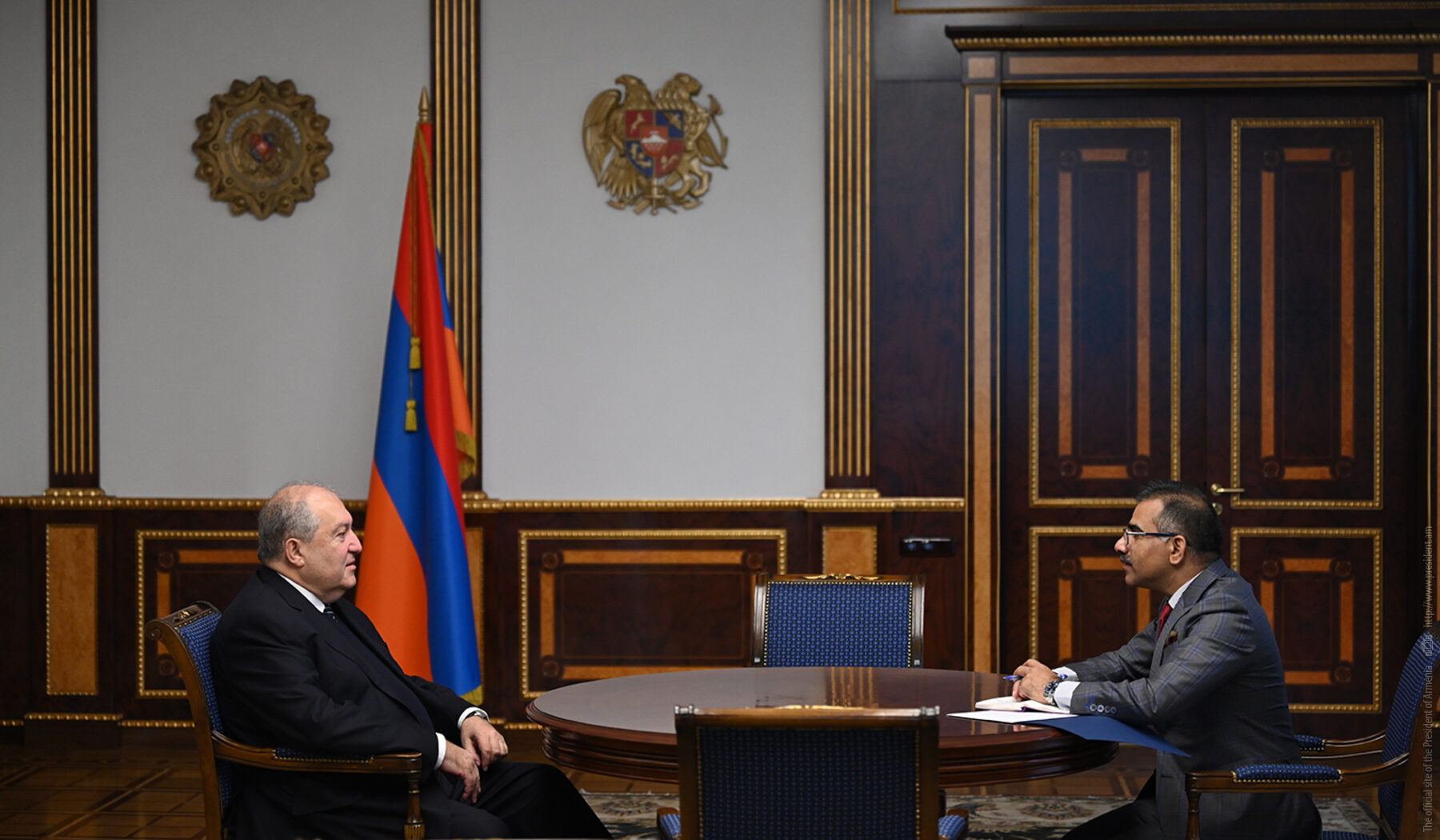
For over 30 years, there was an unusual diplomatic vacuum between Pakistan and Armenia. It was unusual for several reasons, one being that there was no direct conflict between the two countries and the other being that there were no substantial historical hostility or bilateral disputes that would naturally explain such a prolonged diplomatic rupture. On July 6, 2026, however, Armenia designated its ambassador in the United Arab Emirates, Karen Grigoryan, as its first Ambassador to Pakistan. The appointment came less than a year after Pakistan recognised Armenia on August 31, 2025, marking the end of Pakistan’s long-standing absence from diplomatic relations with Armenia as the only UN member state to refuse to recognise the country. However, this breakthrough in bilateral relations does not necessary signal a strategic realignment. Pakistan and Armenia are not turning into strategic partners; rather, they are learning how to deal diplomatically with each other within an interwoven regional security network.
The Paradox and the Solution: Pakistan in Solidarity with Azerbaijan
Pakistan’s previous policy was always filled with a peculiar paradox. Azerbaijan and Armenia were at war, had no diplomatic relations, and had been split over the Nagorno-Karabakh region, but Baku still dealt with Yerevan as a sovereign entity. Azerbaijan challenged Armenia on issues of territory and security, while Pakistan went further and used solidarity with Azerbaijan to expel Armenia altogether from its diplomatic fold. The reasons for the withholding of recognition were not that Pakistan had a direct dispute with Yerevan, but because Islamabad had linked Armenia’s statehood to the outcome of another country’s conflict.
This stance was rendered more precarious with the territorial issue on which Pakistan’s policy was built being completely redefined and Azerbaijan moving to a new stage of negotiations with Armenia. On 8 August 2025, Baku and Yerevan signed an agreement on peace and interstate relations in Washington and agreed to take further steps for signature and ratification. The Pakistani government welcomed this development, and within weeks, Pakistani Foreign Minister Ishaq Dar and Armenian Foreign Minister Ararat Mirzoyan signed a joint communique for the establishment of diplomatic relations between Pakistan and Armenia. Pakistan has not normalised relations with Armenia because it has abandoning Azerbaijan, but it has normalised relations because Azerbaijan’s changed stance has provided Islamabad with the political room to do so as well.
This sequence of events matters when trying to understand the evolving relationship between Pakistan and Armenia because Islamabad’s move to Yerevan was not a precursor of Baku’s path toward peace, but rather an extension of it. Even Prime Minister Shehbaz Sharif’s congratulatory message to Armenian Prime Minister Nikol Pashinyan in June 2026 on the surface felt friendly but was carefully bounded. While it included a call to deepen bilateral relations it also reminded observers that cooperation between Armenia and Azerbaijan was a strategic priority for Pakistan as a partner of Azerbaijan. Interestingly, the Pakistani government has yet to make an official announcement about the appointment of its own reciprocal non-resident ambassador. So, it can be said that the relationship is being institutionalised, but cautiously.
Shifting and Growing Defence Priorities in South Caucasus
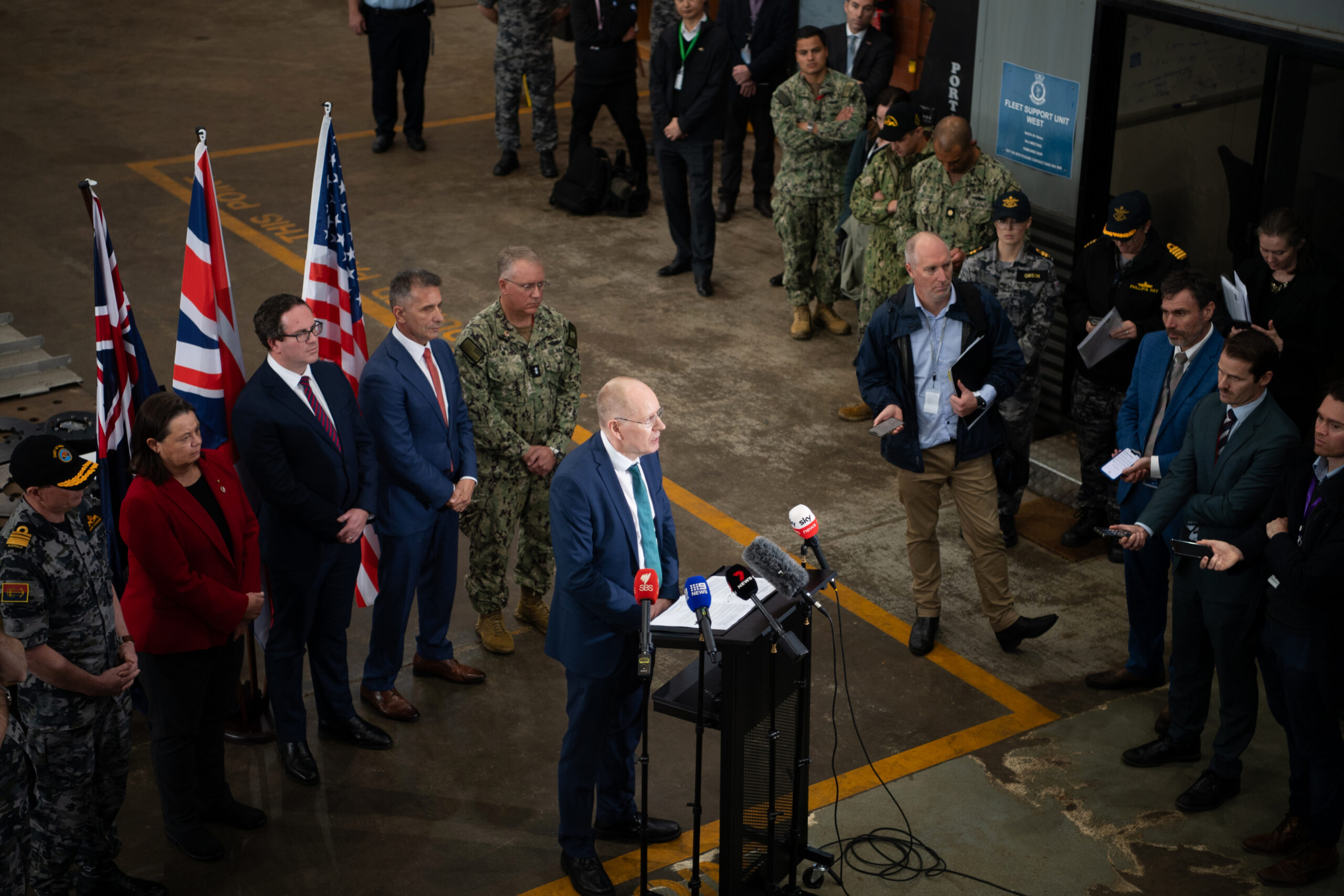
The expanding defence ties in the South Caucasus only further underline this caution. Azerbaijan, a staunch supporter of Pakistan’s Kashmir cause, has received the Pakistan-China-made JF-17C Block III aircraft as a means of bolstering Baku’s air power. Armenia, on the other hand, has increasingly shifted towards India as it seeks to decrease reliance on Russian military aid. The Defence Minister of India formally flagged off the first batch of guided Pinaka rockets to Armenia in January 2026. Additionally, in a landmark move that could alter the military balance in the volatile South Caucasus, Armenia is reportedly nearing the conclusion of a major defence agreement with India to acquire a fleet of Su-30MKI multirole fighter jets to counter the Pakistan-Azerbaijan axis. These deals are not only for the installation of equipment in two relatively modest militaries but also for linking up South Asian defence sectors with a region that remains in a fragile security equation.
The South Caucasus is thus a part of the South Asian strategic competition, however, it is not a straightforward proxy battlefield. Azerbaijan and Armenia are turning to Pakistan and India, respectively, as defence partners for diversification, while Islamabad and New Delhi are emerging as geo-strategic players beyond South Asia. However, this does not mean that Baku and Yerevan are giving up their autonomy to a faraway patron. In a similar vein, not all Pakistani sales to Azerbaijan can be perceived as anti-Armenian, and not all Indian deliveries to Armenia can be seen as anti-Pakistani. The competition indeed influences the market, but it does not dominate it.
Progress Requires Gradual Steps
This is why, in the new Pakistan-Armenia relationship, change will likely take place in gradual, pragmatic steps rather than any dramatic geopolitical turning point. The opportunities are clearly there, but the more meaningful signs of progress will be practical and measurable, for instance, Pakistan appointing its own ambassador to Armenia, both countries establishing more permanent diplomatic representation, and the start of regular trade and/or political consultations. But again, any substantial development is still likely to be gradual, as the current bilateral trade is thin, the political sphere is not that familiar, and neither government will jeopardise its more valuable relations for the sake of a new one. What is perhaps more tangible in its value, however, are the more elementary benefits of diplomacy, i.e., the long-awaited benefit of direct communication, the minimisation of misunderstandings, and the space for cooperation where interests converge.
The true test for this newly formed relationship will be when the interests diverge. For instance, Pakistan is unlikely to dilute its military and political relationship with Azerbaijan, and Armenia has little reason to back off from India as it redefines its military defence plans. Therefore, normalisation can only be sustained as long as both countries refuse to use third-country contacts as a veto on bilateral contact. That demands people-to-people ties, exchanging embassies, and developing a disciplined relationship capable of absorbing disagreements over arms sales, the Kashmir issue, or the South Caucasus dispute that prevents them from severing diplomatic ties, and returning to complete silence.
Overall, the takeaway might be narrower, but it is pivotal. Islamabad and Yerevan have finally come to terms with the fact that mere diplomatic contact does not require an upheaval of geopolitical alignments and they can disagree diplomatically instead of by absenting themselves.
Muhammad Rauhan Rasheed is an Erasmus Mundus Master’s Scholar in the Religious Diversity in a Globalized World program. He has studied at the University of Groningen, the University of Córdoba, and the University of Bern. He is a frequent contributor to publications including The Diplomat, E-International Relations, and Modern Diplomacy.
Maheen Tanveer is an Erasmus Mundus Master’s Scholar in the Religious Diversity in a Globalized World program. She also holds a master’s degree in Population and Development from HSE University in Moscow, as well as a bachelor’s degree in International Relations from the National Defence University in Islamabad.
This article is published under a Creative Commons License and may be republished with attribution.