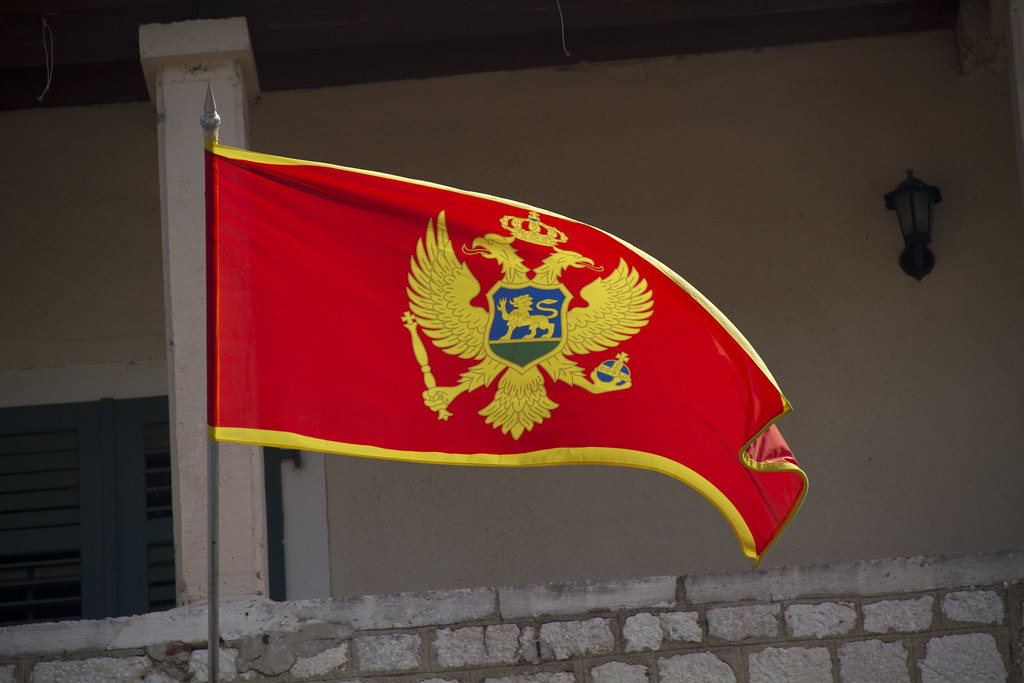
When Montenegro’s President Jakov Milatović visited Washington in November 2025 to observe 120 years of diplomatic relations between Montenegro and the United States, he offered a line in his speech that resonated widely in diplomatic circles: “You have the American Dream; we have a European Dream.” It was succinct and pointed.
For a small Balkan state of about 670,000 nationals navigating a shifting geopolitical landscape, of which 41 per cent identify as Montenegrin and 33 per cent as ethnically Serb, 9.5 per cent as Bosniak and 5 per cent as Albanian, the statement captured a deeper strategic truth. The Montenegrin Government sees the country’s security, prosperity, and identity as firmly anchored in the West. Increasingly, the European Union (EU) views Montenegro as a crucial test case for whether enlargement remains viable and whether a merit-based process can still yield results. The two have formed a strategic partnership and continue to work on deepening political relations.
But is Montenegro likely to be the next country to join the EU and replace Great Britain as its next member state? The answer is cautiously optimistic, but hinges on environmental governance, domestic stability, and Europe’s willingness to pursue its horizontal widening, alongside institutional deepening.
Slovenia was the first country from the former Yugoslavia to join the EU in 2004, though not the first Balkan state, as Greece entered the EU as its tenth member in 1981. This history of regional accession provides important context for evaluating Montenegro’s bid.
For Australian observers, Montenegro illustrates how small states navigate great-power competition by leaning into institutional anchoring mechanisms. Montenegro also recently integrated into the EU’s computerised transit system. This move, which came into force on 12 October 2025 with a six-month adjustment period and for which the EU provided €3 million, will help Montenegro meet Chapter 29 (Customs Union) requirements, improve its border control processes, and reduce costs for businesses by increasing efficiency in customs and migration control.
A Linear Accession Trajectory with Significant Milestones
Compared with its Western Balkan neighbours, Montenegro’s EU path has been notably linear and technically advanced. After declaring independence in 2006 following a tightly contested referendum, Montenegro signed its Stabilisation and Association Agreement (SAA) in 2007, which entered into force in 2010. It applied for EU membership in 2008 and obtained candidate status in 2010. Accession negotiations formally opened in June 2012.
Observers note that progress has been steady. According to the European Commission’s 2025 Report, all 33 negotiating chapters have been opened, with seven provisionally closed.
The 2025 Enlargement Package identifies Montenegro and Albania as the Western Balkan front-runners. Prime Minister Milojko Spajić has set an even more ambitious target of EU and Eurozone membership by the end of Commission’s term in 2029. These dates are aspirational yet reflect genuine progress. Montenegro has completed much of the legal alignment required; the subsequent challenge lies in implementation of the acquis, particularly where EU norms demand significant administrative and capital investment.
Besides the two countries Serbia, as the largest economy in the Western Balkans where tens of thousands of Montenegro-born reside, also wishes to see the EU membership gate open for its citizens in the same time period, having applied for EU membership only 12 months after Montenegro.
Security Anchors: NATO Membership as Geopolitical Alignment
Any deeper examination of Montenegro’s European trajectory must begin with its Euro-Atlantic security orientation. Montenegro joined the North Atlantic Treaty Organization (NATO) in June 2017, becoming the alliance’s 29th member. This followed a contentious domestic debate, including protests and a 2016 coup attempt linked to foreign operatives.
Regionally, Montenegro’s timing was strategic. Neighbouring Albania was already within NATO structures since 2009 alongside Croatia, with Podgorica’s bid to join the alliance benefitting from their know-how and previous experience. Montenegro’s accession signalled a decisive geopolitical commitment to Western institutions. In an era of East-West tensions and questions over long-term US engagement in Europe, small states that make clear strategic choices gain disproportionate diplomatic value. A NATO-anchored Western Balkans benefits Brussels and Washington alike.
The Environmental Test: Chapter 27, Infrastructure, and Constitutional Obligations
Despite strong political alignment, Montenegro’s EU path now rests on a technically demanding area of compliance, including in environmental legislation.
Montenegro became the first country in the world to define itself as an “ecological state” in its Constitution, obliging its government to prioritise environmental protection, sustainable resource use, and alignment with international ecological standards. These expectations now intersect directly with the EU’s demanding requirements under Chapter 27 (Environment and Climate Change).
To close it, Montenegro must undertake major reforms and build significant infrastructure. Alignment with EU environmental standards, particularly in municipal water and waste management, is estimated to cost more than 2 billion Australian dollars.
The controversy surrounding the wastewater collector and treatment plant in Botun, near Podgorica in the Zeta municipality, illustrates the political sensitivity of these reforms. The project is essential for reducing sewage discharge and meeting EU benchmarks. For the EU, the Botun case is a litmus test, whether Montenegro can carry out difficult, long-term infrastructure projects that may be unpopular locally yet necessary for meeting its constitutional and European obligations? Many Zeta residents are vocally opposed to the approved location of the plant’s construction, also citing environmental grounds for their opposition and the lack of popular local consultation.
However, without credible progress on environmental compliance, particularly wastewater and solid-waste management, Montenegro cannot close negotiations, regardless of political goodwill.
Domestic Politics and Rule of Law Reforms
Though successive Montenegrin governments have declared EU membership a national priority, political stability remains fragile. Government changes, shifting coalitions, and identity-based tensions continue to challenge policy continuity. Chapters 23 (Judiciary and Fundamental Rights) and 24 (Justice, Freedom and Security) required sustained reforms, across multiple political cycles, remain Montenegro’s most persistent risk.
Yet the country enjoys a unique advantage with its public support for EU membership consistently ranking among the highest in the Western Balkans.
Two-thirds of citizens, as shown in surveys, support accession and this places pressure on political elites to maintain reform momentum.
The First EU Enlargement after Brexit
If the EU admits a new member in the short term, say by the next five years, Montenegro remains the most likely candidate. It is small, a NATO member, strategically aligned, technically advanced in negotiations, and symbolically important for demonstrating that EU enlargement remains credible.
The risks, including environmental infrastructure delays and political instability affecting rule-of-law reforms, are significant but manageable.
For Australia, Montenegro’s trajectory also highlights how EU conditionality shapes domestic governance, how small states navigate major-power dynamics, and how enlargement can stabilise regions exposed to external influence. Montenegro may be small, but its progress provides insight into Europe’s future strategic architecture.
Montenegro’s accession would mark the EU’s first enlargement since Brexit occurred in 2020, symbolically reinforcing the bloc’s openness even as the United Kingdom continues to adjust to its departure.
Dr Nina Markovic Khaze is an Australian political scientist, international speaker, and educator with deep expertise in the Western Balkans. A graduate of the University of Western Australia and the Australian National University, she has taught at Macquarie University and UNSW across undergraduate, postgraduate, and executive programs.
Between 2007 and 2014, Dr Markovic worked in Canberra in senior parliamentary research roles within the Parliamentary Research Service of the Parliament of Australia, providing high-level and confidential analysis on European and Middle Eastern affairs.
She has published extensively in Tier-1 academic journals and is a frequent contributor to policy debates through public lectures, expert commentary, and international conference presentations. Dr Markovic’s work bridges rigorous scholarship with practical policy engagement, making her a respected voice in Australian foreign policy and international affairs.
This article is published under Creative Commons License and may be republished with attribution.