The territorial dominance of the Islamic State (IS) has gone, but its ideology is fueling lone wolf attacks across Australia. Bondi Beach massacre highlights the need for more innovative prevention strategies to counter evolving online propaganda. Ultimately, resolute leadership can transform tragedy into enduring resilience for a safer nation.
The Latest Bondi Attack:
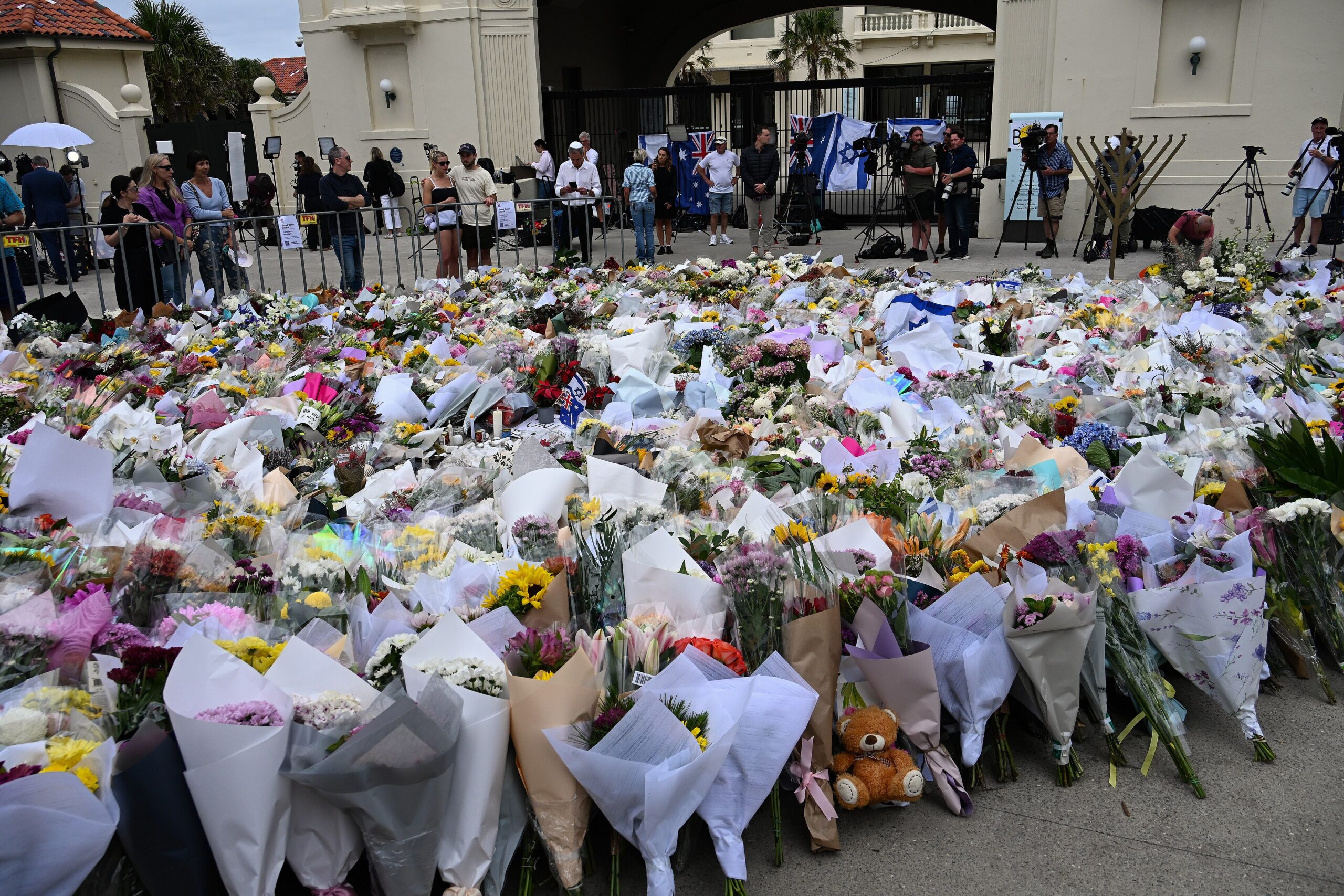
The beaches of Sydney have long been symbolised for safety and leisure. However, the recent Bondi Beach massacre has shattered this illusion. Reportedly, a father and son duo took the lives of fifteen people during a Hanukkah celebration. Police promptly declared that this assault was inspired by IS ideology, while the attackers left a trail of homemade Islamic State flags in their vehicle. Moreover, one of the gunmen has had prior links to the IS network, as investigated by the Australian Security Intelligence Organisation. Since 2014, the group’s propaganda has explicitly used lone wolf attacks globally. This illustrates the group’s capacity to operate with low-tech but can simultaneously conduct high-impact strikes individually. The Bondi assault replicates the same idea where self-radicalised individuals with minimal coordination have caused significant terror.
IS-Backed Pattern of Lone Wolf Violence:
The Bondi massacre shares a grim pattern of IS-backed violent maneuvers on Australian soil. In another incident, a young teenage boy linked to IS sympathisers during a church service in Sydney stabbed Mar Mari Emmanuel. The attack was captured and shared online, thereby propagating the IS narrative of religious warfare. Similarly, earlier incidents also highlight the persistence of the threat. For instance, in 2014, Martin Place Lindt Café siege in Sydney that ended up with two hostages killed after the allegiance by a gunman to IS. Likewise, another teenager stabbed two counter terrorism officers in Melbourne while shouting, “This is for Syria”. These instances all demonstrate the success of the Islamic State in transforming online rhetoric into real-world action. Is the employment of lone actors a post-caliphate weapon of choice? The IS lost territory with the passage of time, and the group started relying on digital propaganda to inspire the autonomous perpetrators of violence. Although decentralised, a significant domestic threat has evolved for Australia.
Australian Response:
By blending military, legal, and intelligence initiatives, Sydney has mounted a comprehensive defence against such threats. Moreover, as part of Global Coalition, the Australian military launched airstrikes and training programs against Islamic State in Iraq and Syria thereby, contributing to dismantle the caliphate.
Locally, the Australian government lists Islamic State and its regional affiliates like Islamic State of East Asia under strict laws like travel bans, asset freezes and citizenship revocation for dual nationals involved in terror maneuvers. The Australian Federal Police dismantle cells via surveillance and arrests in an attempt to combat digital radicalisation pipelines.
Repatriation causes complexity. Australia has worked to bring back women and children from IS-linked networks in Syria. However, the process was not easy, as returnees were subject to intense deradicalisation amid public backlash. These efforts demonstrate pragmatism in managing the human fallout of foreign fighters.
Why Threat Persists?
The recent Bondi attack has revealed vulnerabilities despite significant efforts to counter the threat. Prime Minister Albanese has announced an intelligence evaluation and the implementation of strict laws to address radicalisation and propaganda in the wake of the attack. Even though reactive policies fall short against the agile propaganda of the Islamic State. Lone wolves evade traditional detection by their solo movement. Radicalisation occurs through encrypted apps or dark web forums, where any form of grievance serves as an entry point. The diverse, resilient communities of Australia face radicalisation risks in isolated pockets.
Way Forward:
Australia must be innovative to outpace the Islamic State. Cautiously tailored deradicalisation programs, community-led interventions, and monitoring of extremist content are the need of the time. International Intelligence sharing may be beneficial for understanding propaganda trends, and returnees remain vital.
Australia must design a comprehensive mechanism to curb such future terrorist attacks. Primarily, the state should equip the agencies with state of the art AI tools to identify militants having ties with the Islamic State. Technological advancement may guide well to track explosive precursors, simultaneously, dismantle data silos impeded by the outdated infrastructure. Secondly, Australia may collaborate via AUKUS Pillar II on US DARPA projects to fight against foreign amplified digital propaganda radicalising youth. Thirdly, a significant step would be to strengthen school curriculum against “othering narrative” to breed a healthy multicultural society. Last but not least, public awareness campaigns may empower communities to spot signs of radicalisation beforehand. Bondi attackers were the digital heirs of the Islamic State. The Australian nation can reclaim its streets from the lone wolf shadow with comprehensive, innovative counterstrategies.
Ms Maheen Farhat Raza is a researcher specialising in terrorism and counter terrorism studies. She is based at the National University of Modern Languages. She may be reached at maheen.raza@numl.edu.pk.
This article is published under a Creative Commons License and may be republished with attribution.