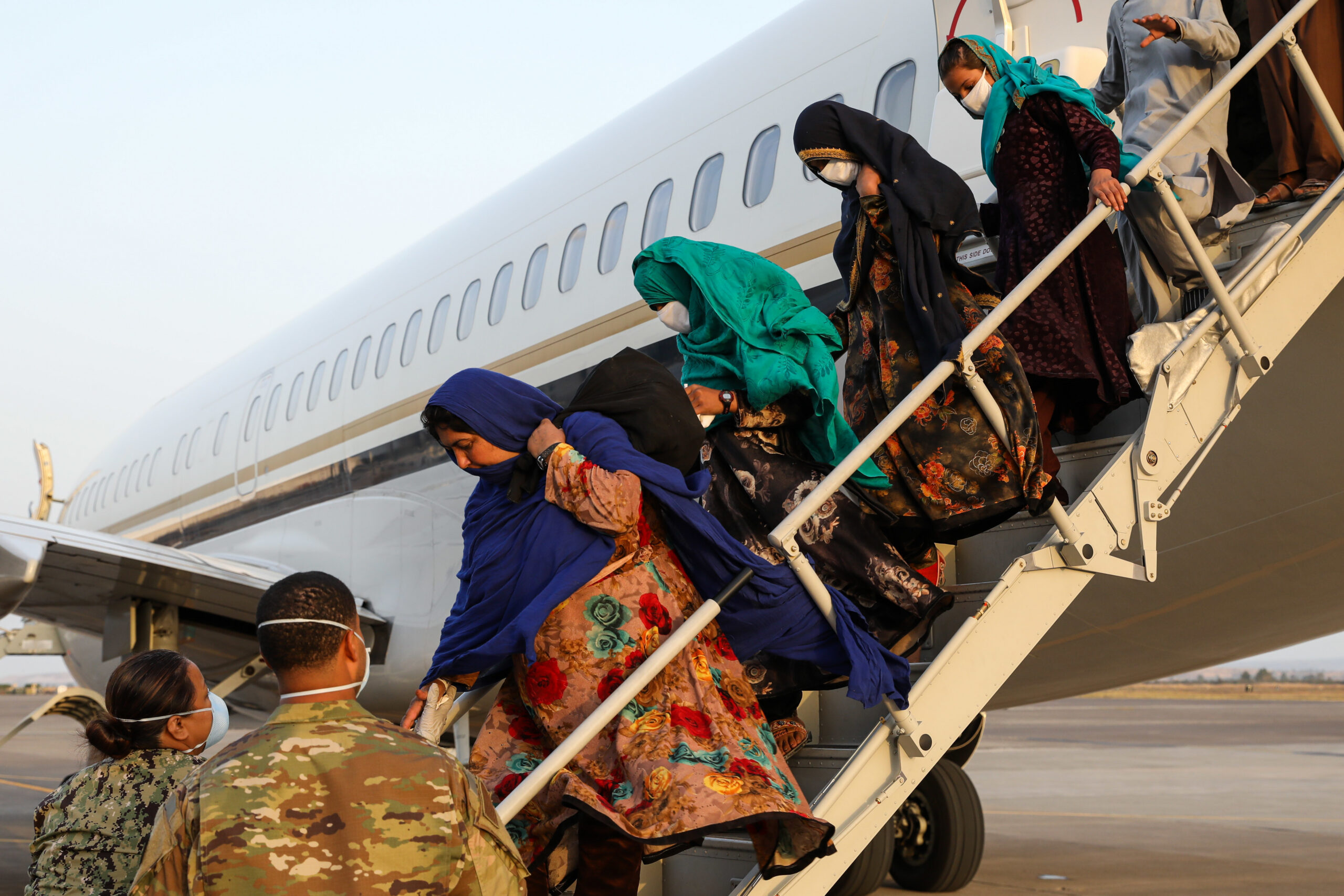
Five years have passed since Australia vacated Kabul when the Taliban retook the capital of Afghanistan. After twenty years’ worth of blood, sweat and tears from our military, police and civilian personnel including many promises made to the Afghans we worked alongside about how we would keep them safe, the Australian Government continues to shirk its responsibilities to our veterans and the most vulnerable Afghans we have responsibilities to bring to safety.
Although politicians including military veteran Andrew Hastie made announcements that Australia had evacuated all Locally Engaged Employees of the Australian Government, this was only true for a group he worked with in his role with Special Forces Command. Hundreds remained behind who had worked with the wider defence force, foreign affairs, police and in development roles.
Earlier this month, Channel 10 aired a series of stories highlighting the case of Afghans who worked at the ADF Trade Training School in Tarin Kot. Australian Army Engineers who worked there have been trying to get their Afghan colleagues to safety in Australia for years. When the army withdrew from that base, one of the Locally Engaged Employees was killed by the Taliban. Another has since disappeared.
On a case I recently worked on, the Department of Home Affairs asked another to travel through Afghanistan’s active warzone to Pakistan, a country that is deliberately deporting Afghans en masse, just to collect his biometric data. Another was told his travel from Pakistan (where he has been unable to renew his visa) to Australia had been delayed because there was no accommodation for him in Melbourne. There are a range of administrative, bureaucratic and security solutions to these issues that the Australian Government could make if they chose to. Instead, the government is choosing to leave these people in harm’s way.
Other similarly vulnerable people to whom Australia also has ethical obligations are being forgotten by the government. The government has denied LEE certification to three former UN staff whose work in very sensitive fields was funded with $90 million Australian Government funds and overseen by Australian staff. These individuals have been repeatedly targeted with one being captured and tortured by the Taliban. Each of these LEE applicants was denied visas to Australia with a questionable interpretation of the relevant legislative instrument.
In my own work supporting Afghan women’s rights defenders, I have seen women who worked at the Afghan Independent Human Rights Commission also forgotten in the visa process. Australia was a major donor to the Human Rights Commission, especially to support gender equality in the country. However, now that the Taliban are disappearing, imprisoning and torturing women’s rights defenders, Australia has removed human rights defenders as a priority criterion for the processing of visas from Afghanistan.
I recently published an article in the Australian Journal of International Affairs on Afghan women applying for visas to Australia. My research showed that despite Australia having several legal and policy commitments to prioritise the protection of vulnerable women affected by conflict, the Department of Home Affairs has failed to reach even its own 20 percent target for issuing visas to vulnerable women and children for the past 4 years. This remained the case within the Afghanistan program which makes up over 40% of Australia’s humanitarian intake, despite the fact that gender apartheid and other gendered violence significantly contribute to the reasons for people fleeing Afghanistan. My research also found a range of systematic, cultural and bureaucratic issues to the way the department is processing, or not, visas for high-risk Afghan women.
Since writing that paper, the Department of Home Affairs removed a set of risk-based priority processing criteria that had been on their website for years. Now, there are only a set of priorities based on the closeness of the familial relationship to the proposer of the visa application. Whilst, family reunion is an important human concern and worthy migration pathway, it should remain separate from humanitarian migration. People in the humanitarian visa pipeline should be processed based on their risk profile, the level of persecution they face; not their family ties.
Last week, Senator David Pocock asked Minister Penny Wong, Manager of Government Business in the Senate, why such vulnerable people were still waiting for visas to Australia. All she could say was that this government had certified more Afghan LEEs than any before, and that there are vast numbers of applicants in the humanitarian pipeline for Australia. These two facts may be true, however, they are vastly insufficient answers to the questions at hand.
The Auditor General has now been asked to undertake a performance audit into the government’s processing of visas for two of the most high-risk groups of Afghans: LEEs and high-risk women. The request came from seven members of the cross bench, led by Senator Pocock.
Five years after Australian personnel left Afghanistan, too many veterans are experiencing ongoing moral injury because their colleagues have been left behind when they were promised they’d be bought to safety. Enough is enough. Those promises need to be kept. The time is now.
Susan Hutchinson is a civil military professional who specialises in gender and security. She has helped over 500 high risk Afghans reach final destinations of safety around the world since the Taliban returned to power in August 2021. She is the Executive Director of Azadi-e Zan, a small Afghan women’s rights organisation, and the architect of the Prosecute; Don’t Perpetrate campaign designed to help end impunity for conflict related sexual violence. Her PhD research looks at the operationalisation of the Women, Peace and Security agenda by national security organisations.
This article is published under a Creative Commons License and may be republished with attribution.