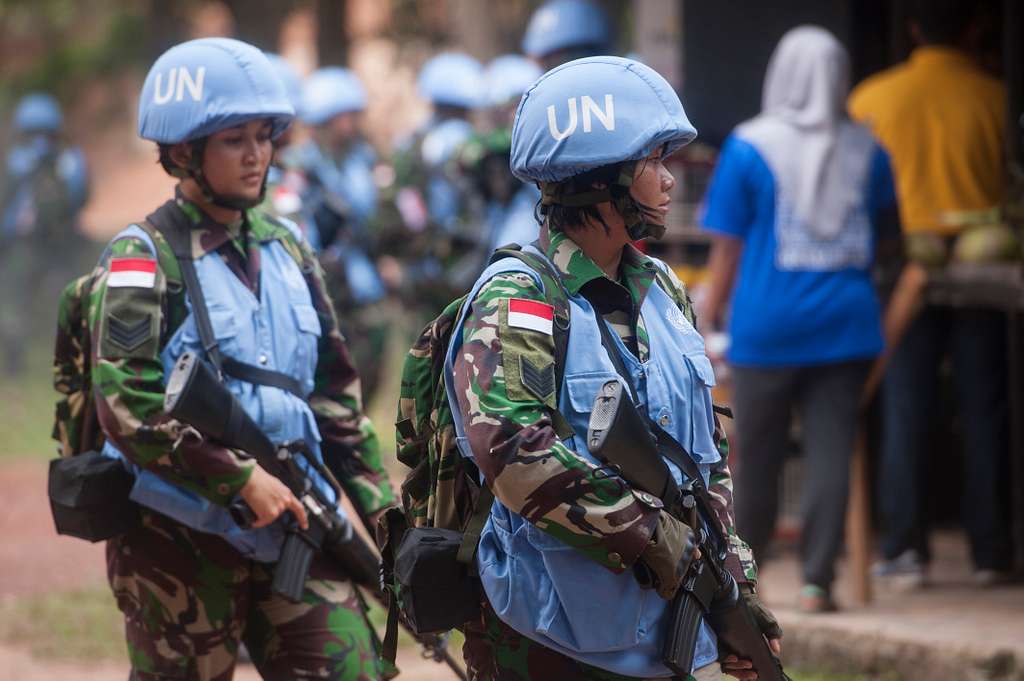
Since the UN World Conference on Women in Beijing in 1995, international donors have substantially increased their financial support to developing countries to promote gender equality and women’s empowerment, amounting to as much as 57.4 billion US$ in 2021, according to OECD calculations (p. 27). In Aiding Development, Brechenmacher and Manncriticise the fact that democracy assistance programs for a long time were missing a genuine gender perspective.
This development reflects the new international norm that women’s political empowerment is needed to strengthen democracy and promote its proper functioning, as expressed in the Beijing Platform for Action (Art. 183).
This book is one of the most comprehensive studies of foreign aid programs for women’s empowerment that I have read. It covers the last three decades, and its ambition, empirically and theoretically, is global.
The book’s focus is women’s empowerment in political institutions and processes, including elections, political parties, legislatures, and politically oriented civil society organisations, especially women’s/feminist movements (p. 13). The donors included in this analysis are 1) bilateral donations from single countries, such as US, Australia, Sweden, Canada and the Netherlands, 2) donations from multilateral organizations such as the Inter-Parliamentary Union, IPU and UNWomen, and 3) a wide range of international nongovernmental organizations such as International IDEA, National Democratic Institute, NDI and International Women’s Development Agency, IWDA. The importance of the local (meaning national and subnational) women’s movements is mentioned throughout the book, but their actions, unfortunately, are not a real part of the analysis.
How Does Donor Aid Actually Work?
Aiding Empowerment poses these highly relevant questions: Who are these donors? What types of projects have they been engaged in? And – most importantly, but also most challenging to answer – with what effects?
The analysis is critical, but also constructive. After the book was written, the Trump administration brutally shut down one of the world’s largest donor organisations, USAID. At the same time, democratic backsliding has spread further worldwide. However, Aiding Empowerment’s wide-ranging analysis is still highly valuable. It is a scientific work, yet it is declared to inform practitioners and women’s movements about what works and what doesn’t when “aiding empowerment.” The authors see themselves as “feminist critical fiends” vis-à-vis the aid programs (p.17).
In 1997, the world average of women in parliament was 12%; in 2025, it had increased to 27%. Around 20% of the world’s cabinet ministers today are women, and around 50% of the world’s present population have experienced having a woman as head of state or prime minister. An all-male political institution has, during this period, lost its democratic legitimacy. Yet, gender equity is still far away, and political life is still dominated by middle-aged men from the ethnic dominating groups and the socio-economic elites in a country, and even more so in international governance.
Four Case Studies
The method used is case studies on Kenya, Myanmar, Nepal and Morocco, combined with thematic discussions based on extensive literature reviews. Under each theme, scattered experiences from the four countries are presented. The authors have an impressive knowledge of the literature (40 pages of notes), including both theoretical works and reports from actual programs. However, the overall conclusions for each of these four countries are primarily drawn from previous literature, which is not always up-to-date and may rely on different approaches. One could have wanted more comprehensive analyses of the four countries, showing the major programs in place in each. Such an overview, combined with policy tracing, could allow for a discussion of the effects of various foreign programs on actual changes in women’s political empowerment, in relation to actions and political structures in each country. Did the foreign aid matter? Because each thematic chapter uses different sources, one can find conflicting conclusions about aid and its effects in countries such as Kenya or Morocco. In addition, the authors sometimes rely on sources that present sweeping generalisations about women’s power in the country.
Critique of International Donor Aid
The book presents an essential general critique of international aid targeting the political empowerment of women, among these are:
- Donor programs are usually too short, 1, 2 or 3 years and are constructed to give measurable, thus narrow effects.
- Donor programs often work in ‘silos’, e.g. stand-alone programs for women only, not involving societal changes at large.
- Donor programs are often top-down projects, which do not, or only insufficiently, involve local women’s organisations.
- Donor programs are usually pragmatic, not ‘transformative’ of the social structures in authoritarian or semi-authoritarian regimes, since they depend on the approval of the authorities in the recipient countries.
Two Generations of Empowerment Aid
The book constructs an interesting, though not entirely convincing, distinction between a first and a second generation of donor programs for women’s political empowerment, following, it is argued, changes in feminist (development) theory.
The first generation: “Getting women in the Room” (see chap. 4, overview in table 4.1) rests on the supply-demand model and focuses its programs on bolstering women’s participation in formal political institutions, whether as voters, candidates, or elected officials. Stand-alone programs, e.g. targeting women only, were the usual format, it is argued in a rather rigid way. Yet, it is correct that the adoption of electoral gender quotas has become a widespread tool in many post-conflict countries and in old democracies, either as voluntary party quotas, legislated candidate quotas, or reserved seats for women. Today, legislated gender quotas for elections are adopted by more than half of countries worldwide (see International IDEA’s Gender Quota Database).
The second generation of women’s empowerment is said to have a more ambitious aim. Rather than “inserting women into the existing structures”, the objective is now “Transforming systems” (chap. 5, overview table 5.1), i.e. an emphasis on transforming patriarchal processes, norms and institutions to make them more inclusive. Instead of ‘standing-alone initiatives, second generation aims at integrating gender perspectives into wider areas of aid, not least democratic assistance programs. Gender mainstreaming is one of the tools.
In general, capacity-building for women has been the most common program format for both first and second ‘generations’ and remains the most common format today in programs for women’s political empowerment. Here, donor organisations gather potential women candidates or activists for 2-3 days or a week’s course and then leave again. These programs have surely been an encouragement for many women in developing countries, but have also been criticised, also by quota experts, including this reviewer, for creating mostly disappointment if, afterwards, the participants just meet the same exclusionary political parties, electoral systems, and political institutions.
However, as a gender quota expert on missions for the International. IDEA, the Inter-Parliamentary Union, and UNWomen, etc. I have personally worked during all these three decades under constant resistance on opening and changing the closed, male-dominated nomination systems (old boys’ networks) to make room for women in elections. Consequently, I find the book’s argument that the ‘first generation’ just worked on “adding women” and not changing structures to be an unnecessary caricature (p.173).
Even if the Beijing Platform for Action did not mention the controversial work ‘quotas’, it was the first UN Platform to demand action by the political parties (the gatekeepers) and the political institutions to open up for women. In contrast, previously, women were blamed for their underrepresentation (‘women lack understanding of and interest in politics’).
New Frontiers
The last part of Aiding Empowerment, entitled “New Frontiers, consists of the authors’ ideas and suggestions for “a different assistance model.” Despite too many repetitions from previous chapters, these three concluding chapters present many interesting new ideas as responses to the points of critique mentioned above. Some look as realistic improvements, others more as a kind of ‘third generation’, maybe too utopian for foreign aid programs, and better suited for transformative social movements. It is a permanent dilemma that while donor aid programs are criticised for not being sufficiently transformative, they are limited in their critique of injustice in autocratic regimes, since they can operate only in foreign countries with the consent of national authorities, who are often not interested in system-changing actions.
‘Gender-washing’ is a new concept in gender studies, parallel to ‘green-washing’. It is the critique that political reforms, be they climate or gender equality reforms (e.g., gender quotas), are adopted only by authoritarian countries to suit international donors. However, recognising that political decisions are usually made for multiple motives, never purely feminist or green, such mixed motives may be preferable to the threat of no response at all during periods of democratic backsliding. In Senegal, a country with strong women’s movements and 41% women in parliament based on a strong quota rule (zipper-system, alternating women and men, although the candidate lists), the new president stated that when removing previous gains for women, he did not care about what Western donors would say (Africanpractice.com, published 3 July 2024).
Finally, after having read this ambitious and comprehensive work, one can only agree with the authors, Saskia Brechenmacher and Kathrine Mann’s argument for writing it: “Although we do not assume that international aid programs targeting women’s political empowerment are inherently effective or beneficial, we therefore argue that dismissing the field as a whole would be a mistake. Instead, the strength and limitations of existing approaches – and how they have evolved – merit careful analysis” (p.36).
This is a review of Saskia Brechenmacher and Kathrine Mann’s “Aiding Empowerment” (Oxford University Press, 2024), ISBN 9780197694275
Drude Dahlerup is a Professor Emerita of Political Science at Stockholm University and an international expert advisor on the empowerment of women related to electoral systems and gender quotas.
This article is published under Creative Commons License and may be republished with attribution.