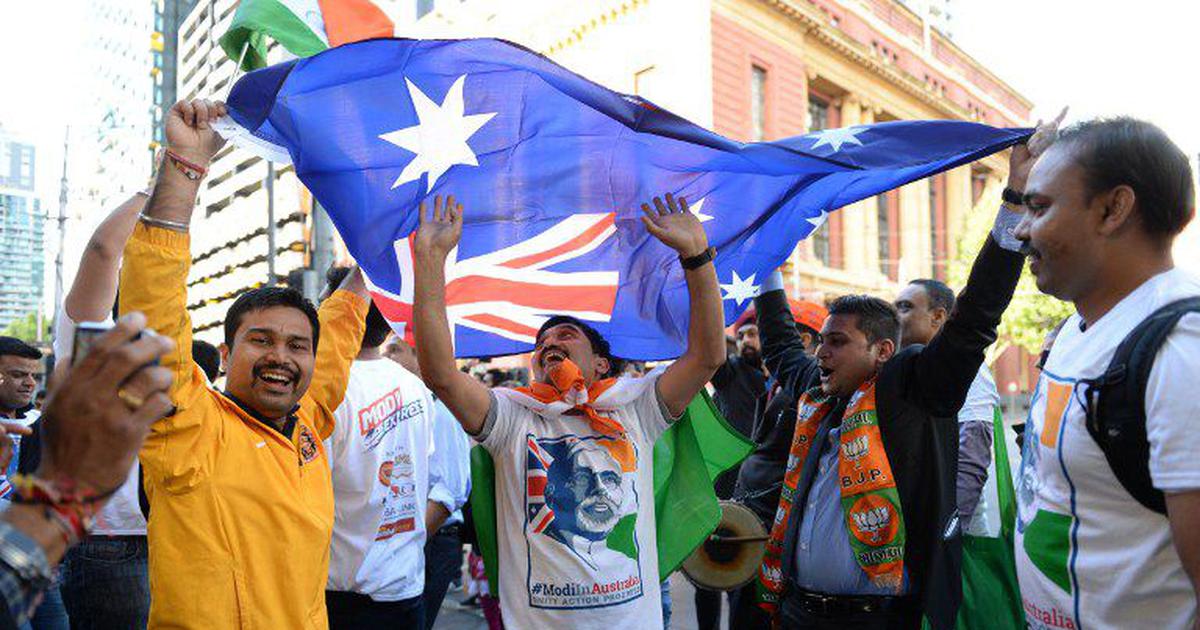
Despite India being Australia’s second-largest and fastest-growing diaspora, broader community understanding of India remains superficial—trapped between policy caricatures and cultural stereotypes. As the Indo-Pacific grows more complex, Australia’s lack of India literacy threatens both strategic partnerships and social cohesion at home.
Several images of India exist in Australia’s popular imagination. In policy circles, it can be the power whose rise we must support as a counterweight to China – or the partner whose ties to Russia prove its unreliability. A democratic success story or aggressive intelligence threat.
In popular Australian culture, it seems to be the land of yoga, cricket and curry – though not much else. Or as we’ve seen in recent racist incidents, a maligned source of unwanted migrants. In truth, India’s size and complexity mean it can be all sorts of things at once. Engaging India means grappling with the country as it is, not the caricatures we build of it.
We have made a lot of progress with this at the official level – though of course, both sides still must build more familiarity with each other (the Australia India Institute has proposed some ideas on this here).
However, broader literacy about India and Indians in the community lags. That’s a problem. For a start, Indian-origin communities are among the most significant contributors to Australian business, economics, art and community.
At nearly a million strong, it is Australia’s second largest – and fastest growing – diaspora in Australia. It is the second-largest tax-paying diaspora, and is deeply engaged in leadership across business, community and charities.
This isn’t lost on politicians, of course – especially those with a strong diaspora presence in their electorates. But it does often seem to be lost in Australia’s broader immigration debate. Assertions that Indian migrants aren’t pulling their economic weight should not go unchallenged.
There are other reasons it serves Australian interests to build better cultural familiarity with India. We have a deep and increasingly urgent need to build defence and foreign policy cooperation with New Delhi. Doing so is much easier when communities on both sides are demystified.
Building social license for a bilateral relationship is easier when the community views the intent and capabilities on both sides in clear terms – not as infallible and perfect, nor as ineffective, but rather as discrete systems with complementary strengths and weaknesses.
Say what you like about AUKUS’s merits. But it’s hard to see how such a significant development could have occurred without the government being assured of strong public support, and a long-standing belief that the US and UK were trusted partners.
Perhaps more important than all, Australians with Indian ancestry now make up nearly four per cent of the population. Our lives are surely less rich when we don’t embrace a significant contributor to our national culture.
Further, our community surely becomes less vibrant, less cohesive and more brittle if we measure diaspora contributions in narrow economic terms. At a time when ‘cohesion’ figures prominently in public debate, it seems unhelpful to be disengaged from a significant community outside of what revenue it brings.
There aren’t necessarily quick fixes to this. But there are things we can do to get out of our own way. For one, it’s striking that despite the large number of Indian students coming to Australia, surprisingly few Australians head in the other direction. This exposes a deep asymmetry that cannot be addressed through short-term visits. We should change that.
Despite its own challenges, ACICIS – a university consortium that facilitates Australian student placements in Indonesia – shows what is possible with the right structures, support, and institutional relationships. More Australian students experiencing India could also support efforts to arrest Australia’s decline in language learning.
Despite government recognition that these matters – exemplified by the Victorian government recently committing $3.5 million to introduce Hindi and Punjabi in schools – the decline is stark at the university level: in 1997, six Australian universities offered Hindi. Today, only one does: the ANU.
Beyond this, we need to build a better understanding of the diaspora. Surveys to date have been valuable but limited in scope –often focusing narrowly on economic and political dimensions. We still understand little about how diaspora experience shape Indian Australians’ sense of belonging in multicultural Australia.
We live in a time when government and commentators alike are forever warning that the Indo-Pacific is increasingly fraught. It’s time to invest in helping Australians to navigate it.
Tushar Joshi is a PhD candidate at the University of Melbourne, focusing on the domestic drivers of Indian foreign policy toward China (2014–2024). His research examines how leadership perceptions, strategic culture, state-society relations, and domestic institutions shape India’s policy choices. He is also a Research and Policy Officer at the Australia India Institute, and writes and speaks regularly on Indian foreign policy, particularly issues related to China and the Indo-Pacific.
Kim Heriot-Darragh is a strategic and defence analyst. He joins AII following a 14-year career in government. While posted to the Australian High Commission in New Delhi (2019-23), he became the first Australian civilian to graduate India’s year-long National Defence College course. He previously served with the Australian government in Washington DC, and deployed as a civilian on military operations in Timor-Leste and Afghanistan. A former Indonesian linguist, he holds a Master of International Law.
Dr Teesta Prakash is a Research Fellow (Security and Geopolitics) at the Australia India Institute (University of Melbourne). Teesta is an expert on the strategic affairs of the Indo-Pacific, specialising in geoeconomics of India, Southeast Asia and the Quad. She was previously an analyst at the Australian Strategic Policy Institute, leading the Australia-India Cyber and Critical Technology Program between 2022 and 2023.
This article is published under a Creative Commons License and may be republished with attribution.