Five years after taking Kabul, the Taliban have proved more capable of governing than almost anyone predicted. The trouble is that the state they are strengthening is drawing down the human and economic capacity of the country it governs.
When Kabul fell in August 2021, observers made two predictions about the Taliban. Some argued the movement would fail at governing, on the grounds that fighters can capture a capital but cannot run ministries, collect taxes or prevent a country from sliding back into civil war. Others argued that governing would soften them, and that a movement cut off from the world’s banks would eventually trade its harshest rules for money and recognition.
Five years later, both predictions look wrong. The Taliban govern more effectively than most expected, and they have conceded almost none of their ideological positions. That makes them unusual among radical movements that take power, which often trade some of their programme for legitimacy and revenue. Syria’s new rulers, for instance, whose leader once headed al-Qaeda’s Syrian branch, recast themselves as pragmatists and within a year were rewarded with the lifting of US sanctions and a White House visit. The Taliban have refused that bargain. They have built a state that keeps growing stronger while the country underneath it grows weaker, and the strength of the state is helping to produce the weakness of the country.
What the State Can Do
Let’s start with what has improved, because an account that ignores it would look is easy to dismiss. The Taliban have been able to collect taxes, issue decrees that are obeyed across the country, and hold the capital without serious challenge; precisely what a movement of fighters was not supposed to manage, according to sceptics.
Afghanistan was the site of one of the world’s deadliest wars when the Taliban entered Kabul. By the measures independent monitors use, conflict violence is now a fraction of what it was in the republic’s last years: the UN counted fewer than half as many civilian casualties in the 21 months after the takeover as in 2020 alone. The Taliban’s insurgency is over; repression, including the targeting of former officials, minorities and women activists, is not. In districts where insurgent fighting took place for over two decades, people no longer wake expecting night raids or roadside bombs as consistently as they once did. Revenue collection has recovered, and orders issued by the leadership are carried out hundreds of kilometres away with a consistency the previous government never achieved despite far greater resources.
Opium provides the clearest example. Cultivation fell from an estimated 232,000 hectares in 2022 to 10,200 in 2025, a drop of more than 95 per cent. Western-backed governments spent two decades pursuing comparable reductions and failed repeatedly. The Taliban achieved it in a single growing season, by force.
But the method matters as much as the result. A survey from the UNODC in the northern provinces of Badakhshan, Balkh and Kunduz, found 85 per cent of households reported either “no replacement or only partial replacement of their [lost] poppy income”. Farmers could be ordered to stop growing poppy. They could not be ordered into a new livelihood.
This pattern recurs across Taliban policy. The movement prohibits, enforces and centralises authority with real skill. It shows far less capacity to build the people, opportunities and institutions on which long-term development depends. Both are forms of state capacity, but only the second expands what the country itself can do.
What the Country Is Losing
The exclusion of women is where the distinction becomes measurable.
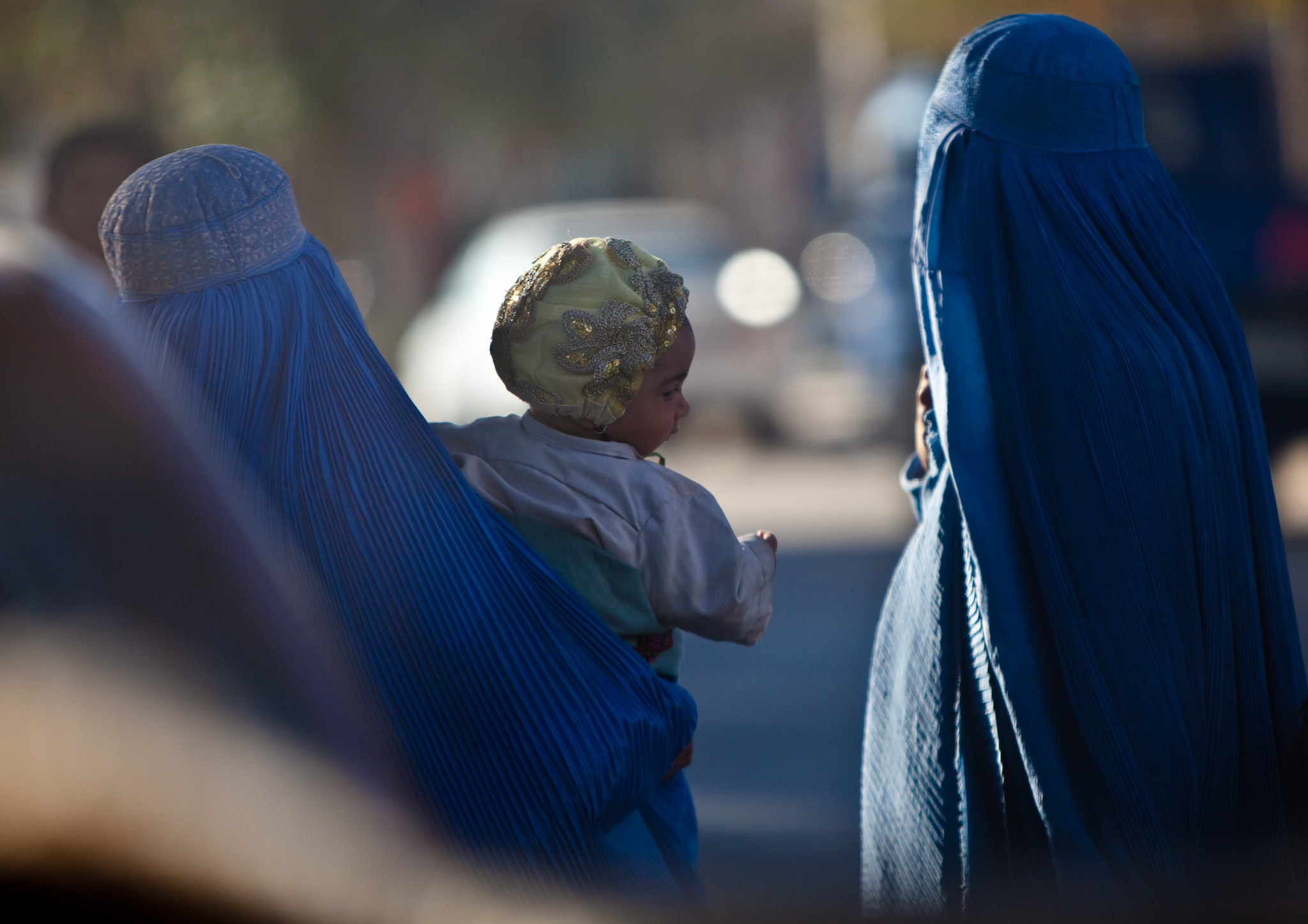
Afghanistan remains the only country where girls are barred from secondary education, and more than 2.6 million have been denied schooling since September 2021. Women have been removed from universities and from most public employment. In December 2024, the authorities closed one of the last remaining routes by suspending women’s medical training, including the pathways into nursing and midwifery.
That restriction took a single day to impose, while rebuilding what it destroyed will take decades.
Across much of Afghanistan, social norms and Taliban rules mean that women depend on female health professionals, and women can no longer enter the pipeline that produces them. UNICEF describes a dual crisis in which the country loses trained women professionals while preventing the next generation from replacing them, estimating a shortfall of up to 20,000 women teachers and 5,400 health workers by 2030.
Take a district clinic whose only experienced midwife is approaching retirement. Nobody can replace her once she leaves, because nobody has been permitted to train for the position. Women then travel further for treatment, postpone care or receive none at all.
This is issue that extends far beyond the present moment. A future government could reopen the institutes tomorrow and would still be unable to produce professionals who were never trained. The damage and danger accumulate with every year the restrictions remain, which means that waiting is itself a decision made with costs.
The Strain Is Already Showing
None of this suggests that Taliban rule is close to collapse. Events in Badakhshan this summer nevertheless show where pressure is building, and they point in two directions.
On 17 July, fighters from a previously unknown group calling itself Sepahian-e Mihan briefly seized the Yaftal district centre before withdrawing. Taliban officials acknowledged the loss, the first occasion since 2021 on which an armed opposition group had taken a district centre. The mayor of Faizabad was killed by a bomb on 13 August, just over two weeks after the province’s information and culture director was shot dead. Such attacks puncture the claim that the Taliban enjoy complete territorial control.
The Fateh confrontation matters for a different reason. Those attacks came from the Taliban’s enemies. This challenge came from inside the movement, from a commander whose own fighters had helped win that control.
Juma Khan Fateh, a Taliban commander and former deputy governor of Zabul, fell out with the leadership over gold. When the Badakhshan governor ordered that khums, the one-fifth Islamic levy the Taliban take on gold extraction, go to the state rather than to Fateh’s men, Fateh hid the excavators and shut down the works. The governor suspended gold mining in the area, and Fateh organised local residents to protest. Several of his associates were then detained on the governor’s orders. By August his men were fighting Taliban special forces in Nusay, and the army chief of staff required four days of negotiation before Fateh reportedly surrendered.
Throughout the confrontation, Fateh insisted that he was not breaking with Taliban rule, and described his quarrel as one with Taliban intelligence units searching people’s homes.
The episode therefore involved no doctrinal disagreement. It was an argument over who controls a mine, who collects the revenue and whose men patrol the valley, fought between people who agree on everything else.
Badakhshan has produced similar disputes over poppy eradication and over commanders sent from the centre to displace those already in place. The Taliban can impose policy from above. As central authority grows stronger, however, it reaches further into the economic networks that sustained those commanders through decades of war.
Like any armed movement that takes power, the Taliban must convert commanders into officials, fighters into employees and wartime networks into administrative hierarchies. Not every commander comes out ahead. The losers are those whose income and standing rested on local mines, customs posts and appointments, exactly what the centre is now taking over. Doctrine asks commanders to agree on rules. Centralisation asks them to surrender resources. The first has proved considerably easier than the second.
The Bill Comes Due Slowly
Both predictions made in 2021 assumed that governing would force the Taliban to choose between ideological commitment and political survival. Five years later they have avoided that choice, largely because of who carries the cost.
Girls lose years of schooling. Farmers lose their main cash crop with nothing to replace it. Communities lose professionals who cannot be recruited back. Commanders in peripheral regions lose access to resources as authority concentrates in Kabul. None of this prevents the government from collecting taxes, issuing decrees or holding the capital.
This explains the paradox of Taliban rule after five years. A state can continue growing stronger while the country becomes less capable of sustaining itself. Schools cannot graduate students they never admitted. Hospitals cannot hire professionals who were never trained. Rural economies cannot survive indefinitely on prohibition alone. A movement united on doctrine should not assume that arguments over resources will always be settled as easily as arguments over belief.
The Taliban have built a more durable state than almost anyone expected in 2021. The next question is how much weaker Afghanistan becomes while that state continues to grow stronger.
Muhammad Amir is a PhD researcher at Deakin University, specialising in international relations and security studies. His research focuses on peace processes, strategic competition, defence policy, and emerging technologies.
This article is published under a Creative Commons License and may be republished with attribution.