This week in Australian Foreign Affairs, the 75th anniversary of ANZUS, deepening collaboration between Australia and Pacific Nations across various initiatives, the Australian extends its response for the crisis on the Nepal-China border, and more.
At the end of August, the Prime Minister attended the 55th Pacific Islands Forum held in Palau. This was the fifth PIF Leaders’ Meeting for Prime Minister Anthony Albanese, as well as, his first official visit to Palau. Whilst in Palau, Albanese announced, in agreement with Qantas, an extension to the Palau Paradise Express that increases the frequency of flights to Palau and extends the direct air service connecting Brisbane and Koror to 30 November 2027. On 3 September, the Prime Minister, in a statement with the Minister for Climate Change and Energy, also detailed Palau and Australia’s commitment to work together on ‘super-charging’ the Pacific’s clean energy transition. Albanese states that “Australia is committed to partnering with our Pacific family on climate action as we prepare to deliver the Pre-COP Leaders’ event in Fiji and Tuvalu later this year.”
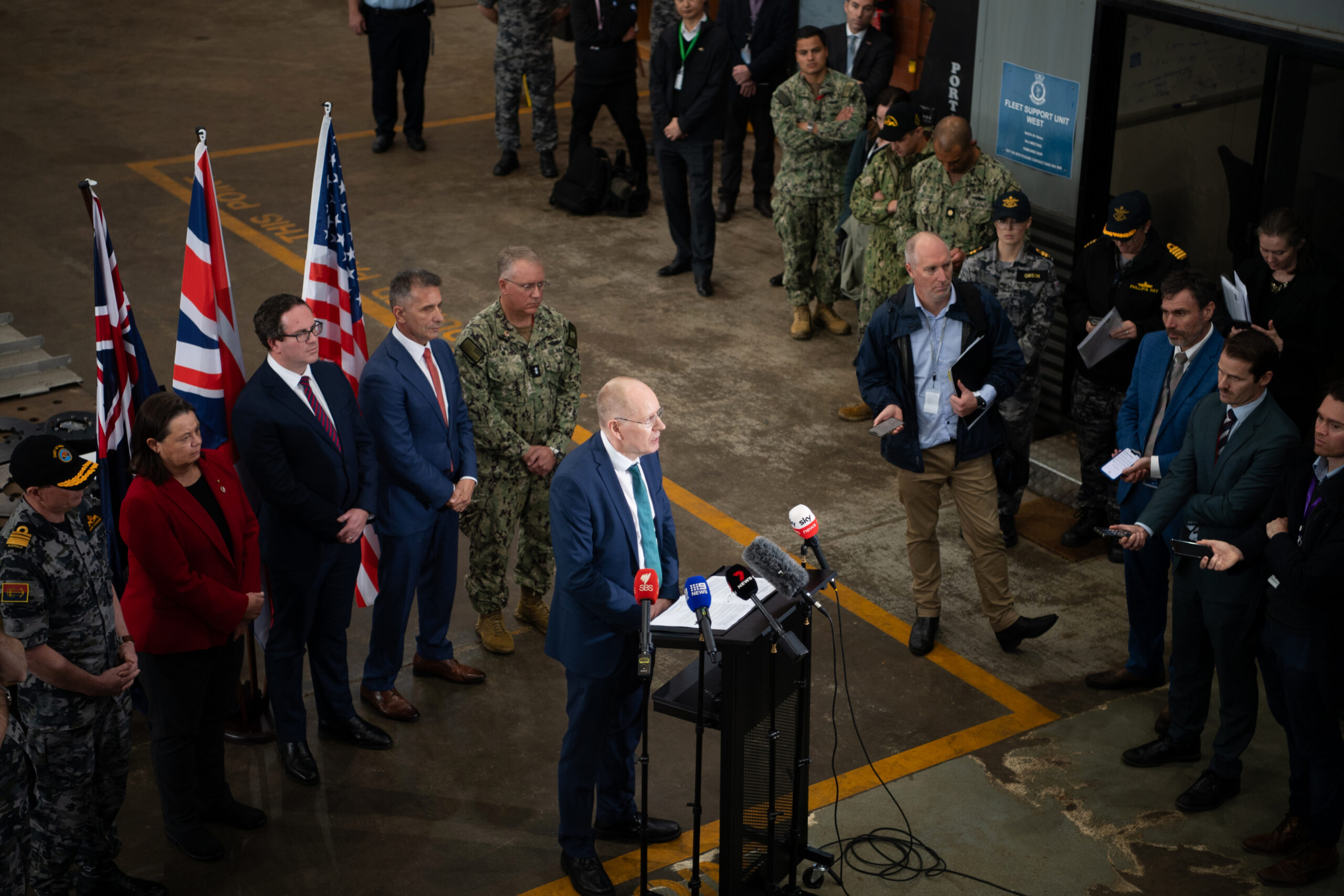
On 31 August, the Defence Minister announced that this week he will be travelling to the United States and the United Kingdom for a series of high level meetings. Arriving in Washington on 2 September the Minister answered questions regarding Australia-US relationship, US force posture, AUSMIN, AUKUS, AI and data centres, Minister Marles also met with his American counterpart to further discuss defence cooperation and AUKUS. The Minister has yet to arrive in the UK.
On 1 September, the Australian Government stated that they will be investing $15.6 million over 4 years to support athletes and officials from 14 countries across the Pacific. The funding seeks to support sporting talent, helping Pacific athletes and officials gain access to high-performance training and qualification opportunities, in the lead up to the Brisbane 2032 Olympic and Paralympic Games.
The beginning of this month also marked the 75th anniversary of ANZUS, a treaty that laid the foundation for the strategic cooperation between Australia, New Zealand and the United States that stands strong today. Signed in 1951, the treaty formalised the Australia-US alliance and further consolidated Australia-New Zealand cooperation beyond ANZAC.
On the same day, in a statement released alongside the Minister for Pacific Island Affairs, the Foreign Minister announced the government’s delivery of an East Micronesia Cable system. Delivered through a six-nation partnership, the 2,250km cable will bring faster, more affordable and more reliable internet connection to 100,000+ people across East Micronesia, including Naoero, Kosrae, and Tarawa.
On 2 September, eleven recipients of the 2026-27 Australian-Korea Foundation grants were announced by Foreign Minister Penny Wong. Chosen from a record number of applicants, the grants will support numerous projects working to deepen cooperation between Australia and Korea across several areas, including commerce, media, technology, science, and the arts.
The following day, the Australian government issued a statement that they will be expanding their response to the catastrophic flooding on the Nepal-China border. The expanded response includes the deployment of specialist drone operators, and the government contributing a further $3 million to match donations from the Australian public that have reached over $4 million. This will help support the search and rescue effort in Nepal, where 38 Australians are still unaccounted for.
Earlier in the week, the Prime Minister declared the shared commitment of Australia and Pacific Nations in combatting transnational crime across the region. The statement comes as Australia and Pacific Nations unanimously endorsed an initiative for Pacific-led maritime security countering illicit drug trafficking, called Waqa Moana. The Australian Federal Police will also be investing $49 million for new counter-transnational and organised crime programs across the region, in addition to the AFP’s $140 million contribution over the next 4 years towards regional security objectives.
This article is published under a Creative Commons License and may be republished with attribution.