This week in Australian foreign affairs: Australia and the European Union conclude negotiations on a landmark Free Trade Agreement and announce a new Security and Defence Partnership; Australia welcomes the President of the Federated States of Micronesia for the first official bilateral visit by one of its heads of state in nearly 30 years; and Australia provides additional humanitarian assistance to civilians affected by the conflict in Lebanon.
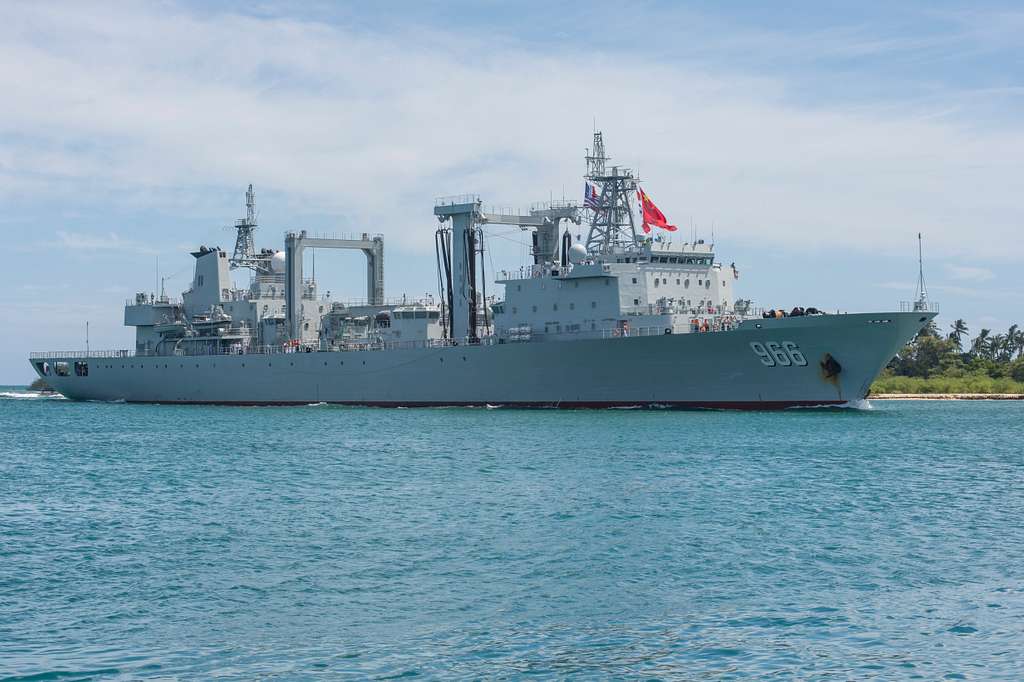
On 21 March, the Department of Defence announced that thirty-one ships from nineteen nations conducted a ceremonial entry into Sydney Harbour for the 2026 Exercise Kakadu Fleet Review. Hosted by the Royal Australian Navy, the review marked the largest gathering of foreign warships in Sydney Harbour in over a decade and coincided with the 125th anniversary of the Australian Navy. The Fleet Review was held alongside Exercise Kakadu, the Royal Australian Navy’s premier multinational maritime exercise, combining ceremonial proceedings with operational engagement. The event included an aerial display by the Royal Australian Air Force and a ceremonial gun salute. The Governor-General, Sam Mostyn, Deputy Prime Minister and Minister for Defence Richard Marles, Chief of the Defence Force Admiral David Johnston, and Chief of Navy, Vice Admiral Mark Hammond AO RAN.
In a press release, Chief of Navy Vice Admiral Mark AO RAN said, “The Fleet Review highlights the depth of our partnerships across the region, demonstrating the strength of the relationships and the importance of working together to ensure a secure maritime domain. For 125 years, Australia’s Navy has defended our nation, protected our maritime approaches, and supported regional stability, but we have never done it alone. Our partners and allies have played a critical role in our 125-year history.”
On 21 March, Foreign Minister Penny Wong and Minister for Multicultural Affairs Anne Aly announced that Australia will provide an additional $5 million in humanitarian assistance to civilians affected by the ongoing conflict in Lebanon. The funding will be directed towards emergency food, nutrition, water, and health services, with $3 million allocated to the World Food Programme and $2 million to the United Nations Children’s Fund. The assistance aims to support vulnerable populations, particularly women and children, amid increasing displacement and deteriorating humanitarian conditions. This latest contribution brings Australia’s total humanitarian assistance for civilians affected by the conflicts in Gaza and Lebanon to over $135 million since October 2023.
The Foreign Minister, in a press briefing, said, ” We are gravely concerned by the expansion of the conflict into Lebanon, the loss of life and the displacement of more than one million civilians. Australia condemns Hizballah for its ongoing strikes on Israel and for dragging Lebanon into conflict. Australia calls for all parties to adhere to international humanitarian law and to protect civilians and aid workers. A major Israeli ground offensive into Lebanon will only exacerbate the worsening humanitarian situation in the country.”
On 23 March, Prime Minister Anthony Albanese and Prime Minister of Singapore Lawrence Wong released a joint statement on energy security, reaffirming the longstanding partnership between Australia and Singapore and their shared commitment to open markets and rules-based trade. In the statement, the leaders expressed concern over the situation in the Middle East and its impact on global energy supply chains and prices and committed to strengthening energy supply chain resilience through deeper regional cooperation and maintaining open trade flows. They also reaffirmed their commitment to ensuring the continued flow of essential energy goods, including petroleum and liquefied natural gas, and agreed to accelerate negotiations on arrangements for trade in essential supplies, including consultation and early notification mechanisms in the event of potential disruptions.
Albanese, in a press release, said, “Consistent with our Comprehensive Strategic Partnership 2.0 joint declaration agreed in October 2025, Australia and Singapore will accelerate negotiations on an arrangement on trade in essential supplies, and will explore options for a future legally binding commitment involving bilateral arrangements, such as consultation and early notification in case of potential disruptions.”
On 23 March, the Parliamentary Joint Committee on Intelligence and Security commenced a review of the listing of Hizb ut-Tahrir as a prohibited hate group under the Criminal Code. Hizb ut-Tahrir was listed on 5 March 2026 as the first organisation under the new prohibited hate group listing framework established by the Combatting Antisemitism, Hate and Extremism (Criminal and Migration Laws) Act 2026. The framework enables the Government to list organisations that promote violence or hatred and activates a range of criminal offences relating to membership, recruitment, and the provision of support. Under the Criminal Code, the Committee may review such listings and report its findings and recommendations to both Houses of Parliament, inviting public submissions as part of the review process.
Chair of the PJCIS, Senator Raff Ciccone, said: “This is the first organisation listed as a prohibited hate group under laws recently passed by the Australian Parliament. Hizb ut-Tahrir has been able to spread hate and create a pathway for others to engage in violence. The Parliament has established a framework to ensure organisations that promote hatred, normalise extremist rhetoric, and risk social cohesion are subject to strong legal consequences.”
On 24 March, Deputy Prime Minister and Minister for Defence Richard Marles announced the launch of the Propel: Australian Submarine Scholarship program, a $15.8 million initiative aimed at supporting the workforce required for Australia’s nuclear-powered submarine program under AUKUS. The program will provide up to 3,000 scholarships over three years to students pursuing STEM studies at Australian universities, with more than 800 students already participating in the inaugural cohort. Delivered in partnership with the Australian Submarine Agency and the Australian Academy of Technological Sciences and Engineering, the initiative seeks to build the highly skilled workforce needed to deliver and sustain Australia’s future submarine capability. The program forms part of broader government efforts to expand the pipeline of STEM-qualified workers for the nuclear-powered submarine enterprise, which is expected to generate around 20,000 jobs nationwide over the coming decades.
“AUKUS represents one of the most significant industrial endeavours in our country’s history, and the Albanese Government continues to invest in young Australians who will make up our future workforce. To successfully deliver Australia’s nuclear-powered submarine program, we need to ensure we develop the skills to build and sustain them. The Propel scholarship program will help to strengthen our future defence workforce – helping to deliver the capabilities that will keep our nation safe and support a future made in Australia,” said Marles.
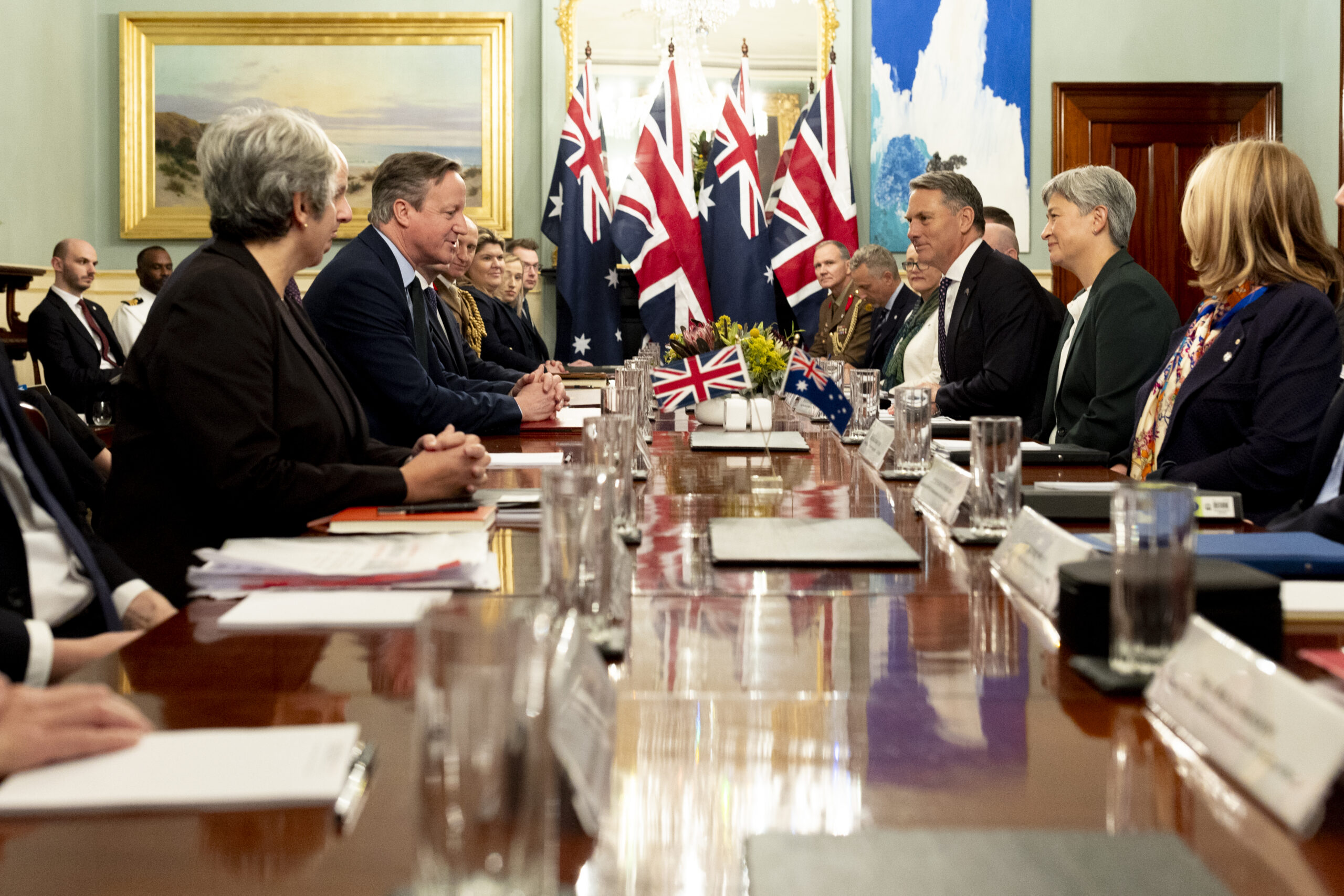
On 24 March, Prime Minister Anthony Albanese and President of the European Commission Ursula von der Leyen announced a new Australia-European Union Security and Defence Partnership in Canberra and welcomed the conclusion of negotiations on the Australia-European Union Free Trade Agreement, reaffirming the strength of the Australia-European Union partnership. The partnership was signed by Deputy Prime Minister and Minister for Defence Richard Marles and Foreign Minister Penny Wong, together with European Union High Representative and Vice President Kaja Kallas, and aims to expand cooperation across the defence industry, cybersecurity, economic security, counterterrorism, and countering hybrid threats.
Under the agreement, Australia and the European Union will increase information sharing, strengthen resilience to complex security challenges, deepen cooperation to counter online radicalisation and terrorism financing, and establish a new space security dialogue. In a press release, Prime Minister Albanese said, “This partnership is a clear demonstration of how Australia and the European Union are working together to tackle global challenges. Our new partnership reflects that despite being geographically separated, we are like-minded in our shared commitment to supporting global peace and security.”
The Prime Minister, along with the Minister for Education Jason Clare, and Minister for Industry and Innovation and Minister for Science Tim Ayres, also announced that Australia will begin treaty negotiations to associate with the European Union’s Horizon Europe research and innovation program. The European Union’s flagship research funding program, valued at AUD $155 billion, will provide Australian organisations access to one of the world’s largest pooled research funds. “By associating with Horizon Europe, we are supporting international research collaboration innovation in Australia, creating jobs and driving productivity to help deliver a Future Made in Australia,” said the Prime Minister.
On 24 March, Foreign Minister Penny Wong and Minister for Pacific Island Affairs Pat Conroy welcomed President of the Federated States of Micronesia Wesley W. Simina to Canberra, marking the first official bilateral visit by a Federated States of Micronesia head of state to Australia in nearly 30 years. During the visit, Australia and the Federated States of Micronesia will sign a Memorandum of Understanding to enhance maritime security cooperation, as well as two additional MOUs under the Pacific Policing Initiative. Australia also announced a $2.5 million package to support climate resilience in the Federated States of Micronesia, including initiatives to improve access to safe drinking water, sanitation, and emergency infrastructure. “This visit speaks to the strength of the relationship between Australia and the Federated States of Micronesia and the value we place on further strengthening that partnership. Both our countries share a strong commitment to Pacific priorities, including regional stability, sustainable development and climate resilience. The visit reflects Australia’s commitment to building close and enduring ties with all members of the Pacific family,” the Foreign Minister said in a press briefing.
On 25 March, the Joint Standing Committee on Treaties tabled a report recommending the ratification of the Agreement to Establish the Pacific Resilience Facility and the Council of Europe Convention on the Manipulation of Sports Competitions. The Agreement to Establish the Pacific Resilience Facility will create an international funding organisation to support projects that strengthen the Pacific region’s capacity to respond to the impacts of climate change. The Committee found that the Agreement aligns with Australia’s regional objectives to build resilience and stability in the Pacific. The Council of Europe Convention on the Manipulation of Sports Competitions establishes a framework for international cooperation to detect, prevent, and address the manipulation of sports competitions. The Committee found that ratification would support Australia’s existing regulatory framework and strengthen global efforts on sports integrity. Committee Chair, Lisa Chesters MP, said: “This is an innovative agreement for the Pacific and efforts targeting the effects of climate change. Australia is a longstanding member of the Pacific Islands Forum and supports Pacific initiatives. The Agreement will allow Australia to increase its regional support in an organisation that is Pacific designed, implemented and led.”
On 25 March, Deputy Prime Minister and Minister for Defence Richard Marles and Minister for Defence Industry Pat Conroy welcomed Germany’s Federal Minister of Defence, Boris Pistorius, to Canberra for his first official visit to Australia. During the visit, ministers discussed opportunities to deepen cooperation between Australia and Germany across defence forces and the defence industry, including joint capability development. The visit also included engagements with Australian and German defence personnel. The visit reflects the growing bilateral defence relationship between Australia and Germany, with a focus on cooperation across multiple domains and shared commitments to international security. “I look forward to welcoming Minister Pistorius to Canberra for his first official visit to Australia. Australia and Germany are linked in the ways we work together, as like-minded partners, to address shared strategic challenges,” said Marles.
Akshit Tyagi is an intern at Australian Outlook at the Australian Institute of International Affairs. He is a postgraduate student in International Relations at the Australian National University in Canberra and holds a Bachelor’s degree in Business Administration and a Postgraduate Diploma in Journalism. He previously worked as a business reporter in New Delhi and has written for The Canberra Times, Woroni (ANU student media), The Hill, and other publications.
This article is published under a Creative Commons License and may be republished with attribution.