Prime Minister Narendra Modi’s five-nation tour from May 15- 21 across the UAE, the Netherlands, Sweden, Norway and Italy represents far more than routine diplomacy. It reflects India’s expanding strategic geography and New Delhi’s attempt to position itself as a pivotal power amid intensifying geopolitical competition, technological fragmentation and global economic uncertainty.
On one level, the visit focused on trade, energy security, defence partnerships and critical technologies. On another level, it revealed the deeper continuity of India’s foreign policy under the Modi government: strategic autonomy, diversified partnerships, and a wider global reach.
The Gulf and India’s Energy Imperative
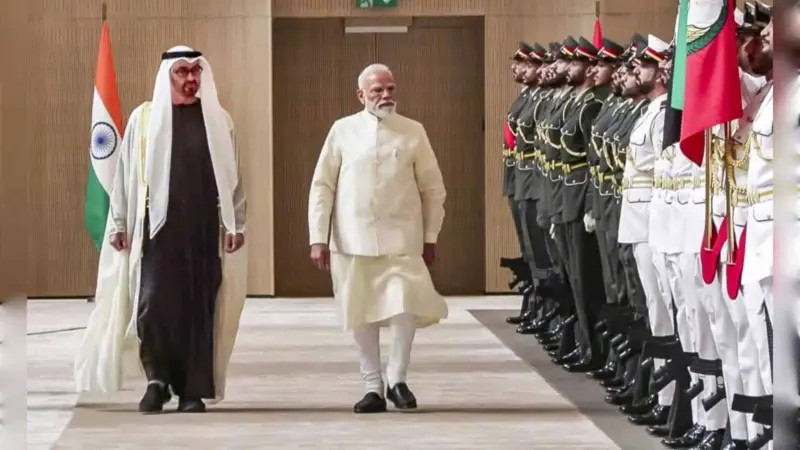
The UAE leg of the tour reaffirmed the enduring centrality of West Asia in India’s strategic calculus. Discussions in Abu Dhabi focused on long-term energy cooperation, defence ties, maritime security and investment flows. In an era of volatility across West Asia, India’s Gulf engagement has become inseparable from its economic security.
The UAE is not only an energy supplier but also a key trade and investment partner, and it is home to a large Indian diaspora. The engagement reflects a maturing relationship that increasingly spans infrastructure, connectivity, and defence cooperation, extending well beyond hydrocarbons.
Europe and the Rise of Technology Geopolitics
The European leg of the tour underscored India’s shifting strategic priorities towards technology, industrial resilience and supply chain diversification.
In the Netherlands, India and Dutch counterparts elevated ties to a strategic partnership and signed 17 agreements covering semiconductors, green hydrogen, critical minerals, defence cooperation and mobility. This development is closely linked to the emergence of “technology geopolitics”, where control over advanced supply chains has become a central axis of global power competition.
With Europe and the United States seeking alternatives to China-centric manufacturing ecosystems, India is increasingly positioned as a trusted partner. Cooperation involving advanced semiconductor ecosystems and industrial innovation aligns with India’s “Make in India” ambitions and broader economic transformation agenda.
Maritime security and supply chain resilience also featured prominently, reflecting shared concerns over chokepoints and global disruptions, consistent with India’s Indo-Pacific outlook.
The Nordic Dimension and Emerging Geopolitics
Modi’s visits to Sweden and Norway highlighted India’s widening strategic outreach into Northern Europe. The Nordic states are becoming increasingly important due to their leadership in artificial intelligence, clean energy, green technologies and Arctic governance.
In Oslo, India participated in the India–Nordic Summit, where discussions centred on AI, climate innovation, the blue economy and sustainable development. India and Norway also announced a “green strategic partnership” spanning clean energy, outer space cooperation and development partnerships for the Global South.
The Arctic dimension adds further strategic depth. As climate change accelerates resource competition and opens new shipping routes, the Arctic is emerging as a new frontier of great-power rivalry. China’s growing presence and Europe’s growing security focus in the region underscore why India’s engagement with the Nordic region is strategically significant.
Italy and the Mediterranean Connection
The final leg of the tour in Italy marked a major elevation in India–Europe relations. In Rome, Prime Minister Narendra Modi and Prime Minister Giorgia Meloni elevated bilateral ties to a Special Strategic Partnership, signalling a new phase in cooperation across economic, defence and geopolitical domains.
A key outcome was the ambitious target to raise bilateral trade to €20 billion (US$23.2 billion) by 2029, alongside a shared push to advance the India–EU Free Trade Agreement. Both sides emphasised economic resilience through diversified and secure supply chains.
A broad set of agreements was concluded covering critical minerals, agricultural research, maritime transport, higher education, and facilitating legal mobility for Indian nurses to Italy, reflecting a shift towards structured economic and labour mobility cooperation.
On the security front, both countries agreed to deepen defence industrial cooperation. They signed MoUs to combat tax crimes, money laundering, and terror financing, signalling growing convergence on financial security and transnational threats.
Strategically, both leaders reaffirmed their commitment to the India–Middle East–Europe Economic Corridor (IMEC), highlighting its potential to reshape global trade routes and the connectivity architecture among Asia, West Asia, and Europe.
The two sides also advanced the Joint Strategic Action Plan (2025–2029) and agreed to institutionalise annual summits to sustain momentum across sectors.
Strategic Autonomy in a Fragmented World
The tour reflects three defining drivers of India’s contemporary foreign policy.
First, economic and technological transformation: diplomacy is increasingly tied to semiconductors, AI, green energy and industrial upgrading.
Second, strategic diversification: India continues to avoid bloc alignment and instead pursues issue-based partnerships across regions.
Third, great-power competition: US–China rivalry, the Ukraine war, and supply chain fragmentation are reshaping the global order, creating space for re-emerging India to act as a strategic balancer.
India’s Expanding Strategic Geography
India’s foreign policy is no longer confined to traditional security concerns. It now integrates technology, trade, energy and industrial competitiveness into a broader strategic vision.
From Gulf energy corridors to European semiconductor ecosystems and Nordic Arctic governance, India is steadily expanding its strategic footprint. The objective is not only to balance power politics but to shape global economic and technological transitions.
For the Indo-Pacific—and for partners such as Australia—this evolution is significant. A more globally engaged India, anchored in multiple regions yet strategically autonomous, is becoming a key architect of the emerging multipolar order.
Dr Ashok Sharma, Visiting Fellow, The University of New South Wales Canberra at the Australian Defence Academy and an Academic Fellow at Australia-India Institute, The University of Melbourne.
This article is published under a Creative Commons License and may be republished with attribution.