Pakistan’s bid to mediate between Washington and Tehran has been celebrated as a diplomatic comeback — but Islamabad’s simultaneous commitments to Saudi Arabia, China, and the Gulf economy make genuine neutrality structurally impossible.
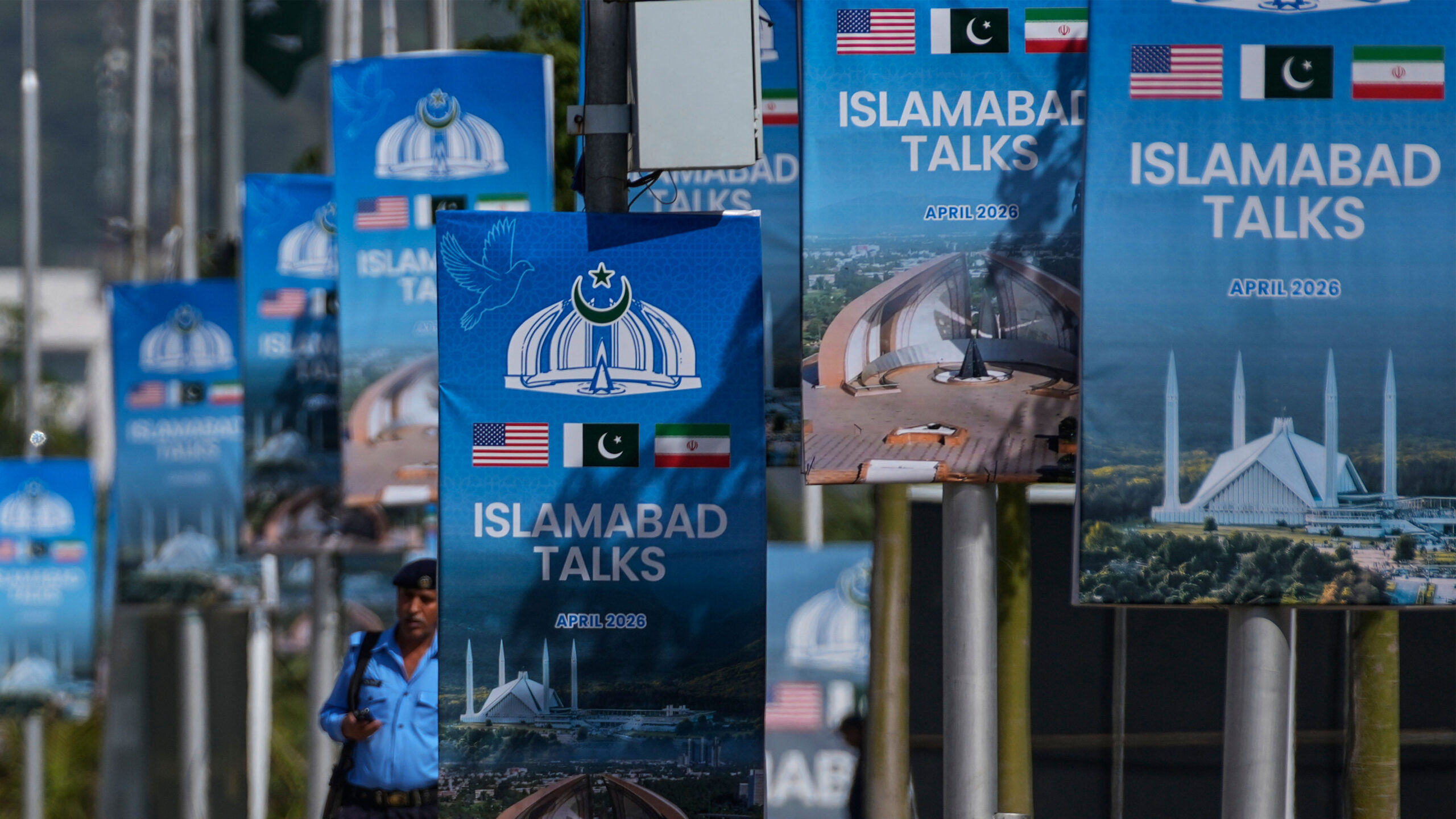
When Pakistan’s Prime Minister Shehbaz Sharif and Field Marshal Asim Munir stepped forward in April 2026 to host the Islamabad Peace Talks between the United States and Iran; Islamabad was hailed in some quarters as a diplomatic phoenix, a country rising from years of international isolation to broker one of the most consequential negotiations of the twenty-first century. The optics were compelling; however, beneath the pageantry of a 300-member American delegation and a 70-member Iranian counterpart sat a more uncomfortable truth: Pakistan is not a neutral mediator. It is a deeply entangled stakeholder attempting to balance a web of irreconcilable obligations to Washington, Riyadh, Beijing, and Tehran simultaneously. That is not diplomacy, but a gamble dressed in diplomatic clothing.
The Illusion of Neutrality
Classical mediation theory holds that an effective third-party mediator must possess three essential qualities: impartiality, credibility with both sides, and sufficient independence to withstand pressure from either party. Pakistan, by almost any rigorous assessment, fails the first and third of these criteria, even if it has, for now, maintained a working credibility with both Washington and Tehran.
Consider the structural contradictions. Pakistan signed a mutual defence pact with Saudi Arabia in September 2025, a country that is not merely a bystander in the US-Israel-Iran conflict but an active stakeholder with deep hostility toward Iranian regional ambitions. As Islamabad’s delegation was framing itself as an impartial convener, Prime Minister Sharif was simultaneously travelling to Jeddah to express “full solidarity” with Crown Prince Mohammed bin Salman while urging restraint. A mediator cannot be a defence partner of one side’s principal regional ally. The contradiction is not subtle, it is structural.
Simultaneously, Pakistan remains financially dependent on Gulf remittances, further compromising its independence. Over 50 per cent of Pakistan’s approximately $30 billion in annual remittances originate from the Middle East, with an estimated 1.4 million Pakistani workers currently in the Gulf region. When the economic survival of Pakistani households is tied to the stability of Gulf states that are broadly aligned against Iranian influence, Islamabad’s ability to present balanced proposals to Tehran is inherently constrained. Iran’s chief negotiator, Mohammad Bagher Ghalibaf, was not entirely wrong in implying that a mediator must not perpetually lean toward one side. He was describing Pakistan’s structural dilemma, whether intentionally or not.
The China Variable
Any serious analysis of Pakistan’s mediation must contend with the China-Pakistan Economic Corridor (CPEC), the flagship infrastructure and investment programme that has bound Islamabad’s economic future tightly to Beijing’s strategic vision. China has its own carefully managed relationship with Iran, rooted in the 25-year comprehensive cooperation agreement signed in 2021 and Beijing’s broader ambition to position itself as the indispensable alternative to the US-led regional order.
Pakistan mediating under explicit American pressure, carrying a “15-point proposal” from Washington to Tehran in March 2026 that included the dismantlement of Iran’s nuclear programme and restrictions on its ballistic missile capacity, places Islamabad in a position that is difficult to reconcile with its CPEC commitments. Beijing’s silence on Pakistan’s mediatory role has been conspicuous. It is the silence not of indifference, but of observation. Every concession Pakistan extracts on Washington’s behalf is a concession that potentially weakens an economy Beijing views as a strategic partner. Pakistan’s leadership has thus far avoided an open loyalty test with China, but the deeper the Islamabad process penetrates the substance of Iran’s nuclear future, the harder that test becomes to avoid.
The India Dimension
There is a third structural tension that receives insufficient attention in Western commentary: India. New Delhi’s deepening security and economic ties with Israel, its growing alignment with the US Indo-Pacific strategy, and its historic role in the region as Pakistan’s principal adversary create a powerful incentive for India to undermine or delegitimise Pakistan’s mediatory role. India has pointedly declined to endorse the Islamabad process. While this may appear to be a minor diplomatic snub, it carries strategic weight. India’s influence in Washington, particularly on matters of regional credibility and counterterrorism, means that American confidence in Pakistan as an honest broker is always one intelligence leak or one cross-border incident away from collapse.
Moreover, the India-Pakistan military confrontation in May 2025 remains a fresh wound. That episode, whilst briefly resolved, demonstrates how rapidly the Pakistan-India security dynamic can destabilise the broader regional environment. Islamabad cannot simultaneously be a credible peacemaker in the Persian Gulf while remaining locked in an unresolved security competition with its eastern neighbour. The two postures require mutually incompatible risk tolerances.
What the Islamabad Talks Actually Revealed
After 21 hours of indirect negotiation, the Islamabad Talks in April 2026 produced no breakthrough. They concluded without agreement, with the US subsequently cancelling follow-up envoy visits and President Trump reverting to maximalist public messaging. Within weeks, ceasefire violations had been reported by both sides, a drone struck an electrical generator near the UAE’s Barakah Nuclear Energy Plant, and analysts were warning of the risk of fresh hostilities within days.
Pakistan’s Interior Minister scrambled to Tehran in mid-May to try to prevent the negotiations from collapsing entirely, a reactive posture that illustrates the limits of Islamabad’s leverage. Pakistan can convene and facilitate proximity talks, but it cannot compel either side toward a compromise that neither genuinely wants. The United States, under the Trump administration, has publicly framed the conflict as a military victory requiring only formalities of surrender from Tehran. Iran, for its part, has insisted its missile programme is non-negotiable and has demanded the Strait of Hormuz blockade end before any nuclear discussions proceed. These are not positions a middle power can bridge by goodwill alone.
The Deeper Risk: Becoming a Scapegoat
There is a risk specific to Pakistan’s position that has received almost no attention: the risk of becoming the party blamed for the failure of diplomacy. When negotiations collapse, as they increasingly appear likely to do, the question of culpability becomes a political weapon. US Senator Lindsey Graham has already expressed scepticism about Pakistan’s reliability as a mediator, citing reports that an Iranian military aircraft was being sheltered in Pakistani airspace during the talks. That accusation, whether substantiated or not, illustrates how quickly trust can erode and how readily a mediating state can be recast as complicit.
Pakistan accepted a role that placed it at the intersection of American military power, Iranian strategic determination, Saudi financial leverage, Chinese economic interest, and Indian strategic rivalry, all simultaneously. The reward for success is uncertain and transient. The cost of failure could include damaging its relationships with all parties simultaneously, precisely because it was trusted, or appeared to be trusted, by all of them.
Conclusion
Pakistan’s mediation in the US-Iran conflict is not without historical precedent or strategic logic. Islamabad’s role in facilitating Henry Kissinger’s secret visit to China in 1971 demonstrated that a smaller power can serve as a critical diplomatic hinge between great powers. And the genuine economic incentives that protect Gulf remittances, maintain regional stability, and cement Islamabad’s rehabilitation on the world stage are real and legitimate. Pakistan’s leadership is not acting irrationally.
But there is a meaningful difference between a diplomatic hinge and a diplomatic hostage. A hinge connects two doors. A hostage is held by both parties and released by neither. As the ceasefire frays, Washington and Tehran entrench their maximalist positions, and the structural contradictions of Pakistan’s multiple entanglements become harder to paper over, Islamabad risks discovering that being indispensable to a failed process is worse than having never participated at all.
The Islamabad process is, at its core, an attempt to serve too many masters without the independence to serve any of them well. Instead of mediation, it is a calculated risk that is becoming less calculated and riskier by the day.
Sami Omari is an Afghan-born international relations, diplomatic, and policy consultant with extensive experience working alongside NATO, International Security Assistance Force, and the U.S. Department of State, including the Bureau of International Narcotics and Law Enforcement Affairs (INL), as well as diplomatic missions on governance, conflict, and legal reform in fragile states. He previously served as a prosecutor and legal advisor in Afghanistan and later worked as a cultural and security affairs instructor with Australia’s Department of Foreign Affairs and Trade and Australian Defence Forces, delivering training on culture, security, and civil–military relations. Mr Omari also served as Government Liaison Manager for NATO in Afghanistan, where he worked closely with Afghan government institutions and international partners during key phases of the conflict, including the period surrounding the U.S.–Taliban Doha negotiations and the release of Taliban prisoners. Now based in Australia, he works as a strategic consultant focusing on South and Central Asian security and strategic affairs and is currently completing a master’s in international relations at Flinders University.
This article is published under a Creative Commons License and may be republished with attribution.