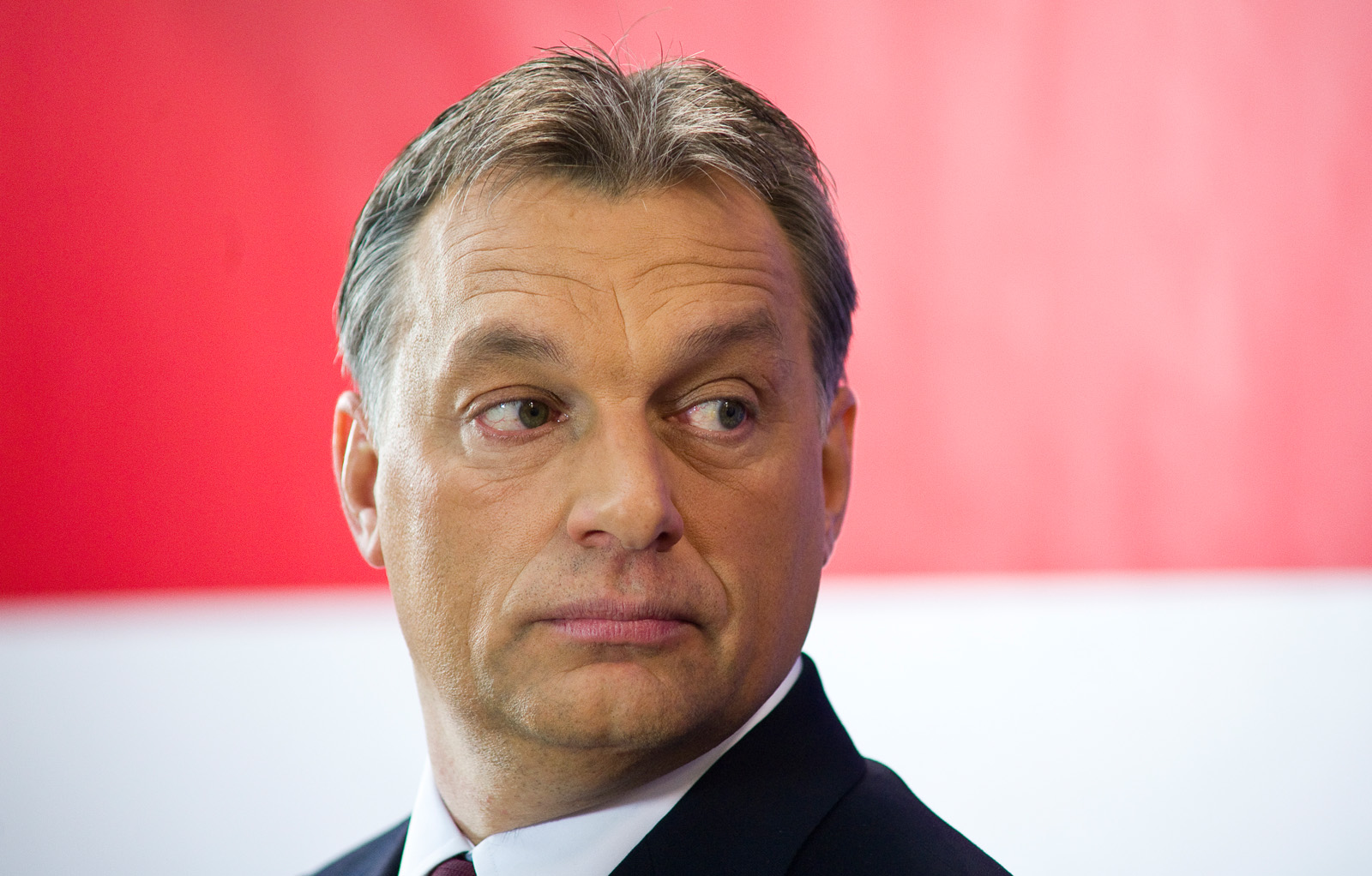
Politics can be ruthless, even to authoritarian rulers – especially when they have to face an election. Overnight, Orbán transformed from an icon of far-right populists into a defeated man who doesn’t even plan to take his seat in parliament.
Liberal politicians are often accused of living in bubbles, failing to understand ordinary voters, and sipping soy lattes. Sometimes this criticism is spot on, but more often than not, it serves merely as a propaganda tool to smear one side of the political spectrum. The truth is, any politician can fall into the trap of their own ideological bubble – especially if they’ve been in power too long and believe they’ve built a system in which they cannot lose.
This is exactly what happened to Hungarian Prime Minister Viktor Orbán. The far-right populist ruled the country for 20 years, 16 of them consecutively. In Hungary, his Fidesz party seized control of the institutions and a vast portion of the media, hoping it had engineered an electoral system in which losing power was not an option.
The country steadily plummeted in rankings of democracy, press freedom, and the rule of law. Despite all this, Orbán’s Hungary became something of a political model for parts of the conservative spectrum. The Prime Minister of a Central European nation of fewer than 10 million people became a star in American far-right MAGA circles, a relationship he cultivated for years with significant financial investment.
His supporters turned a blind eye even when Orbán continued to meet regularly with dictator Vladimir Putin after the full-scale invasion of Ukraine, or when he opened the doors for Chinese influence in Hungary. And despite the billions of euros the country had received from the European Union, it was EU officials and Ukrainian President Volodymyr Zelenskyy who became the targets of the Budapest government’s ferocious pre-election propaganda.
However, Orbán got trapped in his own bubble of conspiracies where the world was run by George Soros, “LGBT ideology,“ and migrants. Yet these ideological attacks on imagined enemies could not conceal a basic reality. While people close to the prime minister grew wealthy, ordinary Hungarians were bringing their own toilet paper to hospitals. Even pro-government polls, which predicted a Fidesz victory, couldn’t change that reality.
“In reality, this regime wasn’t performing well. Education, healthcare, the economy – it’s all in a terrible state. But for a long time, at least the last 12 years, this was hidden by a facade provided by EU money. It made Fidesz look very successful. But after 2022, that money stopped flowing, and all the structural weaknesses and damage the regime caused were suddenly exposed. Until then, Orbán’s system seemed much stronger than it actually was,“ said Hungarian political scientist Zoltán Gábor Szűcs-Zágoni.
Beyond the fact that Orbán’s Fidesz finally faced a real challenger in Péter Magyar’s Tisza party, Hungary’s membership in the EU was crucial to the regime’s defeat. The European Commission blocked approximately €17 billion for Budapest due to rule-of-law violations and threats to the EU’s financial interests. The Hungarian economy and its people felt the sting. By all accounts, Orbán’s government considered extreme measures to avert electoral defeat. But the wave that swept them away was too large, the security forces weren’t entirely on their side, and the EU would have certainly reacted harshly to any attempt to subvert the election.
Politics can be ruthless, even to authoritarian rulers – especially when they have to face an election. Overnight, Orbán transformed from an icon of far-right populists into a defeated man who doesn’t even plan to take his seat in parliament. “I don’t know if he wants to live out the rest of his life in Moscow, but it depends on whether he has better alternatives,“ said Czech populism expert Petra Guasti.
Orbán’s political instinct ultimately betrayed him. His alliance with the world of Donald Trump and Vladimir Putin still worked for the MAGA movement in the US. Still, it had become a toxic burden for many of his European partners – and, most importantly, for Hungarians. The pre-election visit by US Vice President JD Vance was met with nothing but mockery in the country. There wasn’t the slightest chance that the Republicans could sway a single voter to Orbán’s side. This should have been clear to anyone paying even a little attention to developments in Hungary.
Orbán spent a long time showing right-wing populists how to seize and hold power. His “playbook“ remains relevant. In countries like Slovakia, Czechia, or Italy, we see efforts to capture the media and institutions, attacks on independent power centres and NGOs, and the weaponisation of conservative values for political ends. Social media algorithms continue to make these tactics quite effective.
But Orbán also serves as an example that, at a certain point, this might not be enough for voters. They may eventually demand more than just the permanent polarisation of society. They might demand less corruption, better governance, and a more transparent foreign policy.
Populists, especially in EU countries where democracy functions and EU institutions oversee its quality, now face a dilemma. Should they be even more radical than Orbán? Or is the main lesson from Hungary and 16 years of Fidesz rule best summarised by the quote attributed to Abraham Lincoln: You can fool some of the people all of the time, and all of the people some of the time, but you cannot fool all the people all the time.
In fact, it currently looks like Orbán-style politics might next take root in Europe via Nigel Farage in the United Kingdom – a country notably outside the EU.
And what about Orbán, MAGA, and American President Donald Trump? It is truly fascinating that in the US, where the political scene is so deeply inward-looking, the Prime Minister of a mid-sized Central European country became such a symbol for some. However, Orbán invested a great deal of money in that relationship. If that well runs dry, the Hungarian politician will become far less interesting to the American conservative far-right. Orbán might remain a draw for events like CPAC for a little while longer, but he could quickly transition from a keynote speaker to an unwanted side-show outside of primetime. After all, one thing is certain: Trump doesn’t like losers.
Andrej Matišák is a foreign policy reporter for the Slovak daily Pravda and the creator of the Global Agora podcast.
This article is published under a Creative Commons License and may be republished with attribution.