Neither Trump nor Eden paid attention to the lessons of history and to the driving forces behind their opponents’ determination to resist their military onslaughts. In choosing to go to war, there was no coherent connection made between the use of superior military power and fostering a political process to give effect to anticipated battlefield outcomes.
It is tempting to draw parallels between the present conflict with Iran and the lessons to be gleaned from British Prime Minister Anthony Eden’s disastrous decision, in 1956, to join with France and Israel to overthrow Egyptian President Gamal Abdel Nasser by inflicting a major military defeat.
There are important constraints, however, to drawing upon the Suez debacle as a guide to what might be taking place, seventy years later. There are some similarities, of course. Suez was certainly, and the Iran war was at least arguably, a march of folly from the outset. Both conflicts were launched by viscerally driven Western leaders without credible strategic objectives or the means to achieve them.
Neither Trump nor Eden paid attention to the lessons of history and to the driving forces behind their opponents’ determination to resist their military onslaughts. In choosing to go to war, there was no coherent connection made between the use of superior military power and fostering a political process to give effect to anticipated battlefield outcomes.
Despite tactical military successes, economic pressures—panic at US pressure on Sterling, and Eisenhower’s refusal to make good the shortfall of oil flowing to Britain from the Middle East—as well as global condemnation, saw the British thwarted and humiliated. Both conflicts were triggered, to a great degree, by developments in Western capitals.
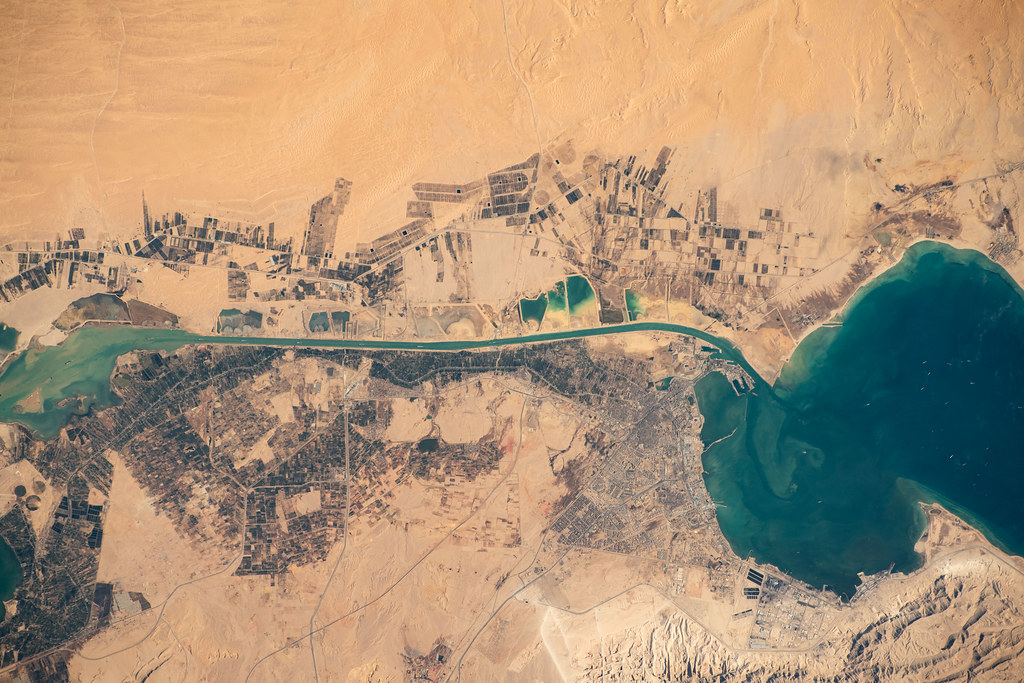
In the case of Egypt, the nationalisation of the Suez Canal on 26 July 1956, which galvanised a hostile response from the UK and other Canal users, including Australia, followed a US decision to reject a well-advanced funding bid for the Aswan High Dam project. Under domestic political pressure from US cotton growers, as well as concern over Egypt’s foreign policy positions, the United States undermined a project that was central to Nasser’s domestic agenda. And, to the chagrin of the Egyptians, it presented its decision as driven by doubt about Egypt’s capacity to deliver such a project.
In the case of Iran, nuclear issues were certain to remain unresolved after Trump decided, unilaterally, to cast aside the agreement with Iran and other key countries that was painstakingly negotiated under the Obama Administration. Israel pressured Trump to launch the present campaign, just as it encouraged Eden to join with France in attacking Egypt.
On the other hand, there are significant differences to be considered. The intellectual depth, wisdom, and perspicacity of the personalities shaping the Anglo-American relationship at present differ. So too is the power balance of the Anglo-American relationship. When the Israeli and French idea of staging an attack was put jointly to the British, Eden signed off on it, knowing that Eisenhower would be strongly opposed. The junior partner in the Anglo-American relationship, but intent on Nasser’s destruction, Eden did not consult Eisenhower. He paid the price for making that choice. So too did Britain.
A second analytical constraint is the difference between the role played by the machinery of the United Nations and the use made of that machinery by the key parties, then and now. In addition to his fury with Eden’s duplicity and failure to heed his advice, Eisenhower was determined that the United Nations should be the instrument by which the attack on Egypt should be halted and reversed. British diplomacy in support of its campaign was shambolic.
British (and Australian) officials were frequently left awaiting instructions from London while Eden and his Cabinet tried, mostly without seeking advice from their officials, to wing their way forward. Not a single member of NATO backed the British and French actions in the United Nations.
Although the Egyptians fought tenaciously, Israeli forces with French support quickly captured the Sinai—so rapidly, in fact, that Israel had to be persuaded to withdraw an initial announcement of a ceasefire in New York, so that the British could go ahead with their own planned attack, undertaken supposedly to safeguard the Canal.
Eden’s use of the veto in the Security Council against the US resolution calling for a ceasefire led to the issue being promptly transferred to the UN General Assembly under the Uniting for Peace procedure.
With hostilities ended, the British were unable to prevent the rapid establishment, under the leadership of the Canadian foreign minister Lester Pearson, of a UN peacekeeping operation to monitor the ceasefire.
At the outset of the conflict, Nasser’s diplomatic masterstroke was to close the Canal using block ships, enabling him to dictate the terms upon which the Canal would be cleared. Nasser refused to allow the Canal to be reopened until the last of the Israeli occupation forces were withdrawn, at US insistence, from the Sinai.
Insisting upon Egypt’s sovereign right to determine which forces could operate under the UN on its soil, Nasser also made sure the UN peacekeepers would be from countries posing no threat to his government.
The third constraint to drawing upon Suez as an indicator of future developments regarding Iran is the fundamental difference in historical context.
Behind the French and British approaches to Egypt lay a fear of the open-ended questions about the empire’s end. For the French, Indochina was gone. Their grip on Algeria was teetering. For Britain, dominion over palm and pine had lost out to the postcolonial reality of Asian non-alignment, led by India and China.
There was determination at popular levels across much of the Arab world to resist Western overlordship, a movement whose pent-up energy Nasser captured effectively.
Nor could the British count upon American support. On the Arabian side of the Persian Gulf, the British and the Americans (seeking to protect their oil interests in Saudi Arabia) had earlier backed opposing sides in the dispute over the Buraimi Oasis.
Even where the British had turned to the United States for assistance, as in the covert removal of the nationalist government in Iran in 1953, the Americans had taken full advantage of the outcome they engineered to secure a share of Iran’s oil wealth.
At the end of the day, the Suez crisis was not about the Canal, or even about Nasser. It was about the determination of Britain and France to cling to the vestiges of an imperial order that was no longer sustainable. Washington had its own understanding of how the international order needed to be arranged, and postcolonial delusions—in those days—were not part of its thinking.
The British lion had its last roar at Suez, but the die was cast long before.
Dr Bob Bowker is the author of Australia, Menzies and Suez: Australian Policymaking on the Middle East Before, During and After the Suez Crisis (DFAT, 2019), and co-edited (with Matthew Jordan) Australia and the Suez Crisis 1950-1957 (DFAT, UNSW Press, 2021).
This article is published under a Creative Commons License and may be republished with attribution.