TOKYO, ISHINOMAKI, MINAMISANRIKU, KOBE, and KYOTO–The 2026 cohort of the Australian Institute of International Affairs–The Japan Foundation Indo-Pacific Cooperation Network (IPCN) has completed the first stage of its program with an intensive study tour of Japan, held from 28 February to 9 March.
Bringing together 15 emerging leaders from across the Indo-Pacific with links to 17 countries and territories, the program focused on disaster resilience, exploring how governments, communities, and institutions prepare for and respond to natural disasters.
The tour was led by AIIA Chief Executive Officer Dr Bryce Wakefield and The Japan Foundation’s Deputy Director Ayumi Takita.
Engaging Japan’s Disaster Resilience System
The program began in Tokyo with an orientation at The Japan Foundation headquarters, followed by a series of high-level engagements examining Japan’s disaster management frameworks.
Participants met with officials at Japan’s Ministry of Land, Infrastructure, Transport and Tourism, gaining insights into national coordination mechanisms and policy approaches to disaster response. A visit to NHK (Japan Broadcasting Corporation) highlighted the critical role of public media in disseminating information during emergencies, with participants touring the newsroom and discussing crisis communication.
The cohort also visited the Australian Embassy in Tokyo, where officials provided perspectives on Australia–Japan cooperation and consular preparedness in disaster situations.
Learning from Tōhoku
A central component of the study tour was travel to the Tōhoku region, which was heavily affected by the 2011 Great East Japan Earthquake and Tsunami.
In Ishinomaki, participants engaged directly with community leaders and residents involved in long-term reconstruction efforts. Discussions with figures including Kariya Tomohiro of Machizukuri Manbou, as well as local leaders who experienced the disaster firsthand, provided powerful insights into community-led recovery, leadership, and resilience.
The group also visited key sites in Minamisanriku, including the Okawa Elementary School ruins and the 311 Memorial. These visits offered sobering reflections on disaster decision-making and the long-term challenges of rebuilding communities.
Infrastructure, Civil Society, and Urban Resilience
Returning to Tokyo, the cohort examined the roles of the private sector and civil society in disaster preparedness.
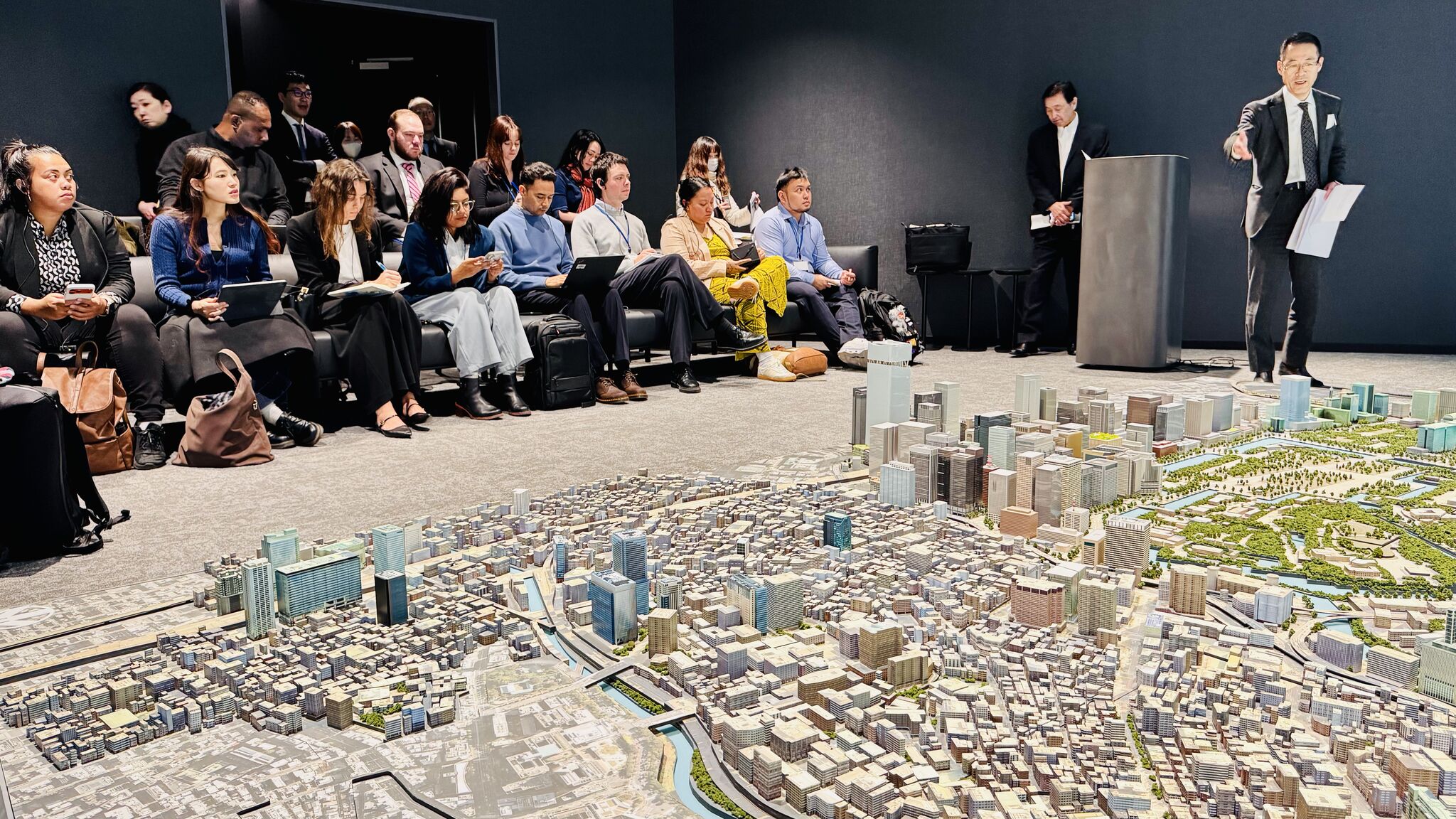
At Mitsubishi Estate, participants learned how major urban developments incorporate resilience measures such as energy management and water systems designed to function during emergencies. Discussions with Peace Winds Japan, a leading humanitarian NGO, explored how non-government actors work alongside government and communities in disaster response.
From Kobe to Kyoto: Memory and Resilience
The program then moved to Kobe, where participants examined the legacy of the 1995 Great Hanshin–Awaji Earthquake. Visits to the Great Hanshin–Awaji Earthquake Memorial Disaster Reduction and Human Renovation Institution and the Design Creative Center KIITO highlighted how education, design, and community engagement contribute to disaster preparedness and memory.
The final stage of the tour took place in Kyoto, where participants explored how historical urban design, cultural practices, and religious institutions have shaped responses to disaster over centuries.
Strong Engagement and Public Visibility
The study tour generated strong engagement both within and beyond the program.
Participants actively shared their experiences across major social media platforms, while video content produced during the tour was published by the AIIA across its digital channels. The program also received coverage in Japanese media, including front-page reporting in the Ishinomaki press, coverage in the Kobe Shimbun, and features on local and the national broadcaster, NHK.
Building Regional Networks
The Japan study tour marks the beginning of the 2026 IPCN program, which aims to build long-term networks among emerging leaders working on shared Indo-Pacific challenges.
Through direct engagement with policymakers, practitioners, and communities, participants gained practical insights into disaster resilience while strengthening cross-border connections that will continue throughout the program.