SUVA, NADI, CHRISTCHURCH AND WELLINGTON—The third cohort of the Indo-Pacific Cooperation Network has completed a study tour through Fiji and New Zealand, examining how governments, communities, scientists, emergency managers and media organisations contribute to disaster preparedness and resilience.
An initiative of the Australian Institute of International Affairs and The Japan Foundation, the network brings together regional experts from different professional fields to strengthen cooperation on disaster resilience across the Indo-Pacific.
AIIA Chief Executive Officer Dr Bryce Wakefield said the tour demonstrated the importance of connecting institutional expertise with community experience.
“Across Fiji and New Zealand, participants saw that resilience is built through cooperation between governments, scientists, emergency managers, communities and trusted public institutions,” Dr Wakefield said. “The network gives emerging regional experts the opportunity to compare approaches, build lasting relationships and develop ideas that can strengthen disaster preparedness across the Indo-Pacific.”
The Pacific leg began in Suva from 23 to 26 June. The cohort received a context-setting briefing from Richard Naidu at Munro Leys. The group also visited the Fiji Museum and visited the Parliament of the Republic of Fiji, where participants briefly met Speaker Hon. Filimone Jitoko. The group also visited the Fiji Museum.
Government meetings included the National Disaster Management Office, the newly established Maritime Emergency Services Centre, and the Ministry of Environment and Climate Change. These visits gave participants insight into Fijian approaches to disaster risk, emergency response and development.
The cohort also met representatives of the International Fund for Agricultural Development and the Asian Development Bank’s South Pacific Office to consider the role of international organisations in supporting resilience and development across the Pacific.
A visit to the village of Galoa placed community experience at the centre of the program. Local residents led the group through areas affected by climate change and discussed the challenges facing the village. Participants were formally welcomed and heard from village elder Setaiki Alusio about local responses to environmental change.
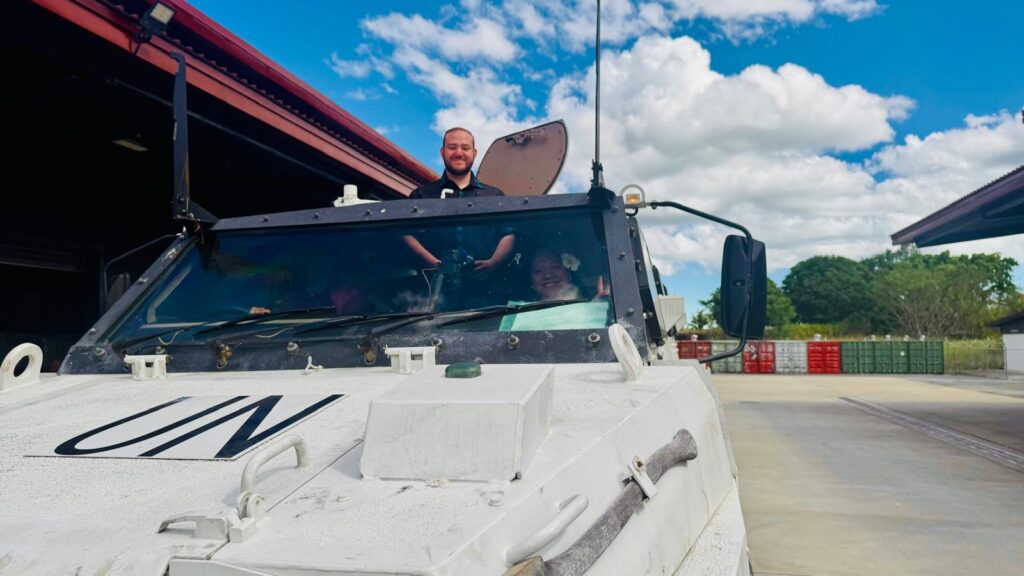
In Nadi, the cohort visited the Republic of Fiji Military Forces Joint Task Force Command at Blackrock Camp. The facility, which has received a major upgrade with support of the Australian Government, supports peacekeeping training, humanitarian assistance and disaster relief operations, as well as regional security and stability missions. The visit provided an opportunity to discuss military perspectives on disaster response and inspect the camp’s upgraded facilities.
The New Zealand program began in Christchurch on 29 June. Participants visited Quake City, the museum dedicated to the 2011 Canterbury earthquake, before meeting the Canterbury Civil Defence Emergency Management Group at its Emergency Coordination Centre.
A major focus of the Christchurch visit was community and Indigenous resilience. At Ngā Hau e Whā National Marae, the cohort received a pōwhiri and heard from Marae CEO Linda Ngata about Māori community responses to the 2011 earthquake and other disasters.
The group also visited the Transitional Cathedral, designed by Japanese architect Shigeru Ban after the original Christchurch Cathedral was badly damaged, and paid its respects at the former CTV building site, where many of the earthquake’s fatalities occurred, including 28 Japanese language students.
In Wellington, the cohort met the New Zealand Ministry of Foreign Affairs and Trade to discuss climate change, disaster response and regional coordination. Participants then travelled to Earth Sciences New Zealand in Lower Hutt, where they examined the role of seismic, volcanic and landslide monitoring in supporting practical decision-making and went on a tour of New Zealand’s disaster monitoring centre.
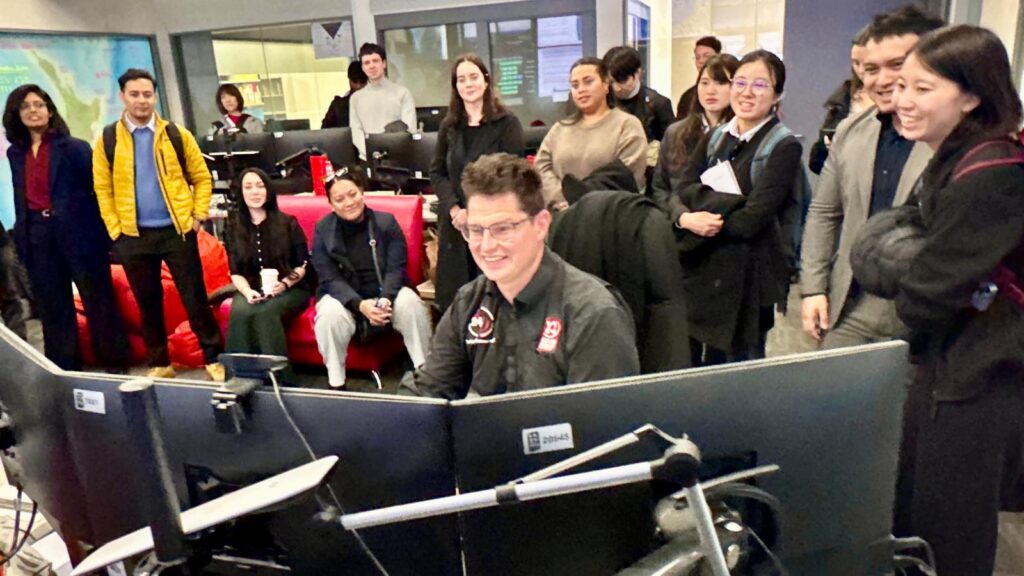
The final day brought together the themes of preparation, coordination, communication and leadership. At the Wellington Region Emergency Management Office, participants discussed regional emergency management, community resilience and the incorporation of Indigenous principles into local government practice.
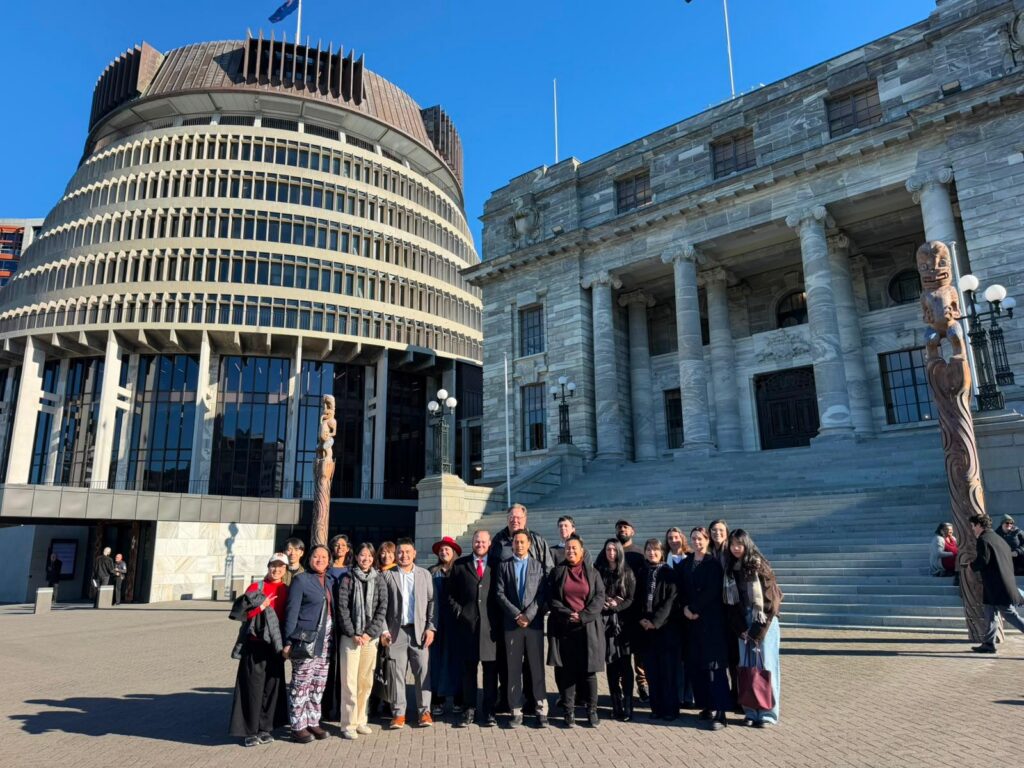
The cohort then visited the National Emergency Management Agency at the National Crisis Management Centre beneath the Beehive, the executive wing of the New Zealand Parliament, gaining a national-level perspective on coordinating major emergency responses.
The final institutional visit was to Radio New Zealand. Discussions focused on the importance of trusted public communication during crises, including RNZ’s role as an emergency information network and its shortwave broadcasting service to Pacific island countries.
The tour concluded with a wrap-up session hosted at the Asia New Zealand Foundation, led by subject matter expert Mayumi Sakamoto.
Across Fiji and New Zealand, the program demonstrated that disaster resilience depends on more than emergency response alone. It is built through strong institutions, scientific capability, trusted communication, international cooperation and sustained engagement with communities before crises occur.