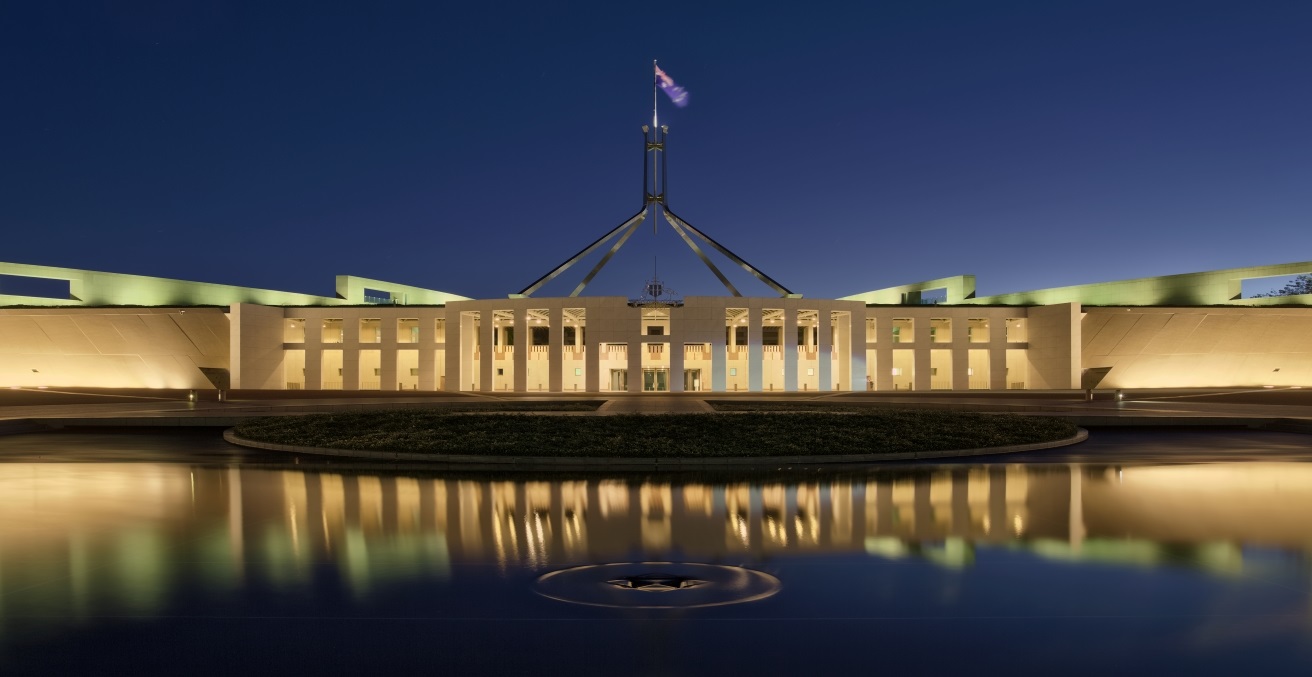
As we remember 50 years of the infamous constitutional crisis and Whitlam’s dismissal and celebrate the positive aspects of his legacy like Medibank, we need to also remember the much darker stories that are rarely told – Whitlam’s betrayal of the Timorese people.
In what is perhaps the least known atrocity of WWII, over 40,000 Timorese were slaughtered by Japanese forces in retribution for the assistance they gave to the Australian Sparrow Force – the small contingent doggedly harassing the imperial army as it marched and sailed inexorably across the Pacific. The Timorese had provided food, shelter and guidance for the beleaguered force.
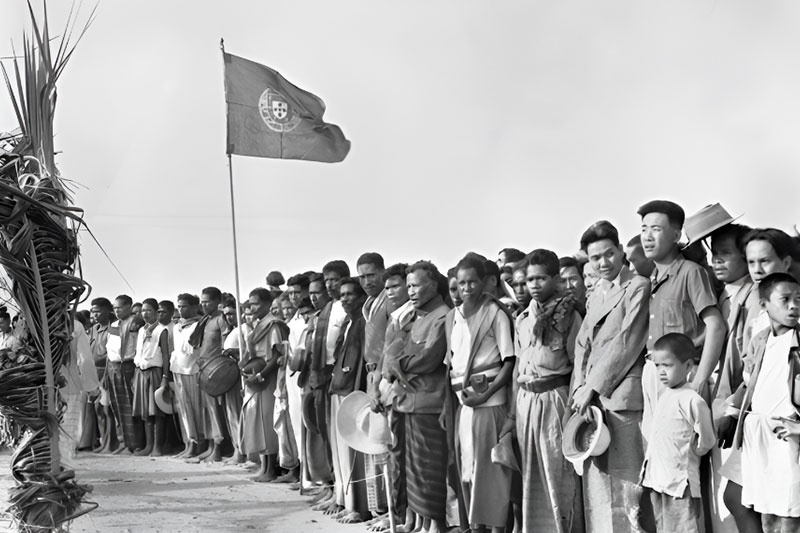
When Portuguese empire was finally overthrown in the Carnation Revolution, many Timorese thought it was their time for independence – and Australia could have paid back its debt.
The political vacuum left by the collapse of fascist Portugal, along with proactive subversion by the Indonesian special operations organisation OPSUS, led to a brief but intense civil war in which FRETILIN, conceived as a ‘moderate reformist national front’, was victorious. They unilaterally declared the independence of the Democratic Republic of East Timor On November 28, 1975 – the high-point of the Maubere Revolution 1974-1978.
Rather than promoting this newly declared independence of the Timorese however, extensive archival evidence demonstrates how the Australian government, under Labor Prime Minister Whitlam (1972-75), actively encouraged the incorporation of East Timor into Indonesia, even before it invaded.
Proactive intervention, not a ‘blind eye’
While many believe the Labor government under Whitlam simply turn “a blind eye” to Indonesian subversion, and others deny Whitlam gave Suharto “Suharto a sly wink during their meetings,” evidence indicates that it was a proactive intervention by Whitlam that caused the Suharto regime to take the course of action that it did.
Research by Harvard academic Mattias Fibiger and documented in Narratives of Denial: Australian and the Indonesian Violation of East Timor, demonstrates that Indonesian Foreign Minister Adam Malik was initially sympathetic towards Indonesian acceptance of an independent East Timor and sought to persuade the dictator Suharto of this position. When Jose Ramos Horta, the representative of the ASDT, later to become FRETILIN, visited Jakarta in June 1974, Malik provided him a letter that affirmed the right of East Timorese to independence. Malik was opposed within the Suharto regime by the hard-line Indonesian Special Operations Group OPSUS that had been deeply involved in both the incorporation of West Papua and in the massacre of the Indonesian Communist Party. OPSUS was against an independent East Timor, believing it could pose a left-leaning threat to the stability of the Suharto regime.
Under these circumstances in June 1974, Whitlam sent his personal private secretary Peter Wilenski to Yogyakarta for private discussions with Harry Tjan, a senior operative with the Centre for Strategic and International Studies (CSIS), the diplomatic wing and think tank of OPSUS. Wilenski conveyed Whitlam’s view that East Timor should become part of Indonesia to ensure it did not come under the influence of “another, potentially unfriendly power”. Tjan later recalled that at the time Indonesia had not been greatly focused on East Timor but that the meeting led to “greater consideration” of the issue. Confident of Whitlam’s support, Tjan approached Suharto with a paper advocating a clandestine operation to force the incorporation of East Timor into Indonesia – the ‘Grand Design’ for Portuguese Timor, as he called it.
Tjan also approached officials at the Australian embassy in Jakarta informing them of his lobbying of Suharto and telling them he saw a role for Australia in “neutralising” unfavourable international opinion towards an Indonesian takeover. What followed in the following eighteen months were a long series of secret regular briefings – at least forty-five secret briefings to the Australian embassy – effectively consultations, informing the Australian government in some detail about Operation Komodo, the Indonesian effort to undermine the East Timorese decolonisation process and force integration, and after the brief civil war, Operation Flamboyan, the OPSUS false flag operation in which Indonesian forces undertook military operations against the Fretilin led government pretending to be anti-Fretilin Timorese forces. It was during such operations that five Australian based journalists were killed by Indonesian forces in the town of Balibo. Malik made periodic efforts to advocate for his own position to the Jakarta embassy but was effectively rebuffed. The briefings were highly successful from the OPSUS perspective, serving to obtain effective Australian acquiescence to their illegal actions and to compromise the Australian government, making later opposition more difficult.
While Suharto had initially been concerned about the impact of an Indonesian intervention in its relations with Australia and the US, including fears it would jeopardise civilian and military aid, Whitlam’s intervention placated him, causing him to support the OPSUS position rather than that of the Indonesian foreign ministry and Malik. The evidence also indicates the Australian intervention considerably influenced the position eventually taken by the US under the Ford administration, that was initially keen to distance itself from the issue. In July 1975, Indonesian president Suharto paid an informal visit to the US, claiming the only solution was integration Timor into the unitary state of Indonesia. Upon his return, Suharto officially made public the Indonesian view that ‘independent East Timor was not viable’.
Why the betrayal?
Other aspects of Prime Minister Gough Whitlam’s approach were decisive factors in Indonesia’s annexation. In several meetings with Indonesian President Suharto in 1974 and 1975, Whitlam made Australia’s position clear in support of Indonesian Absorption. Whitlam’s policy was based on several key principles. He believed that a small, independent East Timor would be economically unviable and a potential source of instability in the region. In part, this was based on the warnings fabricated by Indonesia that East Timor might become a “Cuba” of the South Pacific. He also maintained a colonial mindset despite his progressiveness on other social issues, perhaps out of ignorance rather than principle – admitting he didn’t know much about East Timor beyond its colonial status. Whitlam failed to see the Timorese as ethnically and culturally distinct from Indonesia, despite their Melanesian origins and 400 years of Portuguese colonialism, an error that perhaps contributed to his belief that annexation was somehow part of a broader decolonial agenda.
The issue of the resource rich Timor Sea, which had already been geologically surveyed in the 60s and determined to be “petroliferous”, added further impetus to this position. Australia and Indonesia had agreed on a seabed boundary in 1972, but this line stopped short at the edge of what was then Portuguese Timor. This created a gap – the ‘Timor Gap’ – where the boundary with a future independent East Timor would need to be negotiated. While no country formally recognized Indonesia’s sovereignty over East Timor at first, in 1978, the Fraser government granted de facto recognition, and in 1979, began negotiations over the seabed resources in the Timor Gap, an action that it said itself effectively entailed full de jure recognition.
Conclusion
Whitlam maintained a two-faced diplomatic approach to Timor – on the one hand, he publicly said he preferred an act of self-determination but his private assurances to Suharto significantly undermined this. Taking their cue from Australia, these claims were also eventually supported by the US. Overall, these private assurances to President Suharto are widely seen by historians as having given Indonesia the confidence to invade, knowing it would not face opposition from Australia. The conclusion of the 2500 page East Timor’s Commission for Reception, Truth and Reconciliation report was damming – stating that Whitlam’s government “took this position even though it violated Australia’s obligations under international law to support the right of the East Timorese people to self-determination”.
Dr Shannon Brincat is a Senior Lecturer in Politics and International Relations at the University of the Sunshine Coast.
Fernando Ximenes is an Independent Researcher in Timor-Leste
Dr Peter Job is an Adjunct Fellow at UNSW, Australia and author of A Narrative of Denial: Australia and the Indonesian violation of East Timor (Melbourne University Press 2021).
This article is published under a Creative Commons License and may be republished with attribution.