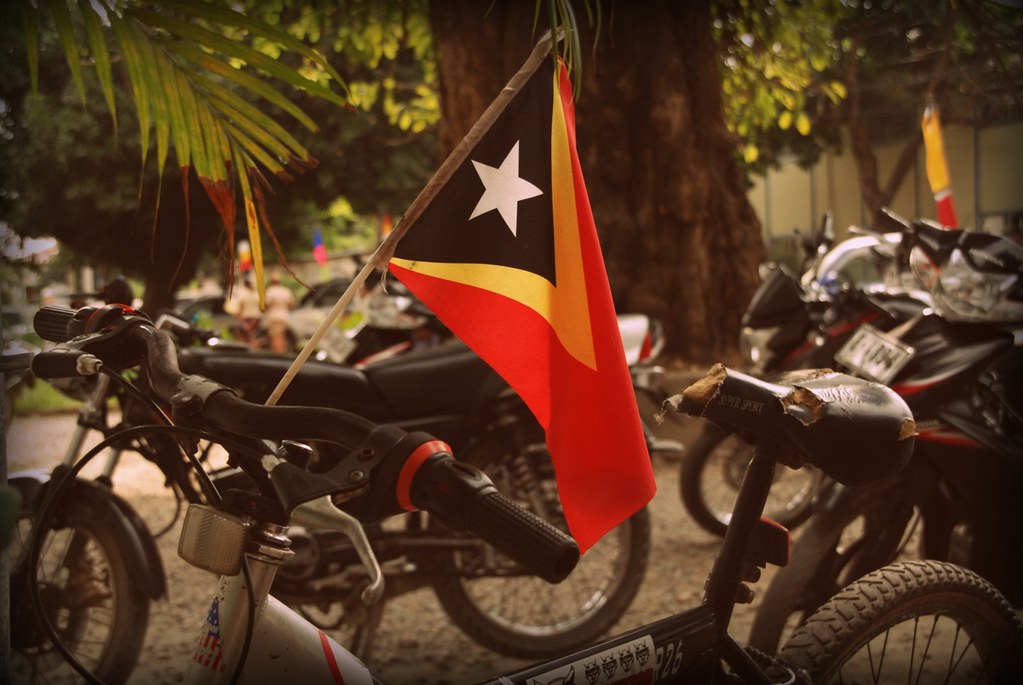
On October 26, 2025, the humid air of Kuala Lumpur will carry echoes of triumph as Timor-Leste—better known as East Timor—formally accedes to the Association of Southeast Asian Nations (ASEAN) as its 11th member. This moment caps a saga of perseverance that spans over two decades, transforming a fledgling nation born in 2002 into a full-fledged player in one of the world’s most significant regional blocs.
For East Timor, it is more than a diplomatic checkbox; it’s a beacon of belonging to the region. It’s happening now mostly due to Malaysia’s Prime Minister Anwar Ibrahim, whose chairmanship of ASEAN in 2025, has made it possible.
East Timor’s quest for ASEAN membership took nearly more than a decade. After a turbulent path to nationhood from Indonesia in 2002, after a brutal 24-year occupation that claimed over 200,000 lives, the newest sovereign country in Southeast Asia was scarred. Its capital Dili eyed ASEAN as essential to its security, anchoring the new country’s fragile sovereignty to the ASEAN family.
East Timor’s formal journey began in 2005 when it was admitted to the ASEAN Regional Forum (ARF). Two years later, in 2007, the country accedes to the Treaty of Amity and Cooperation in Southeast Asia. The next few years, questions were raised about East Timor’s readiness to join ASEAN, from its lack of professional diplomatic staff (including English-proficient staff) to its infant economy. There were other practical issues as well: for example, in 2014 the ASEAN Secretariat openly said the country did not yet have an embassy in all ten current ASEAN member states, a prerequisite for membership. East Timor’s abstention in a 2021 UN vote condemning Myanmar’s coup, together with Cambodia, was called a “vote of shame” from its own elder statesman, José Ramos-Horta. By August 2023, Prime Minister Xanana Gusmão declared no membership while “military governments” like Myanmar’s lingered in the fold. A 2023 roadmap lay out the milestones for East Timor, including hosting mega-meetings, bulking up, and ratifying eighty-four legal instruments. There were some fears that East Timor might be ‘’drag’’ on ASEAN.
From 2019 onwards, East Timor began joining almost all ASEAN meetings as an “Observer”. At the end of 2022, East Timor was “in principle” status to join ASEAN and attended all high-level meetings.
Membership of ASEAN has overwhelming support among the East Timor political class, viewing ASEAN as essential for economic diversification beyond oil and gas, which still props up 80-90% of its revenue. East Timor has a nominal GDP of approximately USD$2 billion as of 2024 and a tiny population of around 1.4 million people. It is the smallest economy among ASEAN member states.
It is no exaggeration to say East Timor’s entry is largely due to Anwar Ibrahim. At the 46th ASEAN Summit in May this year, he made it clear that East Timor will be accepted as full member. His September 2025 visit to Dili sealed bilateral pacts on trade and security, signalling to holdouts that East Timor was not a liability but a bridge. During the two-day trip Anwar was awarded Timor-Leste’s highest honour “in recognition of his long-standing advocacy and Malaysia’s role in supporting the country’s ASEAN aspirations.”
East Timor’s accession marks a key milestone in ASEAN’s 58-year chronicle, a capstone to its foundational dream of a borderless Southeast Asia. Founded in 1967 by Indonesia, Malaysia, the Philippines, Singapore, and Thailand to counter communism, ASEAN ballooned to ten members by 1999 with Cambodia’s entry. From its founding, ASEAN seeks to politically unite all countries in the region, and East Timor was the last holdout.
Its membership fulfilled the bloc’s implicit mandate for pan-regional wholeness.
Economically, though its $2 billion economy is a minnow, Dili’s untapped fisheries, tourism, and coffee exports could invigorate supply chains, while ASEAN’s markets offer diversification from oil volatility. Security-wise, it bolsters the ASEAN Political-Security Community (APSC), enhancing maritime vigilance in the Timor Sea against trafficking and piracy. Diplomatically, it amplifies ASEAN’s voice: a unified eleven countries bloc in global forums, from climate talks to U.S.-China rivalries, positioning the bloc as a neutral pivot.
Australia will benefit.
Australia stands to benefit from East Timor full membership too. As East Timor’s nearest maritime neighbour and key aid giver, pouring about AUD$1 billion in aid since independence. Australia also partially bankrolled Dili’s ASEAN prep with technical aid and English training. There is also the security angle. A secure and prosperous Timor-Leste curbs refugee flows and illegal fishing, easing Australia’s border strains. Economically, it greases trilateral ties with Indonesia via shared energy projects in the Timor Gap, potentially unlocking $10 billion in gas reserves. Diplomatically, a fortified ASEAN amplifies Australia’s “Indo-Pacific” strategy, countering China’s sway.
In summary, East Timor full membership of ASEAN next week is good news for the region and for Australia.
James Chin is professor of Asian Studies at the University of Tasmania and adjunct Professor, Monash University.
This article is published under a Creative Commons License and may be republished with attribution.