At the early stages of many conflicts, there is often hope that the crisis can be contained quickly. However, conflicts such as the Iraq War, the Syrian Civil War, and the Yemeni Civil War illustrate how confrontations initially perceived as limited can expand as regional and international actors become involved.
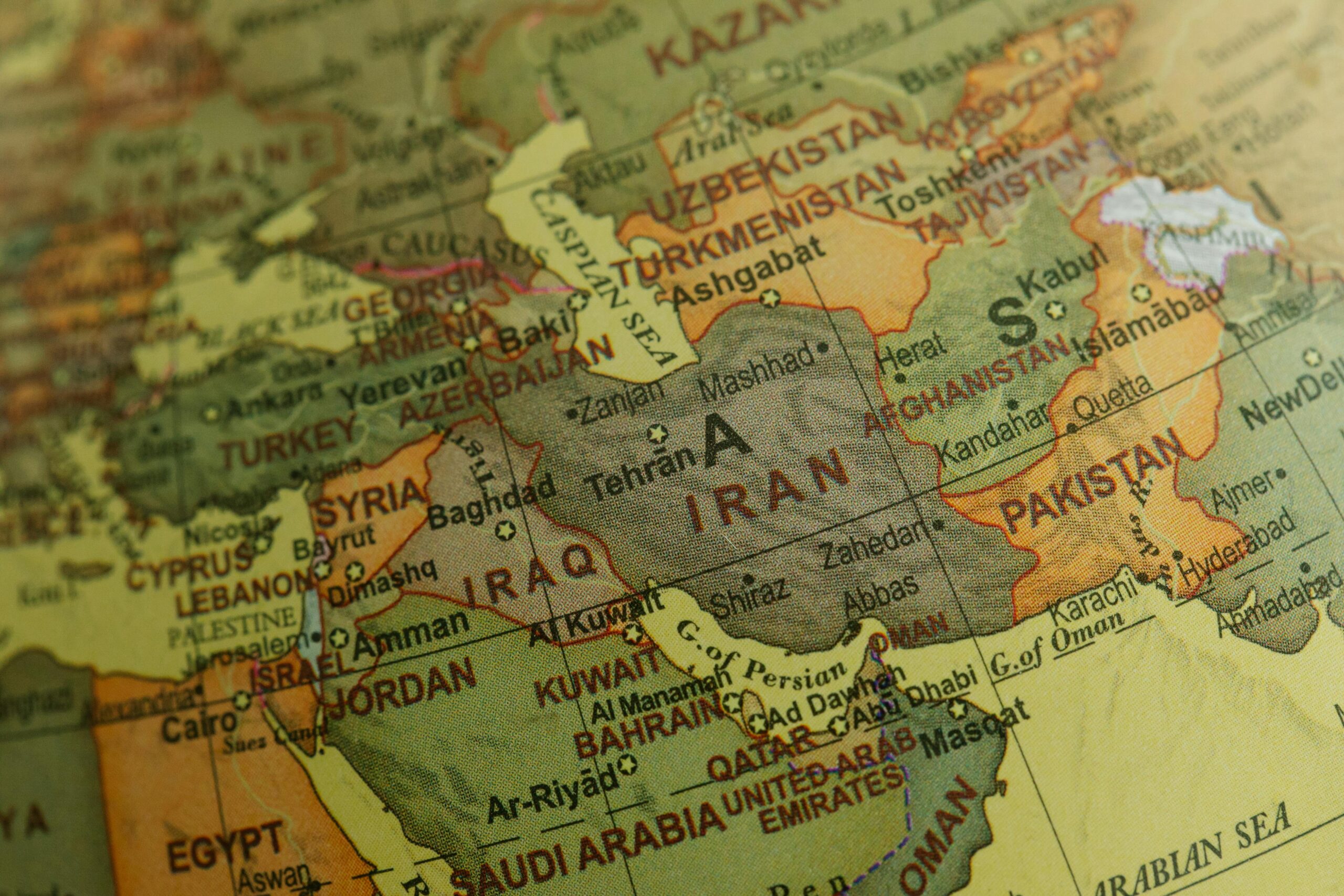
On 28 February 2026, the United States and Israel launched large-scale strikes on Iran, triggering retaliatory missile and drone attacks across the region. The escalation has once again brought a central question to the forefront of geopolitical analysis: Will this crisis remain a limited confrontation, or will it risk evolving into a prolonged and exhausting conflict? Experience from the past two decades in the Middle East suggests that many wars initially perceived as limited have quickly developed into complex, multilayered crises—conflicts that reshape not only the fate of a single country but the balance of power across an entire region.
Understanding the potential trajectories of this crisis requires attention to two interconnected levels of analysis: regional and global geopolitical competition on the one hand, and Iran’s internal political and social structures on the other. Focusing on only one of these dimensions provides an incomplete picture, as internal and external dynamics often reinforce one another in complex ways.
Why the Conflict Could Become Prolonged
At the early stages of many conflicts, there is often hope that the crisis can be contained quickly. However, the experience of regional wars suggests that such expectations are frequently overly optimistic. Conflicts such as the Iraq War, the Syrian Civil War, and the Yemeni Civil War illustrate how confrontations initially perceived as limited can expand as regional and international actors become involved. When military confrontations become intertwined with the strategic interests of regional and global powers, the likelihood of escalation increases significantly.
This pattern has been reflected not only in battlefield developments but also in public statements by political leaders and international institutions. For example, António Guterres warned that the military escalation in the Middle East risks triggering a broader regional conflict with “grave consequences for civilians and regional stability,” calling for an immediate cessation of hostilities and a return to negotiations. Under such circumstances, wars often develop three common characteristics: the geographical expansion of the conflict, an increase in the number of actors involved, and the gradual erosion of national infrastructure and economic stability. Over time, this dynamic can lead to a situation in which none of the parties can achieve a decisive victory, yet the costs of continuing the conflict keep rising.
As a result, a scenario in which the current crisis ends rapidly appears relatively unlikely. A more serious possibility is that the conflict could evolve into a war of attrition—one in which neither a decisive victory nor a swift resolution becomes attainable.
Possible Paths Toward Ending the Crisis
Despite these complexities, several theoretical pathways toward ending such a conflict can be considered. One possibility is that a primary actor concludes that its strategic objectives have been sufficiently achieved. In such circumstances, the conditions for de-escalation and negotiation may emerge. Historical experience suggests that this dynamic has played a role in ending or reducing the intensity of several conflicts. For instance, the gradual withdrawal of the United States from the Iraq War reflected a reassessment of strategic priorities after years of military engagement. Similarly, diplomatic initiatives and negotiated arrangements in the later stages of the Syrian Civil War were facilitated when some external actors adjusted their expectations regarding achievable military outcomes. Yet in complex geopolitical rivalries, identifying the moment when all actors share such an assessment is difficult.
A second scenario involves internal developments within Iran. In many regional crises, shifts in domestic political orientation or foreign policy strategies have helped reduce tensions and open space for diplomacy. The negotiations that led to the Joint Comprehensive Plan of Action illustrate this pattern. Concluded in 2015 between Iran and the P5+1 powers (the United States, United Kingdom, France, Russia, China, and Germany), the agreement required Iran to limit uranium enrichment to 3.67 percent, reduce its stockpile of enriched uranium to about 300 kilograms, and allow extensive monitoring of its nuclear facilities by the International Atomic Energy Agency, in exchange for the lifting of nuclear-related economic sanctions. Such diplomatic arrangements demonstrate how shifts in policy priorities within Iran and among major international actors can create opportunities for dialogue and de-escalation even after periods of prolonged confrontation.
Nevertheless, the simultaneous realisation of these conditions is far from straightforward. Deep mistrust among regional actors, geopolitical competition, and security calculations make a rapid transition toward stability unlikely. As a result, even when opportunities for negotiation arise, translating them into lasting stability can remain a complex and uncertain process.
The Human Cost of War
Amid geopolitical analysis, one fundamental reality is sometimes overlooked: wars inflict their greatest damage on ordinary citizens. The destruction of critical infrastructure, economic disruption, forced migration, and social insecurity can profoundly affect the lives of millions of people. Early reports suggest that the human cost of the conflict has already been substantial. According to figures compiled by Al Jazeera, at least 1,255 people have been killed in Iran since the United States and Israel launched coordinated strikes on 28 February 2026, with many of the victims reported to be civilians.
The violence has also extended beyond Iranian territory. Reports indicate that at least 13 people have been killed in Israel. At the same time, eight U.S. soldiers and several additional casualties in Gulf states have also been reported as the conflict has spread across the region. These figures remain provisional, and casualty estimates are likely to evolve as the conflict continues and additional information becomes available.
For this reason, any scenario that can prevent the conflict’s expansion and reduce its humanitarian consequences deserves serious consideration. Even when a comprehensive political settlement seems difficult, efforts to contain the scale of violence can play a crucial role in reducing human suffering.
Strategic Deadlock and Political Transformation
In many prolonged conflicts, a moment eventually arises when the principal actors find themselves in a strategic stalemate. In such situations, none of the parties can fully achieve their objectives, yet continuing the conflict imposes steadily increasing costs. According to the theory of the Mutually Hurting Stalemate, developed by I. William Zartman, parties are most likely to pursue negotiations when they realise that neither side can achieve a decisive victory and that the costs of continuing the conflict are steadily increasing. This stage often opens space for discussions about alternative pathways to resolving the crisis.
In some cases, prolonged crises can lead to deeper transformations within political systems. Modern history demonstrates that severe political and economic crises can sometimes reshape the structure of states themselves. The collapse of the Soviet Union and the disintegration of Yugoslavia are examples of how sustained internal and external pressures can lead to significant political reconfiguration. Such transformations, however, rarely produce immediate stability and are often accompanied by considerable uncertainty and new challenges.
Self-Determination and Its Complexities
In this context, discussions about the principle of self-determination occasionally re-emerge. Although this principle is recognised in international law, its practical implementation has always been complex and politically sensitive.
Iran is a country with considerable linguistic, cultural, and historical diversity. Scholars note that the country includes dozens of ethnic and linguistic communities that speak non-Farsi languages such as Azerbaijani, Turkish, Arabic, and Turkmen. A 2009 report by the then-minister of education, Hamid Reza Haji Babai, noted that 70% of Iranian students are bilingual. Because the Iranian census does not collect data on ethnicity, estimates vary. Still, most studies suggest that non-Persians constitute more than half of the population, while large minority groups include Azerbaijanis, Kurds, Lurs, Arabs, Baluch, and Turkmen. Because official ethnic statistics are lacking and Azerbaijanis have experienced widespread internal migration to major cities such as Tehran, estimates vary significantly. Nonetheless, most scholars agree that Azerbaijanis are among the most ethnically, politically, and economically influential communities in the country.
For much of the past century, this diversity has been managed within a centralised political structure. Yet when states face simultaneous internal and external pressures, debates about alternative forms of power distribution can resurface. These discussions may encompass a wide range of possibilities—from governance reforms and greater decentralisation to broader forms of regional autonomy. At the same time, such debates inevitably intersect with concerns about territorial integrity and national security.
South Azerbaijan in Potential Future Scenarios
Among Iran’s regions, analysts often point to South Azerbaijan as economically, demographically, and geographically significant. Cities such as Tabriz have historically played an important role in regional commerce, industry, and political movements. Located at a crossroads linking Iran with the Caucasus and Anatolia, the region holds considerable trade and strategic potential.
Some analysts argue that regions with strong economic bases, urban infrastructure, and institutional capacity can play an influential role in periods of political change. In this context, governance reforms, greater regional autonomy, or independence could reduce internal tensions and provide space for negotiation. South Azerbaijan’s economic resources, population size, and strategic location, therefore, make it a significant factor in discussions about Iran’s possible political and regional trajectories.
An Uncertain Future
The current crisis surrounding Iran is not merely a military confrontation; it reflects broader geopolitical, political, and social tensions that have developed over many years. When this war eventually ends—whenever that may be—it is unlikely that its consequences will be limited to the cessation of hostilities. Instead, it may open wider debates about the region’s future political and security architecture.
The central question is whether the present crisis will become an opportunity to rethink governance structures and reduce regional tensions or simply add to the list of prolonged conflicts that have defined the Middle East in recent decades. The answer will shape not only Iran’s future but also the stability of the wider region.
Dr Abraham Alvandi is an Australian researcher and academic with a South Azerbaijani background. He is actively engaged in academic and leadership roles within the digital health sector. In addition to his professional work, he has held several key positions in South Azerbaijani community affairs, contributing to cultural, civic and advocacy initiatives
This article is published under a Creative Commons Licence and may be republished with attribution.