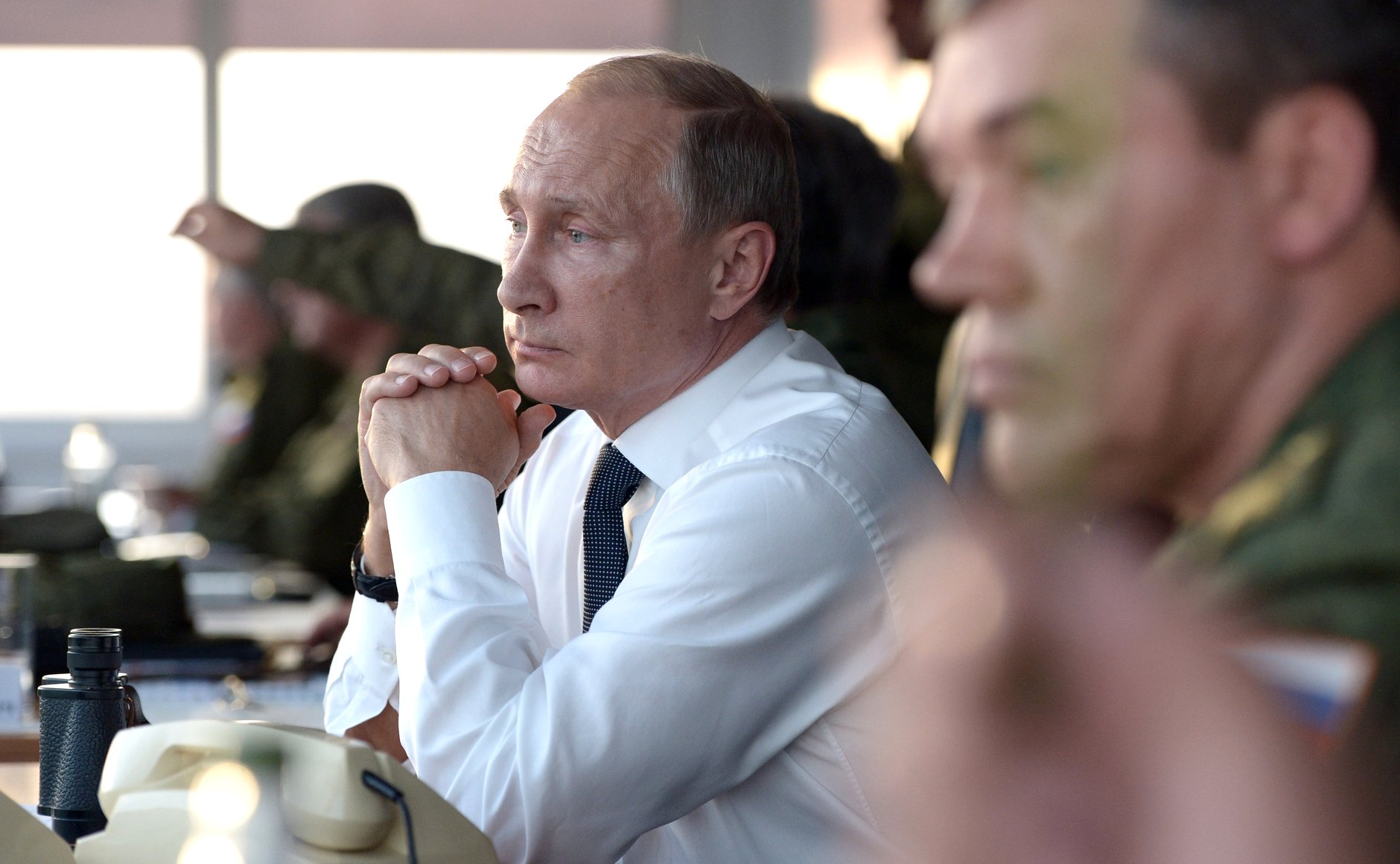
As we reach the fourth anniversary of Putin’s special military operations, let’s remember it is only a year ago that President Trump told President Zelenskyy that he “has no cards” – Russia “has all the cards”. The truth is that Putin holds a losing hand.
His cards show a Russia suffering unsustainable losses. In addition to well over one million casualties, his illegal war has shattered the Russian armed forces, broken the economy, isolated the country, and accelerated the demographic collapse. His dream of reconstituting the Soviet empire is the very definition of fantasy.
For too long, the prevailing assumption that Russia would outlast Ukraine and its western allies was based on the commentary that Russia held an insurmountable edge in manpower and war material. It is not the first time conventional wisdom has devolved into lazy cliché.
The reality is that the war in Ukraine has made Russia a global pariah. It is a vassal of China and beholden to North Korea and Iran for want of military assistance. Additionally, its manpower advantage is being neutralised due to breathtaking losses in men and equipment.
Although the military maintains it is achieving its target of 30,000 recruits per month, Ukrainian assessments place the number of Russian casualties at a steady 35,000 per month. Some sources, such as Bloomberg, report that Russia suffered as many as 44,000 killed and wounded in January alone.
Losses are increasingly outstripping replacement personnel by greater margins. Ukraine, in the meantime, is also committed to meeting quotas. Mykhailo Fedorov, the Ukrainian defence minister, told the New York Times he aims to increase the number of Russian losses to 50,000 per month. “The objective is to impose costs on Russia that it cannot bear,” he told reporters.
Harley Balzer, former Director of Georgetown University’s Russian Area Studies Program and co-author ofFailure: Russia Under Putin, says the main age group of Russians being sent to war is in their 40s and 50s. This is how the government is addressing the demographic time bomb. He adds that the Kremlin’s supply chain of foreign fighters now extends to over 50 countries, and the most common name among soldiers killed in action is Mohamed.
In order to spare major population centres like Moscow, St Petersburg, and Novosibirsk the effects of war and to compensate for declining volunteer rates, the government has relied more and more on non-Russian recruits. The prime human markets are in the Global South. Thousands of young men from former Soviet countries, low-income nations in South Asia, the Middle East, Africa, South and Central America have been lured with false promises of high civilian salaries, educational opportunities, and fast-track citizenship. Once conscripted, they find themselves at the front under-trained, ill-equipped, and integrated with Russian units, attempting to interoperate without a common language.
On the Atlantic Council website, a report includes social media videos picturing the abuse of Africans by their Russian ‘comrades’. Russians are seen taunting them as “disposables” and mocking one recruit who is wearing an anti-tank mine strapped to his chest. His orders are to “run and hop through the woods”.
It is not only cannon fodder that Moscow lacks. The healthcare sectors are also depleted. The shortage has forced Russia to recruit doctors from Africa. In meeting hiring criteria, candidates need not provide a diploma. Nor is there the requirement to speak Russian. A simple statement of qualifications suffices.
How does Putin respond to these systemic risks? He elevated the National Guard of Russia (Rosgvardia) into a powerful “parallel” force operating outside the Defense Ministry. Rosgvardia has a separate chain of command that reports directly to Putin. It is essentially a private army responsible for domestic stability and the protection of the regime. This is a type of praetorian guard whose duty in ancient Rome was to act as secret police, gather intelligence, perform arrests, and protect the emperor.
Established by presidential decree on April 5, 2016, Rosgvardia was a consolidation of OMON (Special Purpose Mobile Unit) and SOBR (Special Rapid Response Unit). OMON is a paramilitary riot police force under the National Guard, known as “Black Berets”. SOBR is an elite Spetsnaz unit serving as a high-risk police tactical unit similar to Western SWAT teams. Together, they now form an imperial army under an emperor who oversees a fragile, fragmenting empire.
According to British MI6, Rosgvardia is a paramilitary of 400,000 personnel (600,000 Russian army troops are presently deployed in Ukraine). It is fortified with heavy weapons, tanks, artillery, and Multiple Launch Rocket Systems (MLRS). About 30,000 national guardsmen are assigned to Ukraine to conduct rear-area security.
Rosgvardia’s Director is Viktor Zolotov, a former KGB bodyguard and longtime member of the Putin inner circle. He served as the president’s chief bodyguard from 2000 to 2013. As part of his current remit, Zolotov oversees intelligence activities and implements state policy.
Putin is creating a punitive regime by increasing surveillance operations, suppressing artists, censoring academics, banning the Telegram messaging app, concocting a rehabilitation of Stalin, and enabling the arrest of minors. Are these the signs of a regime holding all the cards or an autocratic system sensing palpable weakness from the pressures of a long, unwinnable war?
Ukraine has shattered the ikon of Putin as a decisive, poker-faced master strategist. What the world sees now is a former KGB apparatchik who became a self-centred autocrat willing to stake the life of a nation on a gamble that from the beginning was almost sure to be lost.
Dr Jack Jarmon served as USAID Technical Advisor for the Russian government during the mid-1990s. He has taught international relations at the University of Pennsylvania and Rutgers University where he was Associate Director and Research Professor at the Command Control and Interoperability Center for Advanced Data Analysis. He is currently an editorial board member and contributor at PostPravda.info, a Ukrainian and Polish news organisation.
This article is published under a Creative Commons License and may be republished with attribution.