The commotion over the world’s biggest island may be a prelude to a potential conflict over the “Continent of Peace.” The new US National Security Strategy calls to “restore American preeminence in the Western Hemisphere.” In effect—and in line with the 19th century Monroe Doctrine—Washington has returned to viewing the Western Hemisphere as its strategic “backyard.”
The recently released National Defense Strategy further reinforced this approach by emphasizing the “US military and commercial access to key terrain, especially the Panama Canal, Gulf of America, and Greenland.”
The intended audience of both documents is subtle but crystal clear: China and its expanding economic, political, military, and scientific presence worldwide. From Washington’s perspective, this growing influence must be contained. It is especially evident in Latin America and the Caribbean (LAC), where China has been involved in projects worth billions of dollars in Argentina, Brazil, Chile, Peru, and nearly every other country in the Western Hemisphere.
At the January 2026 World Economic Forum in Davos, however, the main controversy centered on Greenland. Initially, the US position included explicit threats toward Denmark to gain sovereignty over Greenland and implicit threats to the post-WWII security alliance itself. Although President Donald Trump ultimately walked back the military pressure, he continues to insist that he wants Greenland—now through some sort of a deal.
But if Washington is seriously considering strategic control in the Arctic—citing security risks from China and Russia, and, less officially, access to rare-earth minerals—why stop there? Should the logic of hemispheric security extend not only northward but also southward—all the way to Antarctica, where the Chinese presence is also increasing?
Antarctica: A Continent of Peace—or a Frozen Rivalry?
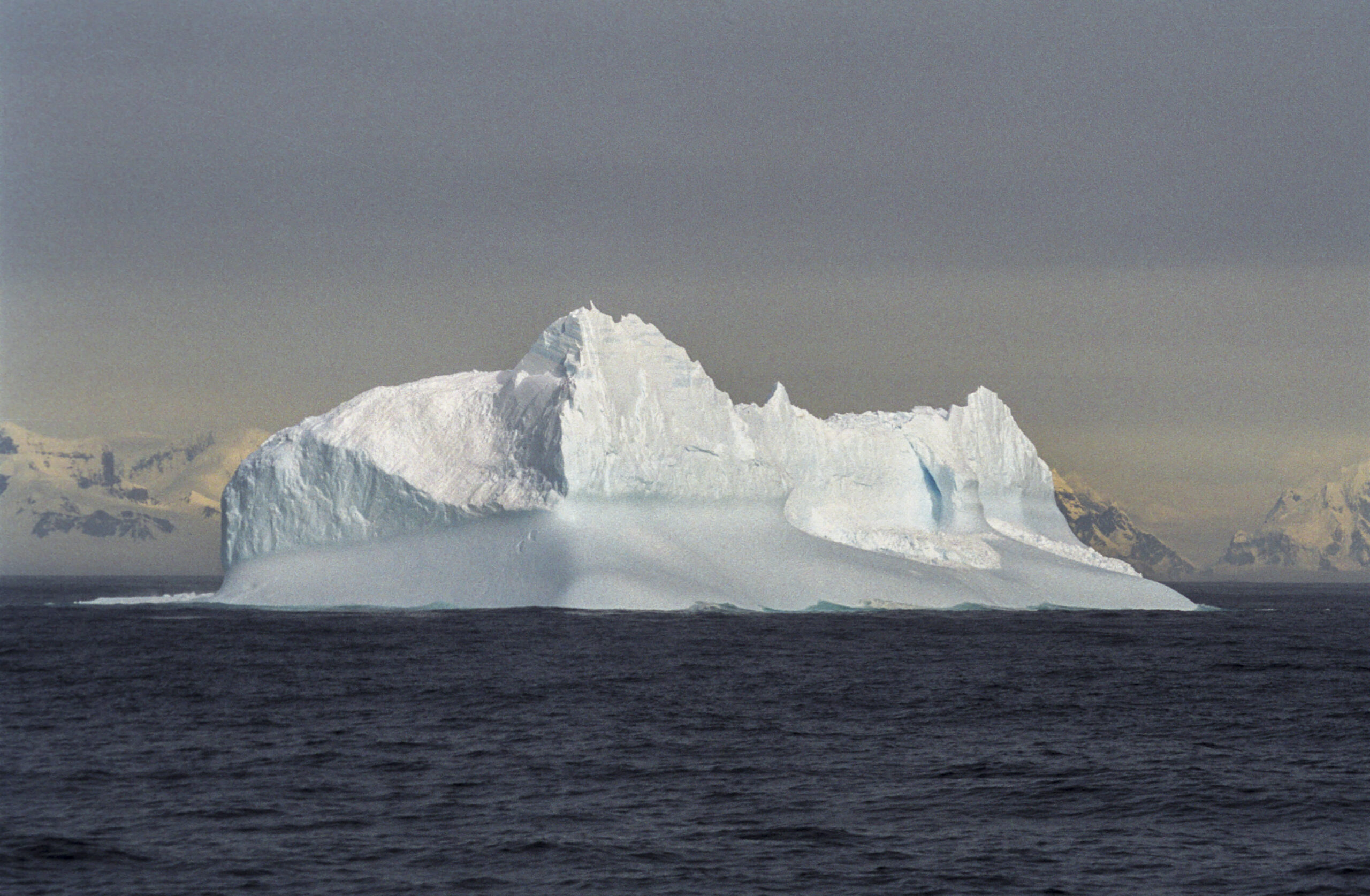
Unlike anywhere else on Earth, the uninhabited white continent around the South Pole belongs to no one. It has been governed by the Antarctic Treaty System (ATS)—initiated by signing the Antarctic Treaty in 1959 in Washington, DC, under the leadership of President Dwight E. Eisenhower.
This system operates entirely outside the UN framework. Headquartered in Buenos Aires, the ATS has designated Antarctica a “Zone of Peace” devoted to scientific research. Military activity is prohibited, nuclear tests are banned, and sovereignty claims are effectively frozen.
Among more than 70 research stations operated by around 30 countries, Argentina, China, Russia, the United Kingdom, and the United States are the most prominent. These states maintain substantial year-round or summer-only facilities for scientific research and exploration under the Antarctic Treaty.
Technically, any country may conduct research in the Antarctic region as long as it complies with the Treaty. But what actually motivates states to spend so much money exploring almost uninhabitable territories that do not even belong to them?
Participation in the ATS—and especially holding “consultative party” status with voting rights—is a marker of international prestige. This is likely the reason why countries such as Poland maintain their research facilities. According to the Warsaw administration, the ongoing modernization of the Henryk Arctowski Polish Antarctic Station—named after a pioneering Polish explorer—is not only about science; it also reflects explicit geopolitical considerations.
These research stations have also become mirrors of long-standing animosities. South Asia’s rival powers offer a telling example: when India established its Antarctic research base in 1983, Pakistan soon followed in 1991, naming its station after the country’s founding father, Muhammad Ali Jinnah. The station was short-lived, largely due to insufficient funding—but its message was more than symbolic.
Territorial disputes add another layer of tension. Several countries maintain official claims to parts of Antarctica, some of which overlap awkwardly. The most prominent case is the Antarctic Peninsula, where Argentina, Britain, and Chile advance competing claims—collectively known as the “ABC.”
In this regard, the United States is a uniquely interesting case. It does not recognize any country’s sovereignty over Antarctica and has made no formal territorial claim of its own. At the same time, it explicitly reserves the right to make a claim in the future. Today, the US National Science Foundation manages strategically important three year-round research facilities—the Amundsen–Scott South Pole Station, McMurdo Station, and Palmer Station—and two research vessels.
US–China Competition on Ice
Some observers argue that science in Antarctica is merely a camouflage. Indeed, these research stations collect climate data, study fragile ecosystems, enable astronomical observations, and monitor glaciers—but they also establish logistical infrastructure, ensure long-term presence, and build technical expertise for operating in extreme environments.
Among the countries that are increasingly present on the Antarctic continent are the same rivals that the United States has identified in the Arctic Circle: Russia and China.
China missed the “Heroic Era” of polar exploration of the 19th and early 20th centuries. The Russians have Fabian Gottlieb von Bellingshausen; the Americans have Richard E. Byrd; the Norwegians have Roald Amundsen, who was first to reach the South Pole; and the British have the legendary Ernest Shackleton, who—although his trans-Antarctic expedition failed—secured his place in history through endurance and deeply human-centered leadership.
In this history of heroism, determination, and courage, China does not have its own Antarctic hero. In the absence of such a historical figure, it now seeks to catch up and prove that it is a modern-day global power that should have a share in deciding Antarctica’s present and future.
A clear demonstration of China’s capabilities is its operation of Kunlun Station at one of the coldest places on Earth. Located only several kilometers away from the highest point on the Antarctic Plateau, it is the second closest station to the South Pole. Notably, however, Beijing failed to get approval for turning the surrounding area into an Antarctic Specially Managed Area (ASMA).
In 2024, China opened Qinling Station, celebrating the 40th anniversary of its presence on the distant white continent. Qinling became China’s third permanent base and fifth in total. Moreover, it marked a significant expansion of China’s presence in the Ross Sea region, south of Australia and New Zealand. The completion of the station was praised by none other than President Xi Jinping—which speaks volumes about the importance of this move for China’s broader strategy and image-building efforts. Moreover, China has equipped the site with a telescope that could potentially be used for both civilian scientific research and military or intelligence purposes—adding to longstanding suspicions about the dual-use nature of some Chinese Antarctic activities.
But that is not the end of the story. China already has plans in place for a sixth station. In March 2025, Beijing announced its intention to build a new summer research station in Marie Byrd Land in West Antarctica—to be completed in 2027.
Another major milestone occurred as recently as December 2025, when a draft law titled Antarctic Activities and Environmental Protection Law was submitted to the Standing Committee of the National People’s Congress. The proposed legislation would apply to Chinese citizens, entities, and organizations conducting activities in Antarctica. Notably, it would also extend jurisdiction to foreign individuals, organizations, and entities if their Antarctic expeditions are organized within, or launched from, Chinese territory.
Finally, China may be interested in amending the Protocol on Environmental Protection to the Antarctic Treaty (which entered into force in 1998) regarding the ban on all activities using Antarctica’s mineral resources except for scientific research. Technically, such a revision may take place after 50 years—that is, in 2048—but Beijing may not feel inclined to wait that long. In the meantime, it is steadily strengthening its presence, expanding research activities, and opening new bases.
Given all this, if Washington treats the Chinese threat in the Arctic so seriously, some may find it surprising that the Antarctic is not on the front pages of newspapers whatsoever. Yet, there may be reasons for that.
So Why Greenland—and Not Antarctica?
Greenland’s geopolitical appeal is obvious. It lies closer to the United States than to Denmark, sits astride emerging Arctic shipping routes, and contains valuable rare-earth materials and other mineral resources. From a strategic perspective, it fits neatly into existing American defense and logistics networks.
Antarctica is very different. It is far away, brutally expensive to access, and technologically demanding. Operating there requires specialized ships, aircraft, and infrastructure. For the moment, a pure cost–benefit calculation does not favor such moves.
But this calculus may change. The more China invests in Antarctic science and logistics, the harder it will be for the Trump White House to treat the white continent as politically neutral. If great-power competition continues, Antarctica’s vast resources, strategic position, and legal ambiguities may attract Washington’s attention.
So why doesn’t President Trump want Antarctica? The simplest answer may be: he doesn’t want it yet.
Dr Antonina Luszczykiewicz-Mendis is a visiting scholar at Oxford University in the United Kingdom and a former Fulbright senior scholar at Indiana University in the United States. She teaches at the Jagiellonian University in Krakow, Poland. You can find more of her work here.
Dr Patrick Mendis is a presidential advisor on national security education at the US Department of Defense—an appointment by the Biden White House with Congressional endorsement. He is a distinguished visiting professor of transatlantic relations at the University of Warsaw. You can find more of his work here.
The authors have recently returned from a study and lecture tour in Latin America and Antarctica. The opinions expressed in this article are their own and do not represent those of their governments or affiliated institutions.
This article is published under a Creative Commons License and may be republished with attribution.