The Bondi massacre highlights ongoing challenges in Australia’s ability to detect and prevent lone-actor extremist violence, particularly when individuals are influenced by ISIS-linked networks and operate under the radar of intelligence agencies.
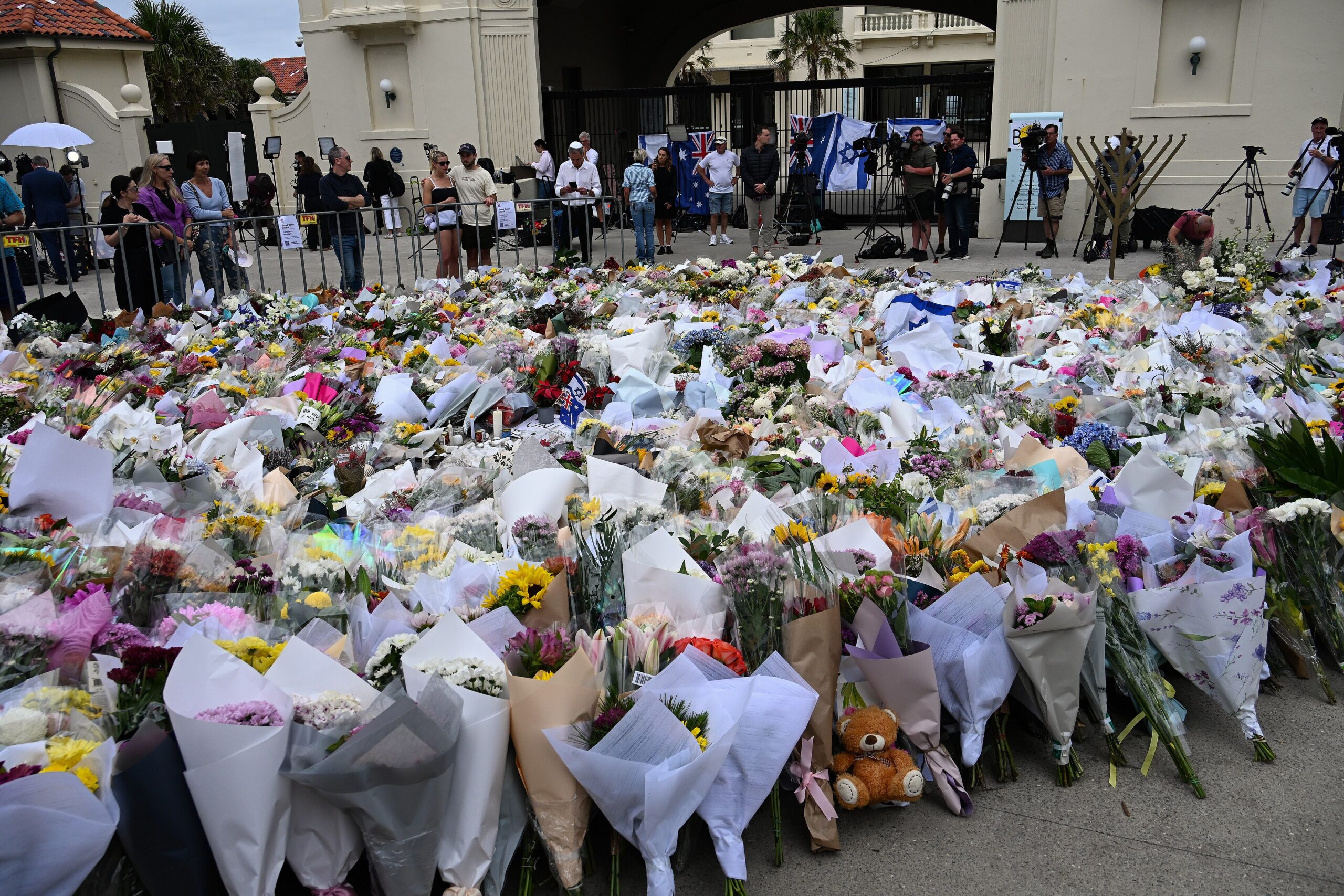
Much remains unknown about the Bondi massacre that targeted a Hanukkah festival last December, resulting in the deaths of 15 attendees. What has been confirmed, however, is that the perpetrators, 24‑year‑old Naveed Akram and his father, Sajid Akram, were inspired by the Islamic State in Iraq and Syria (ISIS) ideology.
Police have stated that the pair acted alone. It has also been revealed that Naveed became a subject of interest for the Australian Security Intelligence Organisation (ASIO) in October 2019 due to his associations with individuals linked to a Sydney‑based ISIS cell. After a six‑month investigation, the agency assessed that Naveed did not pose a threat to public safety. During recent parliamentary testimony, ASIO chief Mike Burgess reiterated that the agency had no reason to suspect that the Akrams would go on to commit the worst terrorist attack in Australian history. According to Burgess, the father and son managed to evade detection by maintaining a low profile and effectively going dark.
This highlights the difficulty of countering ISIS’s appeal, particularly within what can only be described as an overly permissive environment in Australia, one in which certain self‑styled clerics have been able to propagate ISIS-like beliefs, fuelling ‘Sunni Radicalisation’. Following the Bondi attack, it was revealed that Naveed had been mentored by Wissam Haddad, who isknown for past associations with people who later joined ISIS. A former ASIO officer publicly described Haddad as the spiritual leader of a “pro‑ISIS network” in Australia, alleging that he used his prayer centre in Bankstown, a Sydney suburb, to promote extremist ideas.
While it remains unclear whether Haddad’s preaching directly influenced the Bondi attack, the link is difficult to ignore, particularly as he has been accused of delivering lectures containing derogatory anti‑Jewish remarks, accusations upheld by a Federal Court. Australia has long faced a problem of excessive permissiveness toward radicalisation, creating a conducive environment for extremist ideologies to germinate. The Bondi massacre may represent one of the most devastating manifestations of this environment.
When ISIS was at its territorial peak in 2014, Australia, despite its geographic distance, stood out among Western nations for the number of citizens and residents joining jihadist factions in Iraq and Syria. One likely contributing factor was individuals’ ability to disseminate ISIS‑like teachings with relative ease. An Islamic centre and bookstore established by Haddad in Bankstown in 2012 was later revealed to have been used to indoctrinate attendees and recruit individuals for extremist groups in Syria. Although the centre was eventually shut down, Haddad continued his preaching activities.
Australian intelligence officials have also been more outspoken than many of their Western counterparts in the UK and EU states in identifying radical Sunni extremism as the primary driver of domestic terrorism. During a 2017 Senate hearing, then‑ASIO director Duncan Lewis rejected claims that refugees were more prone to terrorism, emphasising instead that Australia’s terrorism challenge stemmed from “radical Sunni Islam.” This explicit framing has continued under Burgess. In ASIO’s 2024 annual threat assessment, he asserted that “Sunni violent extremism poses the greatest religiously motivated violent extremist threat in Australia.” The consistency in emphasis suggests that Australia faces a persistent challenge from this form of extremism and that certain individuals preaching under the banner of Sunni Islam have been able to operate with more freedom than is prudent.
ISIS ideology frames Israel and Judaism as inseparable, casting the conflict in explicitly religious terms. “The fight with Jews is a religious war, not a social or national battle,” ISIS spokesman Abu Huthaifa al‑Ansari declared in early 2024, describing the war in Gaza as a “Jewish war against Muslims.” This explains why Australia experienced the Bondi mass-casualty anti-Jewish terrorist attack. Just as a permissive environment contributed to the disproportionate numbers of Australians joining ISIS, it may also have played a role in enabling the Bondi massacre.
There is compelling evidence that the Akrams adopted a similar worldview, which is one reason the attack has been described as ISIS‑inspired. In a video explaining their motivations, the pair condemned “Zionists,” referencing the war in Gaza. Their decision to target a Jewish religious festival suggests alignment with ISIS doctrine equating Judaism with Israel. Against this backdrop, a multi-partisan mandate is required to disrupt radical extremism in Australia, on which groups like ISIS thrive. Terrorism seeks to provoke fear, polarisation and overreaction. A measured, evidence-based response denies violent extremists that objective. Australia’s challenge is to prevent future attacks like this while preserving the pluralism, freedoms, and social cohesion that define its political identity and liberal values.
Ali Rizk is a Security Analyst and holds a master’s degree in Counterterrorism from Macquarie University, Sydney.
Dr Dalbir Ahlawat is a Senior Lecturer in the School of International Studies, Macquarie University, Sydney.
This article is published under a Creative Commons License and may be republished with attribution.