Australia doesn’t need to predict who governs Tehran to see the strategic risk. If Iran fractures into a prolonged crisis, it will pull US attention, air and missile defence assets, intelligence bandwidth, and maritime presence back into the Middle East – at precisely the moment Australia needs Washington concentrated on Indo-Pacific deterrence. That is the core Australian problem: not Tehran’s ideology, but America’s capacity.
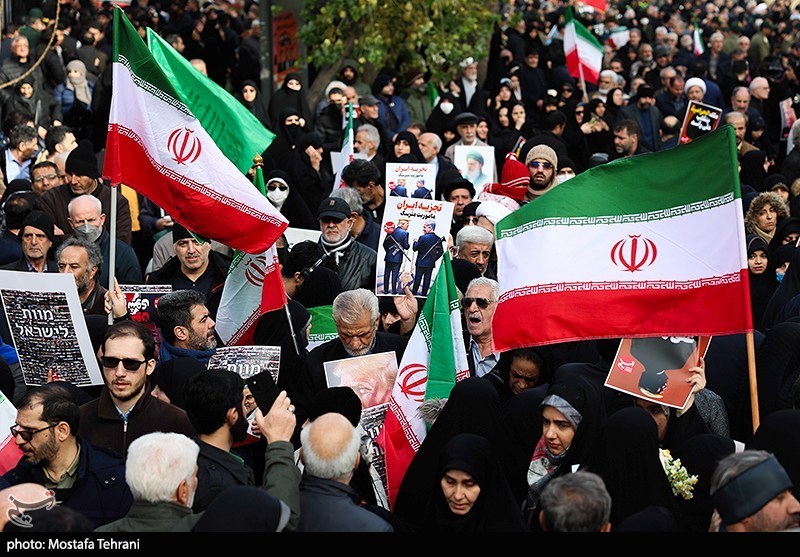
Iran’s protests may succeed or fail. Either way, external pressure is already creating the conditions for prolonged instability and that instability matters more to Australia than which faction ultimately governs Tehran.
If Iran weakens, the region doesn’t stabilise; it reverts. Gulf states pursue divergent strategies in the absence of a shared Iranian threat, forcing them to coordinate. Turkey expands its influence across Syria, Iraq, and the Caucasus with fewer constraints. Israel eliminates Iranian-backed networks but faces splintered militias, criminal-political hybrids, and ungoverned spaces – the conditions that bred ISIS.
For Australia, that regional reshuffle matters through five channels, and the first is the one that matters most.
US strategic bandwidth is the primary Australian exposure. If Washington intervenes in Iran, AUKUS timelines collapse. The Virginia-class submarines Australia is buying? America barely produces two per year for its own navy. An Iran crisis means US Navy priorities shift to immediate operational needs; no spare construction capacity for Australian boats. The reactor technology transfer requires Congressional approval, State Department export licenses, and DOE technical support. All of that stalls when those same agencies are managing Iran’s nuclear program fragments and proliferation risks. Australia’s planned 2030s submarine delivery becomes 2040s optimistically.
We know what American defence diversion costs because we’ve already experienced it. Between 2001 and 2020, while Afghanistan and Iraq consumed US bandwidth, China militarised the South China Sea, developed carrier-killing missiles, and built the world’s largest navy. The 2020s can’t absorb another round. AUKUS submarines arriving in the 2040s rather than the 2030s means Australia faces a decade of heightened Chinese pressure without the capability we’re paying for now.
The bandwidth drain operates through concrete mechanisms. Intelligence assets track Iranian fragments instead of PLA movements. Carrier groups manage Hormuz instead of Taiwan contingencies. NSC meetings focus on Middle East stabilisation rather than on the Indo-Pacific strategy. Iran’s scale multiplies each trade-off;f its population is four times Iraq’s, its ethnic geography creates multiple flashpoints from Kurdish regions to Arab-majority Khuzestan to Baloch borderlands. Each invites external intervention from Turkey, the Gulf states, and Pakistan. The Iraq War consumed American attention for a decade. Iran would be longer and more complex. Hence, Australia cannot afford it.
Terrorism and coalition pressure are predictable. Operation Okra cost $1.3 billion over six years, with special forces and RAAF assets deployed from 2014 to 2020; capability diverted from the Indo-Pacific when we needed it elsewhere. Iranian fragmentation creates worse conditions. Multiple ungoverned regions from Kurdish areas to Baloch borderlands, each potentially breeding extremist networks. The coalition request arrives before Australian politicians can debate it: Five Eyes partners share intelligence on emerging threats, Washington frames stabilisation as burden-sharing, and media coverage builds public pressure. Saying no becomes politically difficult even when strategically correct. Iraq produced one ISIS. Iran’s geography could produce several simultaneous threats, each generating deployment pressure.
Energy volatility hits Australia through our largest trading partners. In 2024, about 20 million barrels per day flowed through Hormuz – roughly a fifth of global petroleum consumption. Japan, South Korea, China, and India depend heavily on that flow and collectively account for most Australian commodity exports. When energy costs spike, manufacturing slows, infrastructure projects are deferred, and consumer spending contracts. Australian iron ore, coal, LNG, agricultural products, and education services all take the hit. Iranian fragmentation creates sustained uncertainty worse than single-event disruptions. No clear authority controlling oil infrastructure means no long-term contracts. No shipping security guarantees mean prohibitive insurance premiums. Multi-year uncertainty prevents the planning that Asian economies need for stable growth and Australia needs for stable export demand.
Humanitarian displacement at an unprecedented scale creates obligations Australia cannot ignore. Syria’s civil war displaced over 6 million refugees from a 22-million population, roughly one in four. Iran’s 88 million population experiencing a similar collapse could generate 20-25 million displaced persons. The primary host countries, Turkey, already hosting 3.2 million Syrians, Iraq recovering from ISIS, Pakistan facing IMF bailout conditions and inflation, Afghanistan under Taliban governance, have no capacity for flows this scale. That immediately triggers international burden-sharing frameworks where Australia faces expectations across four dimensions: financial contributions to UNHCR regional response plans, diplomatic engagement in stabilisation negotiations, domestic resettlement program pressures, and maritime surveillance as people smuggling networks activate established routes from Pakistan and Afghanistan via Indonesia toward Australia.
Diaspora mobilisation tests domestic cohesion when unity matters most. Australia hosts over 80,000 Iranian-born residents, plus 10,000 Kurdish-Australians, over 100,000 Turkish-Australians, and 300,000 Arab-Australians – each with direct stakes in Iran’s future.
Syria showed the pattern: tens of thousands protested across Australian cities between 2011 and 2016, community organisations proliferated from dozens to hundreds, fundraising raised millions, triggering ASIO investigations. Iran multiplies this.
Security services divert resources from Chinese espionage to monitor foreign interference and extremism risks. MPs face competing diaspora demands. Cabinet decides which factions to recognise, sanctions policy, resettlement priorities – each choice angers constituents.
The priority is planning, not positioning. Australia should establish interagency scenario planning for Iran spillover, coordinate early with Five Eyes partners to avoid burden-sharing surprises, and prepare domestic cohesion strategies. Early preparation prevents reactive crisis management that diverts resources from Indo-Pacific priorities.
Whether Iran fractures, falls, or limps on weakened, the Middle East will revert to a more competitive multipolar configuration. Canberra can’t choose Iran’s outcome, but it can choose whether it’s strategically surprised. The 2023 Defence Strategic Review warned that warning time has contracted to less than a decade. Spending half that decade managing Iranian fallout while China operates unchallenged would be a strategic failure. Early preparation is the only option Australia has.
Mohd Amirul Asraf Bin Othman is a Ph.D student in Political Science and International Relations at the Centre for Arab & Islamic Studies (CAIS), The Australian National University. His academic interests are diverse and encompass areas such as Middle East Security Studies, Regionalism, Terrorism, and Extremism, as well as the broader fields of Political Science and International Relations in the Middle East context. You can find him on social media here.
This article is published under a Creative Commons License and may be republished with attribution.