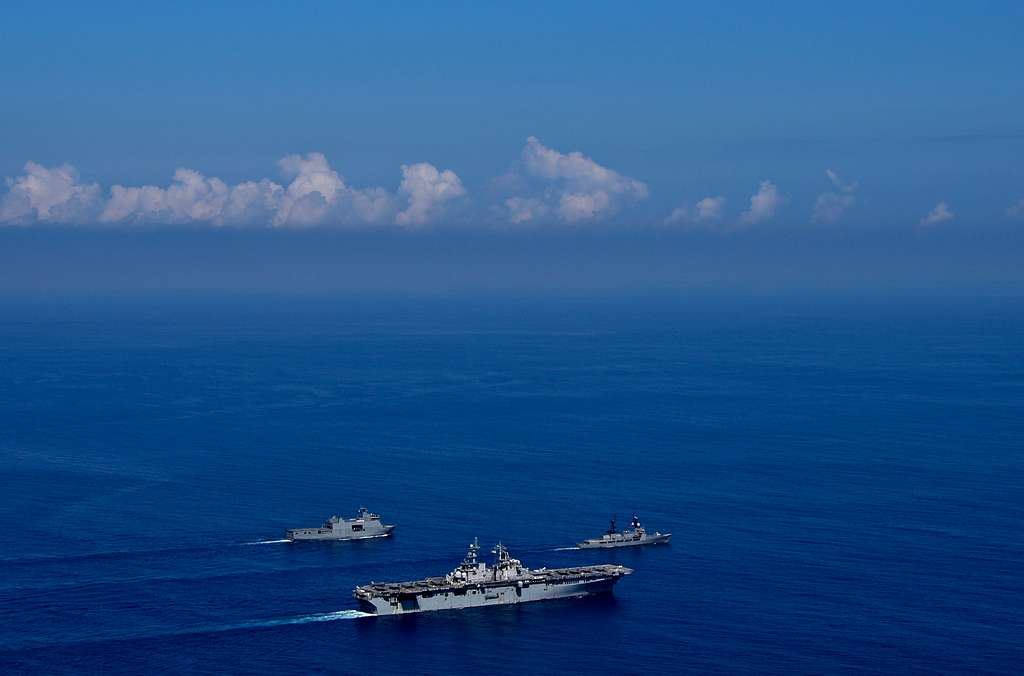
Although the South China Sea dispute mainly involves China and some ASEAN countries, the United States has played an important role. Some ASEAN states, especially the Philippines, have depended on U.S. support in their approach to the conflict.
After more than a month of ongoing war in the Middle East, the US-Israel war on Iran will have a long-lasting impact beyond the region. It will change the trajectory of the hotspot of potential conflict elsewhere, including the South China Sea.
Many analysts argue that the true winner of the war in the Middle East is not actually the United States and Israel, nor Iran, but China. As the US’s biggest rival, Beijing has already benefited from the rising oil prices. Mainly due to their close ties, China and Iran have entered into a 25-year agreement since 2021, under which Iran supplies $400 worth of oil to China in return for Chinese investment and security cooperation. Beyond the oil and investment agreement, the ongoing war in Iran will also strengthen China’s reclamation project and strategic positions in the South China Sea conflict with some ASEAN states.
As a result, in the coming years, we might see a less confrontational escalation in the disputed area between China and other Southeast Asian claimants. Instead, we might expect to see more cooperation between China and other claimants. This will certainly benefit Beijing, as it will support China’s grey-zone strategy of promoting cooperation while disregarding territorial entitlements and settlement based on international law. There are security and economic aspects to how it will change the trajectory of the South China Sea.
From a security perspective, even though the South China Sea dispute involves only China and certain ASEAN states, the United States has consistently been a significant actor in the conflict. Some ASEAN countries have relied on the United States support in their South China Sea strategies, particularly the Philippines.
As the US treaty ally in the region, the Philippines has always been one of the most vocal states in ASEAN in voicing China’s provocative and unlawful behaviour in the West Philippine Sea. The Philippines’ strong position against China assumes that it has the United States’ backing. In 2024, in the Shangri-la dialogue, Philippine President Bongbong Marcos openly stated that “any Filipino death in the event of aggression by a ‘foreign power’ in the South China Sea could invoke a defence treaty between the Philippines and the US.”
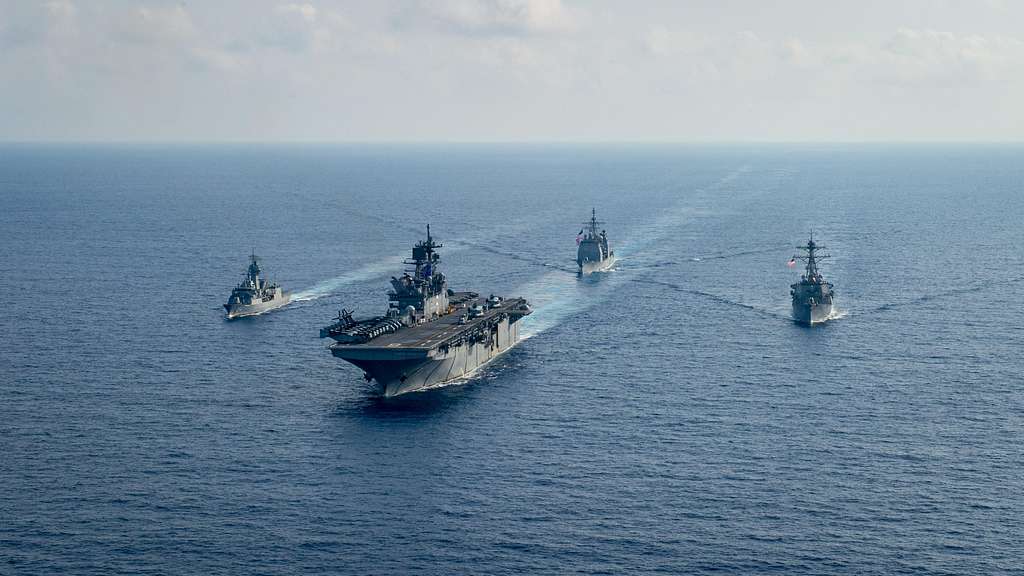
This assumption of always having the United States support as a backup may have changed after the war in Iran escalated. Practically, the US has been refocusing and relocating its resources and assets to the Middle East. The USS Abraham Lincoln (CVN-72), a nuclear-powered supercarrier operating in the South China Sea, was redirected to the Middle East to support the ongoing conflict.
Moreover, with the ongoing war, US allies in the Middle East, such as Qatar, the United Arab Emirates, Bahrain, and Kuwait, have become severely targeted by Iranian missiles. It shows not only that the US bases in their territory can become a liability during conflict, but also that, as an ally, the US has failed to protect them from the strikes that come from Iran. US allies in Southeast Asia will therefore learn from these situations and may calculate how far their security alliances with the United States can really protect them if a war breaks out in the South China Sea.
Secondly, not only from a security perspective, the war between Iran and the United States leadership will also force many Southeast Asian left with no options other than having closer economic ties with Beijing. Even before the war started, ASEAN countries had been under pressure from Trump’s tariff policy. Therefore, many of the ASEAN countries seek to strengthen their economic ties with Beijing.
This has become more necessary since the war began. Amid an escalating energy crisis, the Philippines recently sought to continue negotiations with China on oil and gas joint development in an overlapping maritime area in the South China Sea. President Marcos openly stated that “Maybe this [conflict in the Middle East] provides impetus for both sides to come to an agreement”. This has drawn criticism from Philippine analysts. Before the Philippines resumes talks on oil and gas joint development this year, Indonesia has already signed an MoU on joint resource exploration with China in 2024, allegedly abandoning its long-standing policy of denying any overlapping claims with Beijing.
The ongoing war in the Middle East and changing geopolitical dynamics may also disrupt negotiations on the South China Sea Code of Conduct. Even though the ASEAN 2026 chair, the Philippines, has prioritised the CoC negotiations with China, recent geopolitical developments may reduce China’s appetite to conclude it.
One of China’s major reasons for seeking to conclude a CoC with ASEAN states is to prevent any involvement of the United States in the disputed area. Now that the US has refocused its strategy and military resources on the Middle East, China may find it less urgent for it to conclude the CoC soon. For China, it would be more beneficial and important to pursue joint development and exploration of natural resources with countries such as Indonesia and the Philippines in the South China Sea, where jurisdiction is ambiguous, rather than to address the legality of maritime jurisdiction and entitlements there. This grey zone strategy and deliberate ambiguity have indeed become China’s strategy in the South China Sea.
Therefore, even though this cooperation with China in the South China Sea may yield economic benefits, particularly in the absence of the US, ASEAN states must be very careful when entering into any agreement with China. Any agreement and joint development in South China should be based on and comply with international law. It should not sacrifice its long-term interests for a short-term gain during this ongoing war in the Middle East.
Aristyo Rizka Darmawan is an Assistant Professor of international law at Universitas Indonesia and a PhD Scholar at the Australian National University.
This article is published under a Creative Commons License and may be republished with attribution.