For several decades, gender equality has been a central pillar of global development and international aid, shaping how development challenges are framed, how programs are designed, and how success is measured. Yet today, gender-focused development work is facing a profound moment of uncertainty. Global funding is shrinking, traditional donors are retreating, and the idea of “global development” itself is under strain.
This shift is especially evident since Trump began his second presidential term. Under Trump, gender equality was explicitly deprioritised in foreign aid. In 2025, the Trump administration significantly dismantled USAID’s operations. It moved to transfer most of its functions to the State Department, cancelling most programmes and placing staff on leave, even though the agency still exists legally. Gender, diversity, and inclusion were reframed as “divisive agendas,” rather than as foundations of social justice and democratic governance.
The reduction is not limited to the United States. Other traditional donors, including European governments and international foundations, have also cut back. Global attention has shifted towards defence, security, and geopolitical competition, rather than towards social development.
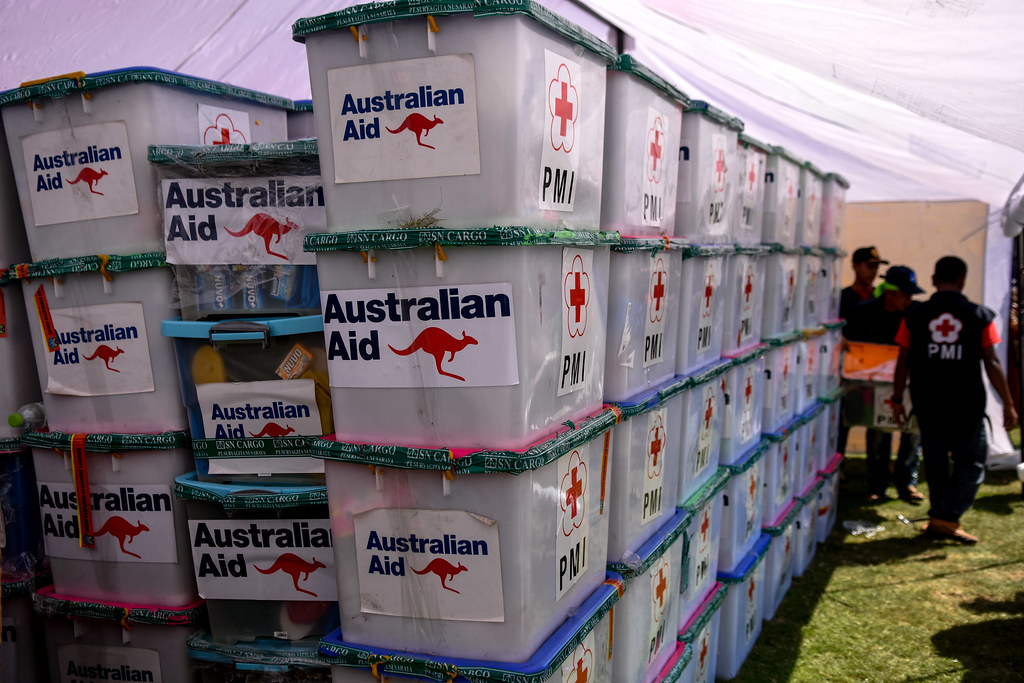
Based on our interviews, for countries such as Indonesia, where many non-governmental organisations (NGOs) rely on international donors to fund programs and even pay staff, these changes have forced many to scale back or suspend essential services for vulnerable communities. Gender-related initiatives, often already underfunded, now face even greater uncertainty. This raises a crucial question: in a world where major donors are retreating from gender equality, what happens to gender-focused development work in Indonesia? And what role does Australia, Indonesia’s closest neighbour and long-standing partner, play in this shifting landscape?
Gender as a political target and Australia’s position
Throughout 2025, Indonesian NGOs and activists debated the implications of declining global funding. The International NGO Forum on Indonesian Development (INFID), a Jakarta-based civil society organisation, documented these concerns in its 2025 publication Dana & Daya: Strategi Pendanaan OMS dari Pengalaman Anggota INFID di Indonesia (Funds and Capacities: Civil Society Organisation Funding Strategies from the Experiences of INFID Members in Indonesia). The book shows that over the past five years, global funding for Indonesian NGOs has steadily declined. Based on our interviews, Nurul Saadah Andriani of SAPDA (Centre for the Advocacy of Women, Persons with Disabilities, and Children), an academic and disability rights advocate, observed, “Funding? Funding this year is not much,” noting that current support is limited and increasingly focused on short-term capacity building rather than sustained research or long-term institutional support for women with disabilities.
Gender equality and LGBTQIA+ rights have become one of the most visible casualties of this shift. During Trump’s first term, and markedly in the second, these issues were framed as threats to national sovereignty and traditional values. For Indonesian NGOs that have long relied on USAID and similar donors, this shift has been deeply destabilising. Gender, disability, and reproductive health programs—often framed as “non-essential” or “ideological”—are among the first to lose funding.
Against this backdrop, Australia’s role stands out. While Australia is not immune to domestic political debates about aid, it has remained a consistent supporter of gender equality in Indonesia. As a close neighbour, strategic partner, and long-term development actor, Australia occupies a distinctive position in what Amitav Acharya calls a “world minus one” scenario, a global landscape reshaped by the retreat of the United States, where Washington remains the most powerful country but is absent from the existing international order, and other states and institutions take on a greater role in maintaining cooperation and global governance. Suzanne Nossel argues that without U.S. leadership, multilateral cooperation is likely to be weak and inconsistent, making Australia’s steady engagement a stabilising force for gender-focused development.
Australia’s engagement with gender in development is embedded in a formal policy architecture rather than ad hoc. In 2023, Minister for Foreign Affairs Penny Wong reaffirmed the centrality of Gender Equality, Disability and Social Inclusion (GEDSI) within Australia’s International Development Policy. The policy requires that 80 per cent of investments address gender equality, and that all new investments over AUD 3 million include gender equality objectives and be informed by gender analysis. Under DFAT rules, GEDSI is mandatory for major aid investments. Australian Official Development Assistance (ODA) to Indonesia totalled AUD 329.1 million in 2023–24, with an estimated AUD 351.4 million for 2025–26, highlighting a sustained institutional commitment to gender and inclusion even as global and domestic pressures demand strategic trade-offs.
KONEKSI and the grounding of gender equality
One key programme advancing these priorities is KONEKSI — the Indonesia Knowledge Partnership Platform, a bilateral initiative between the Australian and Indonesian governments that supports research collaboration and promotes gender equality, disability, and social inclusion. In late 2024, 10.3 per cent of its expenditure was directed towards GEDSI-related initiatives.
Beyond funding, the programme works with local researchers, civil society, and government stakeholders to identify context-specific priorities. Recent gender equality leadership consultations in Jakarta and Lombok emphasised capacity-building, cross-sector collaboration, and culturally grounded approaches to gender equality, underscoring the importance of locally driven solutions rather than externally imposed agendas.
What emerges from these experiences is not a defence of “global development” as a unified paradigm, but a more modest, diverse, and grounded approach to development in an era of fragmentation. In a world where consensus has weakened and major donors have retreated, development takes new forms: relational, locally embedded, and politically contested.
Australia’s role in Indonesia’s gender equality landscape illustrates this shift. Rather than leading a global agenda, Australia is helping sustain spaces for gender work by supporting knowledge partnerships, leadership programs, and long-term relationships with local actors.
The future of gender and development in Indonesia will not be shaped solely by grand global frameworks but by how diverse and local actors collectively navigate a fractured world: by sustaining alliances, protecting vulnerable communities, and keeping gender equality alive as a practice, even when it is under attack as an idea. The question is how development and gender justice can be pursued meaningfully in a world that is no longer global in any simple sense.
Associate Professor Eva Nisa is a cultural anthropologist and expert in Islamic studies. Her research and publications focus on the intersections between religious, cultural, political, economic, legal, social, and philosophical aspects of peoples’ lives. She is interested in global currents of Islam reshaping the lives of Muslims in Southeast Asia, especially Indonesia and Malaysia. Prior to her post in Anthropology, College of Asia and the Pacific, the Australian National University, she taught in Religious Studies at the Victoria University of Wellington. Currently, she serves on the editorial board of The Asia Pacific Journal of Anthropology and chair of the Islam in Southeast Asia series, ANU Press.
Dr Marilyn Metta is a social anthropologist, researcher, and trauma practitioner with over 25 years’ experience working with culturally diverse, First Nations, and marginalised communities in Australia and the Asia-Pacific region to address sustainable development, gender equity, diversity, and inclusion. As an internationally award-winning author and researcher, she has published widely on gender rights and social justice issues, as well as on best-practice research methodologies. She serves in the Advisory Group to the Western Australian Minister for the Prevention of Family and Domestic Violence. She is a Senior Research Fellow at the Indo-Pacific Research Institute at Murdoch University in Western Australia. She is currently the Head of GEDSI and Strategic Partnerships at KONEKSI, a knowledge and innovation partnership program between Australia and Indonesia.
Sorang Saragih serves as a Senior Consultant for GEDSI Networks and Program Coordinator at KONEKSI. She is also a PhD candidate in the Department of International Relations at the Coral Bell School of Asia Pacific Affairs at The Australian National University. Prior to her roles at KONEKSI and ANU, Sorang worked at the grassroots level with NGOs, churches, and local activists. She helped document the experiences of women victims/survivors of violence in conflict and post-conflict settings, using participatory action research methods, and advocating for their rights with various institutions. She holds double MA degrees in Global Politics from Ateneo de Manila University in the Philippines and in Gender and Peacebuilding from the University for Peace in Costa Rica. Sorang also earned her bachelor’s degree in International Relations from the University of Indonesia.
Indry Oktaviani, MA, is the Senior Manager for GEDSI at KONEKSI. She has years of experience dedicated to advancing gender equality and feminism. Her expertise spans public policy advocacy, awareness-raising, and research, focusing on integrating gender justice, disability inclusion, and environmental perspectives. She has been working with CSOs focused on gender-based violence, particularly child marriage and sexual violence.
Wahyu Tini Astuti, M.Si, is the GEDSI Coordinator at KONEKSI. She has years of experience working on GEDSI and development programs, supporting inclusive initiatives and strengthening partnerships. She has expertise in GEDSI mainstreaming, inclusive program management, and stakeholder engagement, and has contributed to capacity-building, knowledge-sharing, and monitoring efforts to support more equitable and sustainable development outcomes.
This article is published under a Creative Commons License and may be republished with attribution.