When Washington declared a “national emergency” over Cuba in February 2026, it did more than tighten existing sanctions. By authorising a tariff framework on countries supplying oil to the island, the United States has taken a longstanding unilateral embargo closer to a globalised economic blockade.
Framed as promotion of security and democracy, the policy restricts Cuba’s access to fuel, food, transport and basic services, and is helping drive it towards what the United Nations officials warn could be a humanitarian collapse.
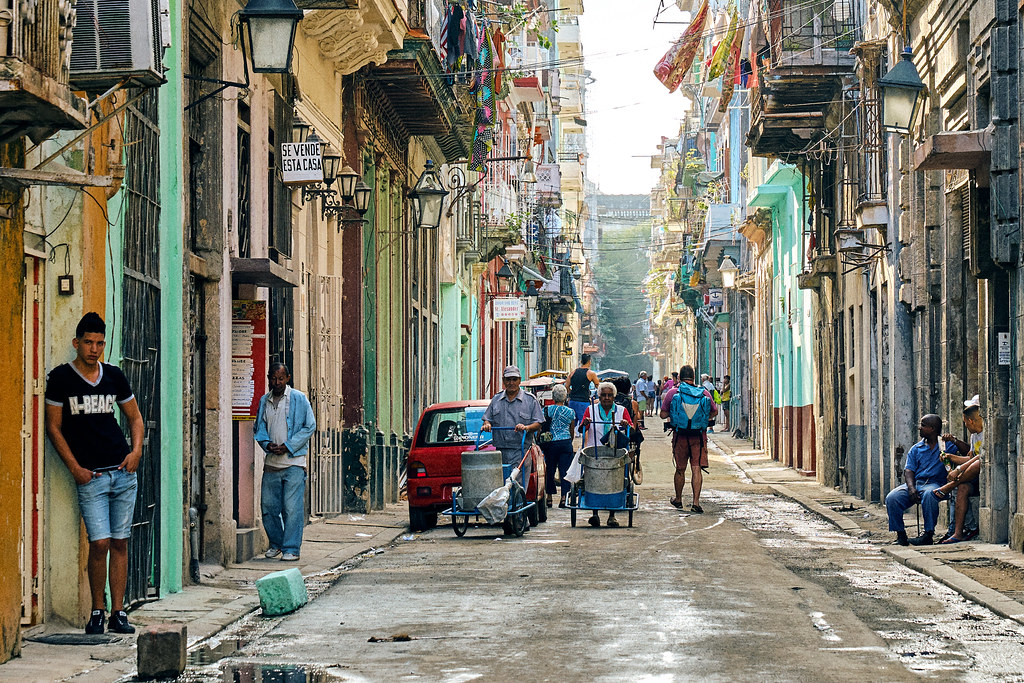
Fuel shortages and rolling blackouts were already a fact of life for most Cubans before the latest measures. According to reports, the US oil squeeze is “crippling life in Cuba”, with an energy crunch leading to rationing and paralysed public transport. The UN Secretary General’s spokesperson, Stéphane Dujarric, has cautioned a humanitarian “collapse” if the energy needs are not fulfilled, as United States President Donald Trump threatened additional tariffs on countries that sell oil to Cuba.
According to estimates by United Nations bodies, the cumulative economic damage to Cuba from the United States embargo exceeds US$130 billion, with more recent Cuban and UN documentation placing losses at roughly US$170 billion at current prices. In addition, a 2023 General Assembly debate on the embargo’s economic and social impact heard that six decades of restrictions have cost Cuba ‘trillions of dollars’ in missed opportunities and higher transaction costs.
Taken together, these estimates suggest that six decades of sanctions have removed a volume of resources that would strain any national economy, let alone a small, import-dependent one. They raise a simple question: what country – regardless of its system of government – could sustain cumulative losses on this scale without severe social and developmental consequences?
Against this backdrop, the latest U.S. tariff framework can be seen as an escalation from sanctions toward economic warfare. The embargo has long been criticised as a blunt tool that harms ordinary Cubans more than their leaders, impacting the population indiscriminately – from family travel and scientific publishing to the cost of basic foodstuffs – while failing to achieve its stated political aims. It also carries legislation that creates legal and financial risks, discouraging or reshaping foreign investment in the island. Washington is using its central position in the global trading system to pressure other states into joining the island’s isolation from a small Caribbean country.
The actions, from an international law perspective, clash with the principles that many democracies cite when they talk about a “rules-based international order”. The UN Charter states that all countries are sovereign equals, discourages interference in domestic affairs, and promotes relations based on equal rights and self-determination. The UN General Assembly’s latest resolution calling for an end to the U.S. embargo on Cuba also argues that its extraterritorial effects go against the Charter and limit freedom of trade and navigation. UN bodies and experts have been unusually direct about the legal risks. In October 2024, the General Assembly once again voted overwhelmingly to call for an end to the embargo, continuing more than three decades of similar resolutions. In November 2025, UN Special Rapporteur Alena Douhan urged the United States to lift sanctions on Cuba that “do not align with numerous international legal standards”, underlining their humanitarian impact. In February 2026, UN human rights experts condemned the new executive order as a “fuel blockade”, calling it “a serious violation of international law” and “a grave threat to a democratic and equitable international order”, and stressing that such sweeping unilateral coercive measures have “no basis in collective security” because they are not authorised by the Security Council under Articles 39–41 of the Charter.
Whatever one’s view of Cuba’s domestic governance, these concerns are not merely abstract. The current policy mix–decades-old unilateral sanctions combined with the latest extraterritorial penalties on third-country oil suppliers– carries three troubling implications.
First, it deliberately blurs the line between sanctions and economic warfare by degrading civilian living conditions. UN Human Rights spokesperson Marta Hurtado warns that Cuba’s “deepening socioeconomic crisis”, amid a decades-long embargo and tightened energy measures, is having “an increasingly severe impact on the human rights of people in Cuba”, undermining access to water, sanitation, health care and information. Fuel shortages are affecting hospitals, public transport and food distribution.
Second, the new framework deepens the extraterritorial reach and runs counter to global efforts to limit such practices. Studies show the embargo already operates in effect as a global measure, with foreign banks, insurers and shipping companies adjusting their behaviour because of US trade controls rather than government policies. Research on these secondary sanctions also shows clear effects on Cuba’s trade as firms seek to avoid legal and financial risk. By linking tariffs and other penalties to any countries supplying oil to Cuba, the latest measures intensify that pressure and draw other states into enforcing a policy that UN member states have, for more than three decades, overwhelmingly rejected as contrary to the Charter in their annual resolutions on the “necessity of ending the economic, commercial and financial embargo imposed by the United States of America against Cuba”.
Third, the escalation highlights a widening gap between rhetoric and practice on the “rules-based order”. Leaders in many advanced democracies – especially middle powers such as Canada and Australia that rely on multilateral rules to constrain stronger states – have long presented that order as grounded in the UN Charter, international law and universal human rights, invoking it in policy frameworks like Australia and the Rules Based International Order and in joint statements on a “free and open Indo-Pacific,” as well as in recent speeches warning that the “rules based order is fading” and urging middle powers to “stick together” to defend the Charter’s principles.
Yet there is now open recognition that this order is changing. In his January 2026 keynote speech at Davos, the Canadian prime minister, Mark Carney, suggested that the old “rules-based” world is effectively over and urged middle powers to band together in defence of their interests. That admission has been welcomed as rare candour, but it is also revealingly narrow: the crisis of the “rules-based order” becomes urgent only once coercive economic tools begin to harm states like Canada. For Cuba, which has long been subject to embargoes, secondary sanctions, and now an oil blockade, the problem is not the sudden “death” of a fair system, but the persistence of one in which rules are applied selectively – enforced against weaker states and set aside when they constrain stronger ones.
Cuban authorities have acknowledged an “acute fuel shortage” and announced restrictive measures that will further affect daily life, including limits on fuel sales to the public, a four-day work week for many state entities, shorter school hours, reduced university attendance, and cutbacks to interprovincial bus and train services. International outlets describe emergency rationing and transport disruption. There is room for serious debate about economic governance, political freedoms and the need for internal reforms. But none of that alters the basic legal question: whether it is acceptable for a powerful state to seek regime change or major policy shifts by cutting off a country’s lifeblood –its access to energy and basic goods– through measures that UN bodies and experts now describe as incompatible with the Charter and broader international law, including recent statements that the fuel blockade “constitutes a serious violation of international law” and a “grave threat to a democratic and equitable international order.
For democratic middle powers such as Australia, Canada and the European Union’s smaller member states that still claim to support a law-governed international system, this moment presents a test. They may have no direct role in setting US sanctions policy, but they do have a voice in UN forums and in their bilateral and regional diplomacy. As the humanitarian situation in Cuba worsens and the embargo’s extraterritorial reach expands, reaffirming the Charter’s principles of sovereign equality, nonintervention and self-determination, and applying human rights and humanitarian norms consistently, would show that a “rules-based order” is more than a slogan. It would also align them with the large majority of UN member states that, year after year, vote to condemn the embargo and increasingly view the tightening oil squeeze on Cuba not as legitimate diplomacy, but as a form of economic warfare that undermines the very rules it claims to defend.
Juan Zahir Naranjo Cáceres is a PhD candidate in Political Science, International Relations & Constitutional Law at the University of the Sunshine Coast (Australia), where he teaches International Justice and Human Rights. His research examines constitutional governance and democratic institutions in comparative perspective. He holds a Bachelor of Laws degree and postgraduate degrees in Constitutional Law, Australian Migration Law, International Relations, and Teaching.
This article is published under a Creative Commons License and may be republished with attribution.