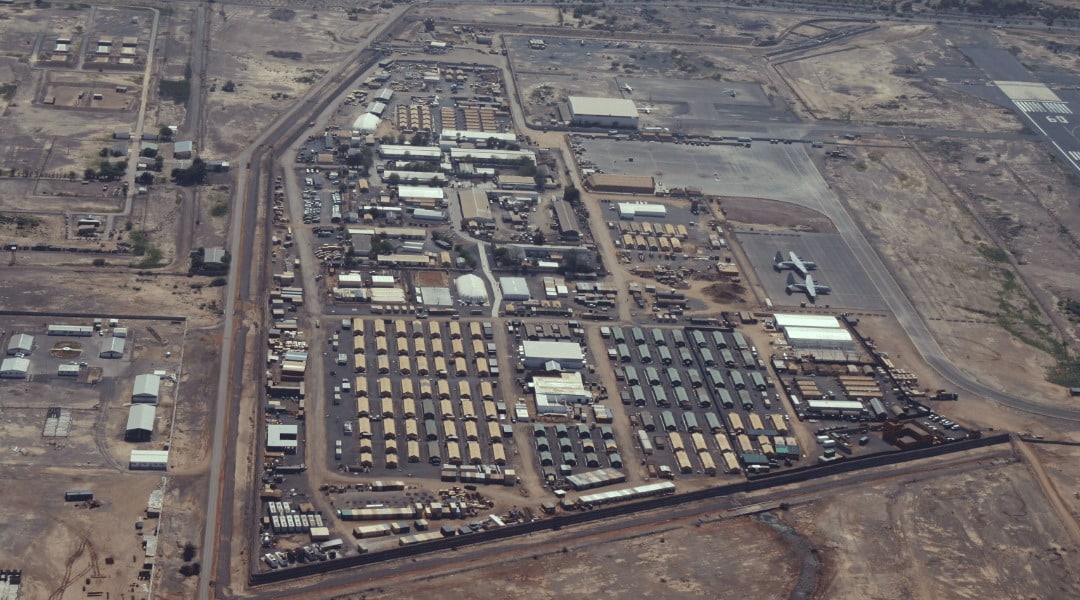
As the conflict in the Middle East intensifies, a question that has received little attention is whether the war could extend beyond the region and reach Africa. The United States’ only permanent military base on the continent is in Djibouti, where it operates alongside military facilities belonging to China, Japan, Italy, and France.
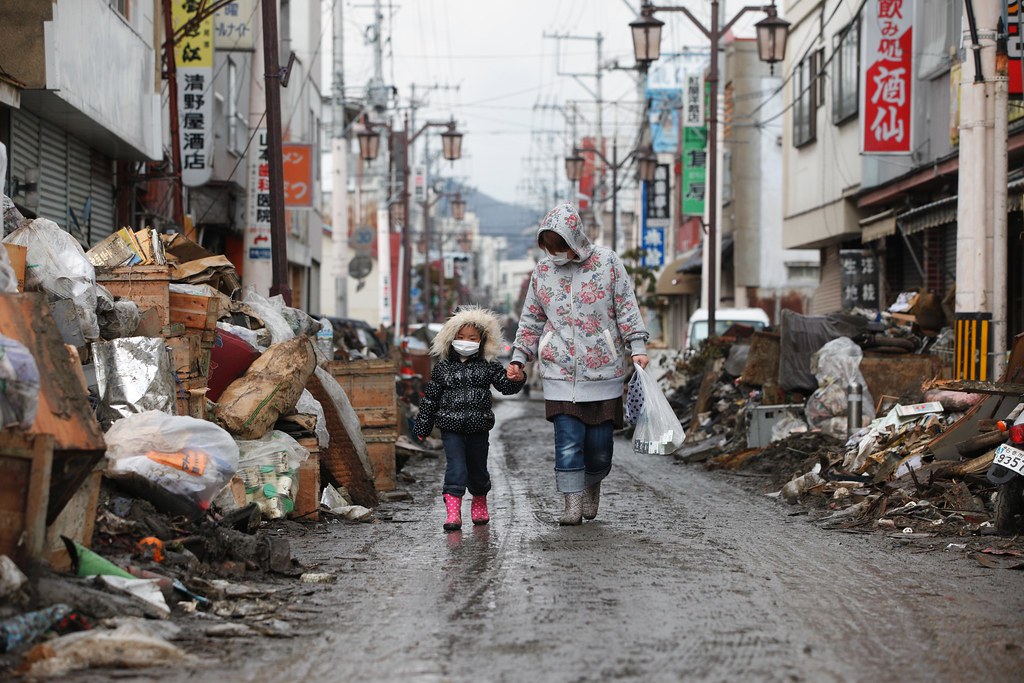
Africa has not been a direct theatre of recent major conflicts, including the Russian invasion of Ukraine and the ongoing conflicts in the Middle East. Nonetheless, the continent has experienced significant indirect repercussions. The Russian invasion of Ukraine, for example, led to a shortage of 30 million tons of grain in Africa, where the continent imports more than 50% of its grain from either Russia or Ukraine.
Six African countries, including Eritrea, Egypt, Benin, Sudan, Djibouti, and Tanzania, were the worst hit by the conflict, as they rely on the warring parties for over 70% of their wheat supply. These wars have disrupted global supply chains, particularly affecting markets for fuel, food, and fertiliser. For many African economies already burdened by the economic fallout of the COVID-19 pandemic, these shocks have compounded existing vulnerabilities.
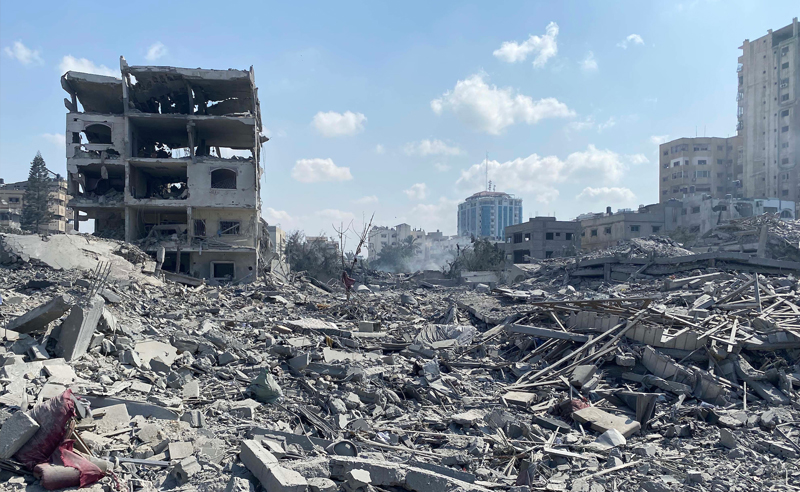
The war in Gaza has further intensified these pressures. More recently, the escalation following U.S.–Israel strikes in Iran, which the U.S. administration has called Operation “Epic Fury,” and Iran’s subsequent response, including the closure of the Strait of Hormuz, have added another layer of uncertainty to global markets. The Strait of Hormuz is a vital maritime route through which approximately 20 per cent of the world’s petroleum is transported. But this strait is also vital for the fertiliser trade, on which most African countries rely. Its closure has revealed vulnerabilities in global energy markets, impacting economies well beyond the Middle East, including Australia. However, developing economies, especially in Africa, are likely to face the most severe consequences.
Could Iran’s responses reach Africa?
Since the assassination of Iran’s Supreme Leader, Ayatollah Ruhollah Khameini, and several senior Iranian political figures, Tehran’s retaliation has escalated. Iranian strikes are reported to have targeted locations in Israel and multiple Gulf states, including Qatar, the United Arab Emirates, and Bahrain, which host U.S. military installations. While Iran’s response has mainly focused on the Gulf region, the global reach of American military deployments means that other U.S. facilities worldwide could also be targeted, either directly by Iran or indirectly through its proxies.
Djibouti holds a notably strategic position in this context. The country hosts five foreign military bases in proximity. The U.S. installation, Camp Lemonnier, is situated only a few miles from China’s only overseas military base and is near Djibouti–Ambouli International Airport. France, Japan, and Italy also operate military facilities within the country.
Although Djibouti is approximately 1,500 miles from Iran, it is not beyond the reach of Iranian military power. Iranian drones have already shown they can reach targets as far as the United Arab Emirates. Additionally, Iran could depend on its proxies, such as the Houthis in Yemen or Hezbollah in Lebanon, although previous Israeli attacks have significantly weakened their capabilities. The Houthis, for example, operate less than 500 miles from Djibouti across the Gulf of Aden. From Yemen, the Houthis could potentially target U.S. facilities in Djibouti with relative ease.
Iran also has medium-range ballistic missiles capable of reaching such distances. The Khorramshahr missile, for instance, is said to carry a warhead of around 1,800 kilograms and has an operational range of about 2,000km (roughly 1,242 miles). With lighter payloads, this range could extend to nearly 3,000km (about 1,864 miles). Depending on launch site and payload configuration, Djibouti could therefore be within the potential strike range of Iranian missile systems.
Questions remain about the accuracy and effectiveness of these systems. However, reports indicating possible Russian intelligence support for Iran’s missile programmes suggest that improvements in precision cannot be disregarded. In these circumstances, Camp Lemonnier, which hosts around 4,000 U.S. military and civilian personnel alongside approximately 1,000 local and third-country workers, could feasibly become a legitimate target. Simultaneously, Iran’s missile and drone capabilities have been countered by the advanced air defence systems deployed by Israel, the United States, and their regional allies. Nonetheless, recent developments show that these systems are not invulnerable, with some missiles and drones bypassing defensive networks. The conflict has already caused casualties among U.S. personnel, with several fatalities and additional injuries reported. U.S. President Donald Trump, while he has repeatedly commended the significant achievements in the war thus far, also cautioned about more future deaths.
What if Djibouti were attacked?
An attack on Camp Lemonnier would present a uniquely complex security scenario. The proximity of multiple foreign military bases means that even a minor targeting error could have significant international repercussions.
A miscalculated strike could potentially affect installations belonging to China, France, Japan, or Italy, thereby spreading the conflict. The presence of China’s People’s Liberation Army (PLA) base in Djibouti adds a strategic dimension. While there is no evidence of Chinese involvement in Iranian military operations, questions could arise regarding indirect or technical forms of support, particularly given the growing strategic competition between Beijing and Washington. Some of China’s defence technologies, including components of the HQ-9B air defence system, have been sold to Iran, although some analysts have questioned their operational performance. Just before the recent invasion of Iran, it was reported that they were looking to acquire China’s CM-302 Supersonic Missiles.
The United States and China have previously experienced tensions related to their military presence in Djibouti. In 2018, for instance, U.S. officials accused Chinese personnel of using laser devices against American aircraft operating near the base, reportedly causing eye injuries to pilots.
Even if Camp Lemonnier itself were able to withstand or mitigate the impact of a potential strike, Djibouti’s national defence capabilities remain relatively limited. Any miscalculation in an attack could therefore have severe consequences for the host country. Furthermore, if Iranian strikes were to affect facilities belonging to U.S. allies such as France, Japan, or Italy, this could potentially drag such countries into the conflict.
The economic implications would also be significant. Djibouti’s strategic location at the junction of the Red Sea and the Gulf of Aden makes it a critical logistical hub for global trade. Ethiopia, for instance, relies on Djibouti for approximately 90 per cent of its imports. A security crisis in Djibouti would therefore disrupt regional trade flows and generate economic shocks that could ripple across the wider African continent.
These risks help explain why many African states have historically been reluctant to host major foreign military commands. The U.S. Africa Command (AFRICOM), despite focusing exclusively on African security affairs, remains headquartered in Stuttgart, Germany, after most African governments declined to host it. Djibouti represents a notable exception, having chosen to host multiple foreign military bases as part of its economic and military strategy. Rental agreements with these powers generate substantial revenue for Djibouti. For instance, China reportedly pays Djibouti approximately US$20 million annually for its base.
Although Africa largely remains outside the immediate battlefield of current geopolitical conflicts, it is not immune to spillover effects. Djibouti’s distinctive concentration of foreign military bases positions it at the crossroads of great power rivalry and Middle Eastern security issues. If Iran extends its retaliation beyond the Gulf region, U.S. facilities in Djibouti could potentially come within its operational range.
Even if the direct impact on U.S. military assets was limited, the wider consequences for Djibouti and the African continent could be substantial. Potential disruptions to security, trade, and regional stability would affect not only the Horn of Africa but also global supply chains more generally. China’s role in this remains vital. Although Beijing continues to assert the “non-interference” policy, its expanding global security presence is significant.
Joel Odota is a PhD student of International Relations at the Centre for Australia-Africa Relations at Curtin University. He holds a Master’s in International Relations from the Australian National University and a Master’s in Politics and International Relations from Peking University. Joel’s work focuses on China-Africa relations, Great Power rivalry, and the agency of African countries in global politics.
This article is published under a Creative Commons License and may be republished with attribution.