Is Trump abandoning America First isolationism for neoconservative interventionism? The reality is far more calculated: beneath the apparent chaos of military posturing and diplomatic ruptures lies a deliberate strategy to counter China’s rise by tearing down the very international order America once built.
Recalibration, Not Rupture
At first glance, the foreign-policy posture adopted by the Trump administration in its second term appears to mark a clear departure from the isolationist ethos that has defined the MAGA movement since President Trump’s inaugural address in 2017. As the administration moves deeper into its renewed mandate, a series of statements and actions—ranging from military engagement in Venezuela to assertive rhetoric regarding Greenland—seem, on the surface, to contradict the original America First worldview. That worldview deliberately alienated NATO allies, adopted a transactional approach to partnerships, displayed rhetorical restraint toward Russia, and rejected sustained overseas engagement.
This apparent shift did not go unnoticed during the formation of the new administration. The appointment of Senator Marco Rubio as Secretary of State was widely interpreted as an early signal of a more classical—some would say neoconservative—turn in what commentators quickly labelled “Trump 2.0.” This interpretation gained further traction despite the president surrounding himself with ardent MAGA loyalists, including Vice President J.D. Vance, whose ideological credentials remain firmly rooted in non-interventionism. Recent American initiatives in Nigeria and Venezuela, coupled with confrontational posturing toward Greenland, have reinforced the prevailing diagnosis of an increasingly interventionist presidency.
Yet this interpretation, while intuitively appealing, remains incomplete. It rests on a binary opposition between isolationism and interventionism that obscures the more complex strategic logic underpinning U.S. foreign policy in Trump’s second term. A more nuanced analytical framework suggests that current policy occupies an intermediate space—one that neither repudiates MAGA nor reverts to the liberal internationalism of previous Republican administrations.
Disengaging from the Post-1945 Order
The first pillar of this recalibrated strategy is the deliberate disengagement of the United States from the post-1945 international order, often associated with the Bretton Woods system. From the MAGA perspective, this order has progressively constrained American freedom of action while delivering disproportionate benefits to rival powers, above all the People’s Republic of China. Multilateral institutions, alliance obligations, and global trade regimes are no longer viewed as force multipliers but as structural liabilities that dilute U.S. sovereignty and strategic autonomy.
This critique echoes a broader revisionist current in American strategic thinking, increasingly visible across the political spectrum (see, for example, discussions at the Quincy Institute and American Compass). Washington, in this reading, no longer perceives itself as the “system maker and advantage taker,” but rather as a power encumbered by rules and institutions that others exploit more effectively. Disrupting this order—even at the cost of diplomatic friction—is therefore not an unintended consequence of Trump’s foreign policy, but one of its central objectives.
Countering China as the Central Strategic Imperative
The second, and more decisive, pillar is the systematic countering of Chinese influence as America’s principal strategic challenger. This objective provides the connective tissue that links seemingly disparate U.S. actions across multiple theatres. From East Asia to the Western Hemisphere, from global trade architecture to strategic chokepoints such as Panama and the South China Sea, American assertiveness is best understood as an effort to contest China’s expanding economic, diplomatic, and security footprint.
This approach does not represent a return to Cold War–style containment, nor does it resemble the liberal interventionism associated with the Reagan or Bush administrations. Instead, it reflects a selective and transactional form of engagement aimed at disrupting Beijing’s global advance while avoiding the permanent commitments and normative ambitions of the traditional internationalist model. As senior U.S. officials have repeatedly argued, the existing “globalist economy” has disproportionately favoured China, necessitating a rebalancing of the international system (see U.S. Vice Presidential remarks cited by The Heritage Foundation).
Viewed through this lens, actions that appear inconsistent with MAGA isolationism take on a different meaning. They are not about exporting democracy or stabilising regions per se, but about drawing limits around Chinese and BRICS-aligned expansion.
Venezuela as Signal, Not Exception
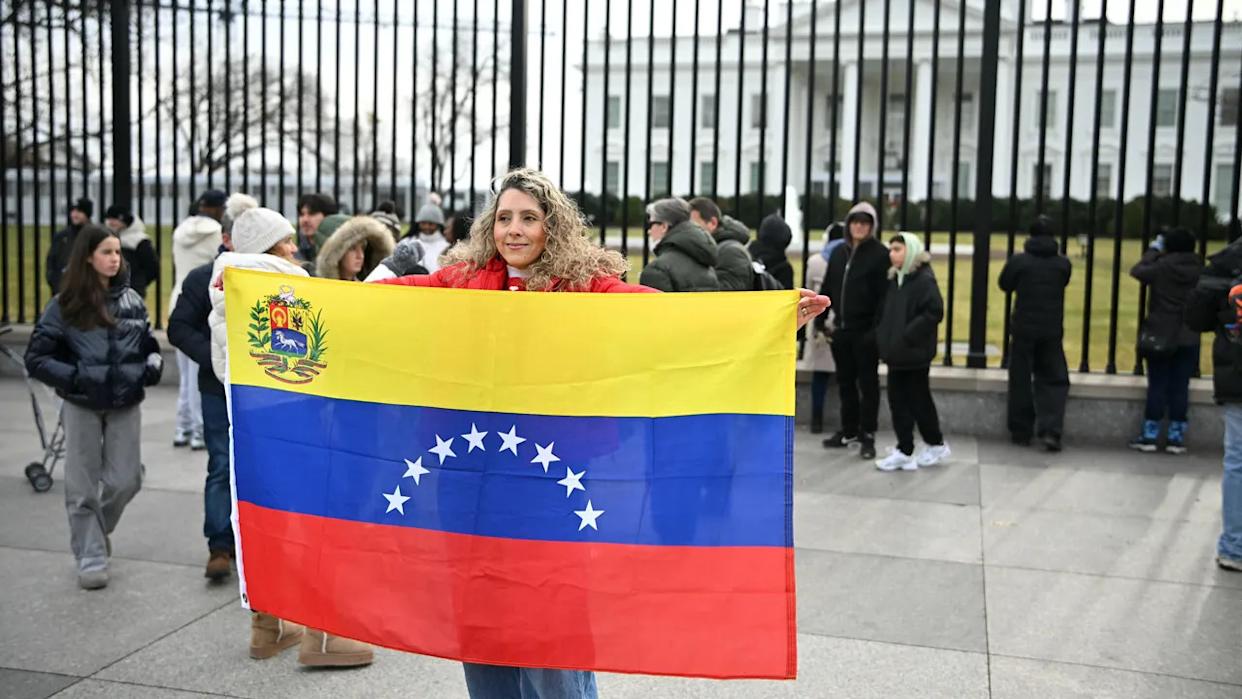
The military action in Venezuela illustrates this logic particularly well. To MAGA supporters accustomed to retrenchment, intervention in Latin America appears anomalous. Yet strategically, Venezuela represents a theatre in which U.S. assertiveness serves as a warning against deeper alignment with China and other revisionist powers in the Western Hemisphere. In this sense, Venezuela is not an exception, but a signal—one that underscores Washington’s willingness to act selectively to preserve its strategic space.
The same logic applies to U.S. posturing elsewhere. Whether in Africa, the Arctic, or global trade negotiations, American actions reflect an effort to impose costs on states and regions that facilitate China’s global reach, rather than a blanket embrace of interventionism.
Iran and the Sino-Eurasian Nexus
It is within this broader framework that Iran assumes particular strategic importance. Washington’s concern is not Iran in isolation, but Iran as a potential pillar of Chinese power projection across Eurasia. The 25-year strategic partnership signed between Tehran and Beijing in 2021—covering military, technological, and economic cooperation—has bound Iran more closely to China’s long-term ambitions, including the Belt and Road Initiative (BRI).
Militarily, the partnership has involved arms transfers, joint exercises, and technology sharing, enhancing Iran’s defensive and offensive capabilities. Economically, it integrates Iran into China’s energy and infrastructure networks. Iran’s geographic position—at the crossroads of the Middle East, Central Asia, and South Asia—renders it indispensable to Beijing’s continental connectivity and maritime strategy.
The 12-day conflict of summer 2025, while weakening Iran domestically, appears to have accelerated this convergence by increasing Tehran’s dependence on Chinese economic and technological support. From Washington’s perspective, the risk is clear: Iran could emerge as a strategic pivot in a broader Eurasian alignment that dilutes U.S. influence across the Middle East and beyond.
Pressure Without War
Should Iranian leaders therefore fear imminent U.S. military action? Not necessarily in the conventional sense. A large-scale kinetic strike would likely devastate Iran’s infrastructure while pushing it irreversibly into China’s orbit—an outcome fundamentally at odds with Washington’s strategic objectives. Instead, the renewed emphasis on “maximum pressure,” calibrated escalation, and strategic ambiguity points toward a subtler goal: weakening Iran’s reliance on China and preserving U.S. leverage over Tehran.
This approach aligns with a broader American effort to prevent the consolidation of a Sino-centric Eurasian bloc, rather than to pursue regime change or military domination for its own sake.
Conclusion: The Silk Thread Beneath the Spectacle
In sum, Trump’s foreign policy in its second term is neither a repudiation of MAGA nor a wholesale embrace of interventionism. It represents a strategic recalibration—one that rejects the constraints of the post-1945 order while employing selective power projection to confront what Washington increasingly views as the central geopolitical challenge of the twenty-first century: China and its expanding network of partners, with Iran as a key node.
What often appears as disorder, contradiction, or caprice conceals a discernible logic. Beneath the spectacle lies a silk thread—deliberate, continuous, and oriented toward reshaping the balance of power in an increasingly contested international system.
Dr Pierre Pahlavi is a full professor at the Royal Military College of Canada in the Department of Defence Studies, co-located with the Canadian Forces College, Canada’s Staff and War College. His research focuses on Iran and its asymmetric strategies, public diplomacy, and the use of force in the international system. He has published in various journals in strategic and security studies and has recently published a book in French on the Iranian revolution, Le Marécage des Ayatollahs, prized by the Académie française. He has a PhD in political science from McGill University, Montreal, Canada.
This article is published under a Creative Commons License and may be republished with attribution.