For a middle power seeking to diversify its strategic and economic exposure while upholding its commitments to the US alliance, Australia must look beyond the assumption that contributing to regional stability requires direct military action in the South China Sea.
Other, less visible yet strategically consequential options exist. At Davos earlier this year, Canadian Prime Minister Mark Carney cautioned that the ‘pleasant fiction’ of the old rules‑based order has ruptured, leaving middle powers to rebuild sovereignty not through rhetoric but through shared investments in resilience at sea and on land. Australia’s dilemma is sharper still: it faces a Malacca paradox in which the very sea‑lanes that sustain its prosperity may be the ones it must help constrain to prevent a Taiwan conflict from cascading into systemic economic collapse and the erosion of regional democracy and security.
The Malacca Paradox and Its Strategic Significance
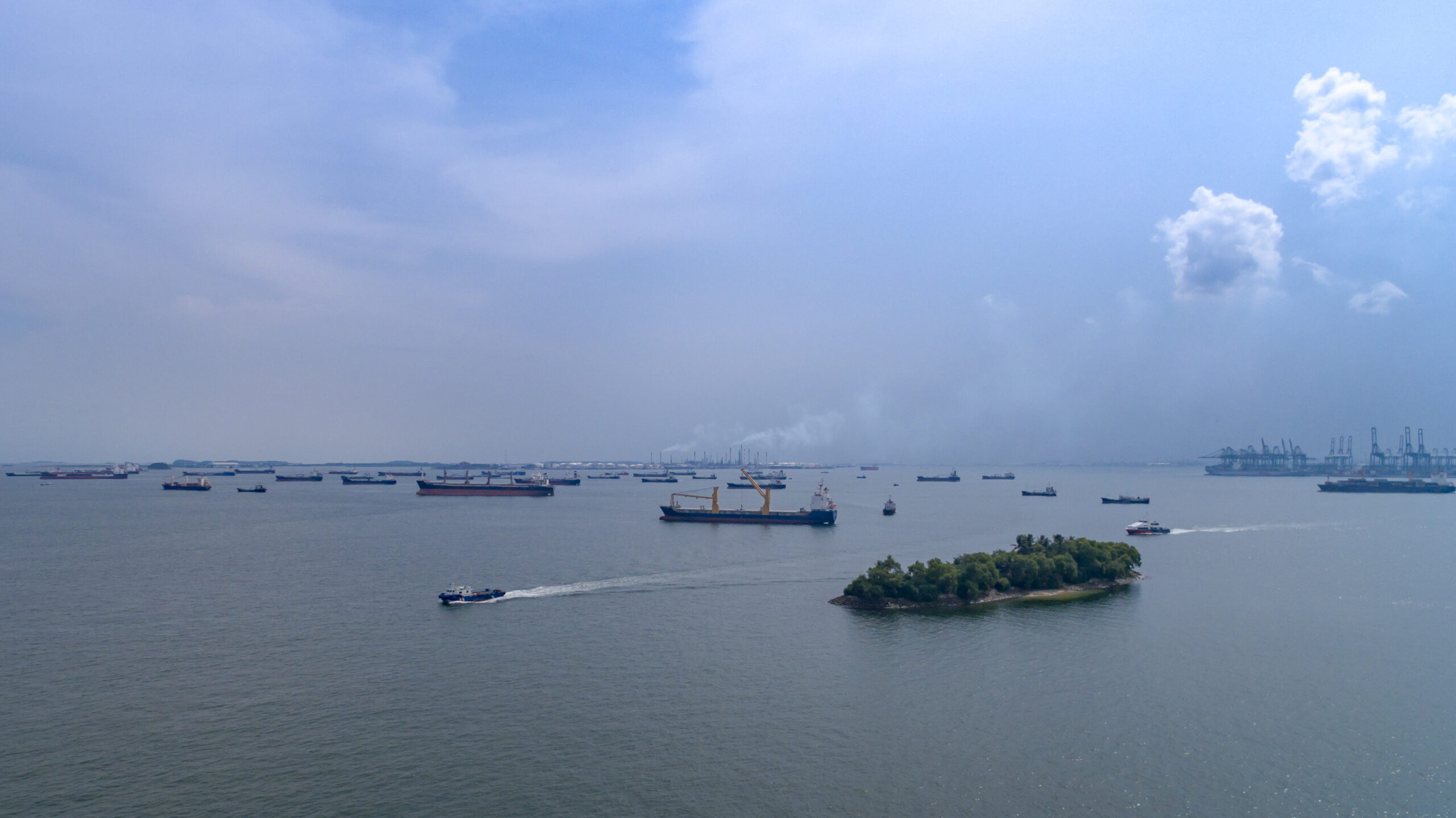
As a highly trade-exposed middle power, Australia’s growth model depends on open sea lanes to and from East Asia, including Chinese markets and the Taiwan–South China Sea–Malacca complex. Yet serious conflict in the Taiwan Strait would itself devastate global trade, capital flows, and semiconductor supply, with long‑run inflationary and fiscal consequences far beyond those of the Ukraine war. The paradox is that Australian prosperity now rests on demonstrating a credible plan for wartime economic action at sea – a plan that might deter Beijing from ever risking such a conflict in the first place.
China’s manufacturing‑led growth remains structurally dependent on imported energy and raw materials, much of which must transit the Malacca Strait and adjacent sea lanes. A Taiwan conflict would almost certainly trigger Western sanctions and investor flight, while exposing China’s acute vulnerability at maritime chokepoints, particularly if regional and extra‑regional navies could credibly threaten its energy and bulk‑import flows. At the same time, Taiwan’s central role in advanced semiconductor production, supplying most of the world’s leading‑edge logic chips, means any large‑scale conflict or blockade would send shockwaves through global manufacturing, from civilian electronics to defence systems. In such a scenario, negotiating the willingness, caution, or outright objection of Southeast Asian states would become a central diplomatic challenge, given their proximity to key chokepoints and their desire to avoid entanglement in great‑power confrontation.
The economic literature now converges on three points. First, a high‑intensity Taiwan conflict, even if short, would cause a sharper contraction in global trade and higher price levels than recent shocks such as the Ukraine war or COVID‑19. Second, financial contagion—via banking exposures to China, asset sell‑offs, and a flight to safety would amplify real‑economy damage. Third, the fiscal and inflationary overhang from such a conflict would be enduring, as governments absorb defence costs, support banks, and rewire supply chains. In this environment, pre‑war signalling that Malacca can be used as a lever of coercion becomes part of the deterrent architecture, not an optional extra.
Plan Grey and middle‑power sea denial
Historical experience suggests that even during major wars, belligerents rarely cease all commerce; instead, they calibrate wartime trade to protect key domestic industries while denying the enemy quick‑conversion military inputs. Russian gas continued to transit through Ukrainian pipelines for years after 2022, and sanctions on Moscow have been gradually widened from defence‑related goods to more basic intermediates. A coercive strategy centred on Malacca would need to reflect this paradox of wartime commerce: targeting Chinese vulnerabilities without triggering indiscriminate collapse of global trade.
A hypothetical Australian-led “Plan Grey” could operate in the space between peacetime freedom of navigation and outright blockade. Under this concept, Australia, working with like‑minded middle powers, would coordinate a maritime campaign outside the first island chain, focused on:
- Establishing combined maritime awareness and interdiction capabilities from the eastern Indian Ocean through the Sunda and Lombok Straits into the western Pacific, leveraging Australia’s investments in submarines, long‑range strike, and undersea systems.
- Pre‑designating inspection regimes and routing controls for China‑bound energy and bulk cargoes in the event of imminent or actual aggression against Taiwan, backed by multilateral legal frameworks and sanctions authorities.
- Developing alternative convoyed routes for trade flows excluding China, re‑directing flows into the South and North Pacific around Australia and through secure ports in allied and partner states.
Australia’s role is not to “strangle China” unilaterally, but to act as a multilateral partner with the states whose coasts front key regional sea‑lanes. The aim is to signal that if Beijing chooses war, it also chooses managed exclusion from critical maritime arteries, while lawful trade for others is maintained to the extent circumstances allow.
Gatekeeping Malacca without crashing the global economy
A viable Malacca strategy must reconcile blockade logic with the realities of global interdependence. Contemporary evidence from sanctions on Russia and from long‑running trade between enemies suggests three design principles.
First, focus on conversion time. Military‑useful cargoes that can quickly alter the balance of forces – fuel, advanced components, key dual‑use technologies are legitimate targets for interdiction, whereas low‑conversion goods with diffuse economic effects can be allowed through under licence. Second, exploit chokepoints and capacity points, but preserve systemic trade by guaranteeing escorted corridors for non‑Chinese shipping into and out of the Pacific via southern and northern routes around Australia. Third, anticipate circumvention: just as Russia has rerouted sanctioned flows through intermediaries, China would seek to move trade overland or via alternative maritime routes, reducing but not eliminating the coercive effect.
For Australia, managing these dynamics implies a shift from a narrow “defence of Australia” posture toward a middle‑power sea‑denial role embedded in the wider logic of Australian maritime security policy. SIPRI data show that Asia-Oceania military expenditure has risen steadily over the last decade, with Australia now among the world’s top fifteen spenders and re‑weighting its force structure toward submarines and long‑range strike. At the same time, international arms‑transfer patterns reveal deepening reliance of regional partners on US and European enablers, underscoring the importance of pre‑war planning for combined naval operations and convoy protection.
Resolving the paradox
If left unmanaged, the Malacca paradox would tempt Canberra either to free‑ride on US strategy or to cling to a brittle status quo in which prosperity is silently mortgaged to the assumption that China will never gamble on Taiwan. A more realistic approach accepts that economic interdependence neither guarantees peace nor precludes calibrated wartime trade. For Australia, acting as a responsible international steward now means using diplomacy, signalling, and force development to make clear that any assault on Taiwan will be met not only with military resistance in the Strait, but with measured, law‑governed pressure on China’s maritime lifelines while keeping alternative sea‑routes open for others. Such a strategy does not resolve the tension between security and prosperity; it institutionalises it. But by embedding Malacca gatekeeping within a coalition of middle‑power navies and by investing in the convoy, sealift, and undersea capabilities required to reroute global trade, Australia can turn the Malacca paradox into a deterrent – one aimed at ensuring that one aimed at ensuring that the Taiwan question is settled, if at all, by politics rather than war.
Dr Sean Andrews CSC is a retired Royal Australian Navy officer and maritime strategist, currently Senior Fellow at the Strategy, Statecraft and Technology – Changing Character of War Centre, Pembroke College, Oxford University. He has led Australia’s Sea Power Centre, commanded ADF operations in the Middle East, and publishes widely on Indo-Pacific sea power, maritime security, and the global oceanic order.
This article is published under a Creative Commons License and may be republished with attribution.