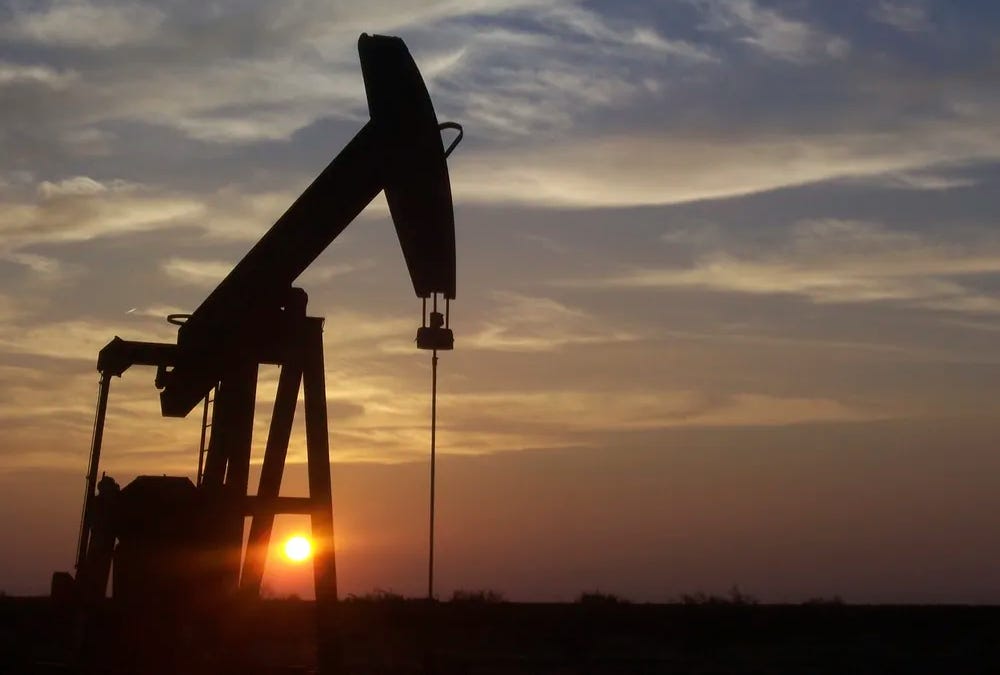
Middle Eastern crises have long acted as external audits of ASEAN’s economic model. From the 1973 embargo to current instability around Hormuz, each episode reveals the same vulnerability: Southeast Asia remains exposed to distant geopolitical shocks.
The renewed crisis in the Middle East should be read in Southeast Asia not as a distant war with indirect consequences, but as a recurring political-economic shock that reveals an old regional condition: ASEAN has long pursued industrial growth, urban modernisation, and export expansion within an energy order it does not fully control. The immediate policy concern is clear enough. The International Energy Agency notes that around 20 million barrels per day of crude oil and oil products moved through the Strait of Hormuz in 2025, with roughly four-fifths of those flows destined for Asia. The U.S. Energy Information Administration likewise identifies the strait as one of the world’s most consequential energy chokepoints. The deeper point is that today’s anxiety over Hormuz belongs to a much longer story: the region’s developmental successes have repeatedly rested on imported fuel, open sea-lanes, and geopolitical arrangements shaped elsewhere.
That historical perspective matters because it changes how the crisis is understood. ASEAN’s vulnerability is not merely a matter of oil prices rising in response to conflict. It is the outcome of a developmental model shaped in the late-colonial and postcolonial eras, when Southeast Asian states were integrated into global commodity and shipping networks in highly unequal ways. Some territories became exporters of raw materials; others became entrepot economies; still others, such as the Philippines and Thailand, industrialised under chronic balance-of-payments pressure. Energy insecurity, therefore, became embedded in the region’s political economy. The first oil shock of 1973 did not create that dependency, but it exposed it with unusual clarity. It also revealed the unevenness within Southeast Asia itself. Indonesia’s OPEC history reminds us that one ASEAN state could temporarily benefit from high prices as an oil producer, even as neighbours absorbed imported inflation, fiscal strain, and external imbalances.
Uneven Energy Economies Within ASEAN
This divergence is central to the region’s history. ASEAN has never had a single energy economy. Singapore turned vulnerability into an advantage by becoming a hub for refining, bunkering, and trading. Malaysia and Brunei could cushion domestic markets through hydrocarbon revenues. Indonesia oscillated between producer power and import dependence. The Philippines, with its archipelagic transport costs and structural reliance on imported fuel, has repeatedly experienced oil shocks with social and political consequences. Thailand’s experience has differed in detail but been similar in macroeconomic effect: energy price spikes transmit rapidly to manufacturing costs, logistics, food prices, and household welfare. The ASEAN Energy Statistics Leaflet 2025 captures this broader heterogeneity in contemporary form, showing an ASEAN region that is deeply interconnected yet still marked by striking differences in energy endowments, consumption structures, and transition capacities.
Middle Eastern crises have long acted as external audits of ASEAN’s economic model. From the 1973 embargo to current instability around Hormuz, each episode reveals the same vulnerability: Southeast Asia remains exposed to distant geopolitical shocks. The crisis must therefore be read as political economy, not event-driven diplomacy. Oil underpins not only transport but food, electricity, industry, and urban life, so price shocks ripple through subsidies, exchange rates, fiscal policy, wages, and political legitimacy. As early as 2008, the Asian Development Bank warned of destabilised inflation expectations, a concern echoed in recent AMRO analysis linking inflation in ASEAN+3 to energy and commodity volatility.
The present moment is historically familiar but unfolds in a transformed regional context. ASEAN is now richer, more urban, and more infrastructure-intensive than it was in the 1970s—a success that has heightened its exposure. Export manufacturing, aviation, and digital and urban systems all depend on stable, affordable energy, while fuel price shocks still transmit quickly across the economy. The temptation is to treat this as a short-term supply disruption. Yet economic history suggests that shocks become transformative only when they drive institutional change. The question is whether ASEAN will do so.
Why Europe Responded Differently
Comparison with Europe is instructive not because ASEAN should emulate the European Union wholesale, but because it shows what sustained crisis learning can produce. In response to the Russia–Ukraine energy shock, Europe advanced diversification and demand management, accelerated clean energy investment, and experimented with joint purchasing mechanisms. Though still vulnerable, it has built instruments for collective response. ASEAN, by contrast, remains institutionally cautious. Its strength lies in diplomatic flexibility rather than in supranational authority—a model that preserves sovereignty and trust while limiting coordination in moments of systemic stress.
Yet ASEAN is not without institutional foundations. The ASEAN Petroleum Security Agreement, renewed in October 2025, was designed to address petroleum emergencies, while the ASEAN Power Grid has been positioned as a tool for resilience and connectivity. These initiatives matter not because they resolve crises immediately, but because they provide a platform for deeper coordination. Economic history shows that regional institutions are forged through crisis, as in Europe, and in East Asia after the 1997–98 financial crisis, with the Chiang Mai Initiative. ASEAN’s current energy vulnerability may now demand a similar shift from declaratory cooperation to operational burden-sharing.
What would this mean in practice? First, ASEAN must treat petroleum security as a regional public good, supported by credible emergency-sharing mechanisms with clear rules and regular simulations to reduce unilateral hoarding. Second, it should prioritise cross-border electricity interconnection and renewable energy investment as strategic imperatives, not climate rhetoric, to reduce exposure to recurring energy shocks. Third, energy policy must be integrated with industrial policy—strategic reserves, refinery resilience, shipping insurance, port redundancy, and grid financing are infrastructures of sovereignty in an era of external volatility.
The deeper challenge is distributional. Energy shocks affect ASEAN unevenly across states, sectors, and social classes, complicating collective action. Yet this diversity makes coordination more, not less, necessary. Southeast Asian history shows that markets integrate faster than institutions, leaving states exposed when crises outpace policy capacity.
The Middle East crisis should therefore not be seen as a temporary oil shock, but as a structural reminder that ASEAN’s development has unfolded within a global energy system largely beyond its control. Geography cannot change, but policy can. A historically grounded response that recognises vulnerability as structurally produced and uses crisis to deepen institutions may allow ASEAN to transform this disruption into a foundation for a more resilient regional energy order.
Dr Severo C. Madrona, Jr., PhD, is a Professorial Lecturer at the Department of History, Ateneo de Manila University; the National College of Public Administration and Governance, University of the Philippines-Diliman (UP-NCPAG); and the Ramon V. del Rosario College of Business, De La Salle University Manila.
This article is published under a Creative Commons License and may be republished with attribution.