Over the decades, Tokyo has been one of Jakarta’s largest financial partners. Prabowo’s visit, however, marks the strengthening of a new sector: defence partnerships, with promises of new frigate procurement and trilateral security arrangements.
This development reflects Indonesia’s strategic autonomy while seeking to expand and strengthen regional defence arrangements in an increasingly uncertain regional environment. Prabowo’s interest in cementing a security partnership with Japan emerged during his tenure as Defence Minister, when he first expressed serious interest in Japan’s then-new 30FFM frigates in 2021, which were later renamed the Mogami-class frigates. His Asta Cita (eight key goals) policy platform places national sovereignty, defence modernisation, and commitment to bebas dan aktif (free and active) foreign policy principle among its core pillars. His recent visit to Japan and subsequent security talks, therefore, reflect those interests.
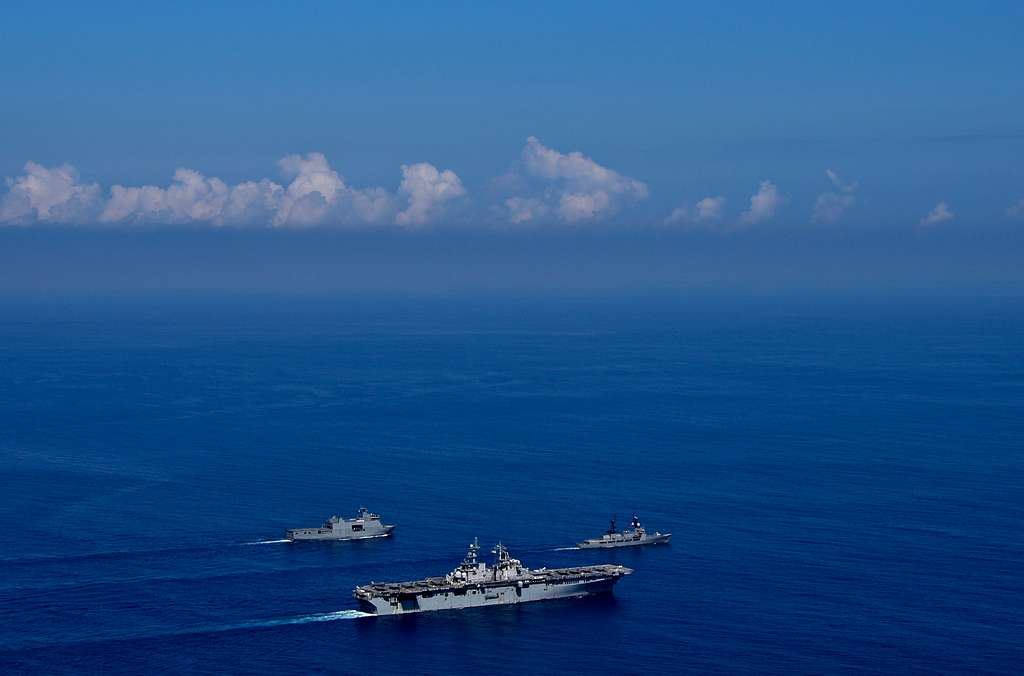
The Mogami-class frigate, which Indonesia eyed, is among Japan’s most advanced surface combatants. This 5,500-ton vessel is equipped with a 16-cell vertical launch system capable of firing advanced anti-aircraft missiles and Type 07 vertical-launch anti-submarine missiles, which are among Japan’s most advanced anti-submarine assets. Critically, the Mogami’s high degree of automation required only 90 crew members, reducing long-term personnel costs that had constrained Indonesia’s limited naval budget, which was only 24.75 trillion rupiah (US$ 1.45 million) in 2025. Japan has also reportedly offered a co-production arrangement with PT PAL Indonesia, under which four vessels would be built by the Indonesian shipyard.
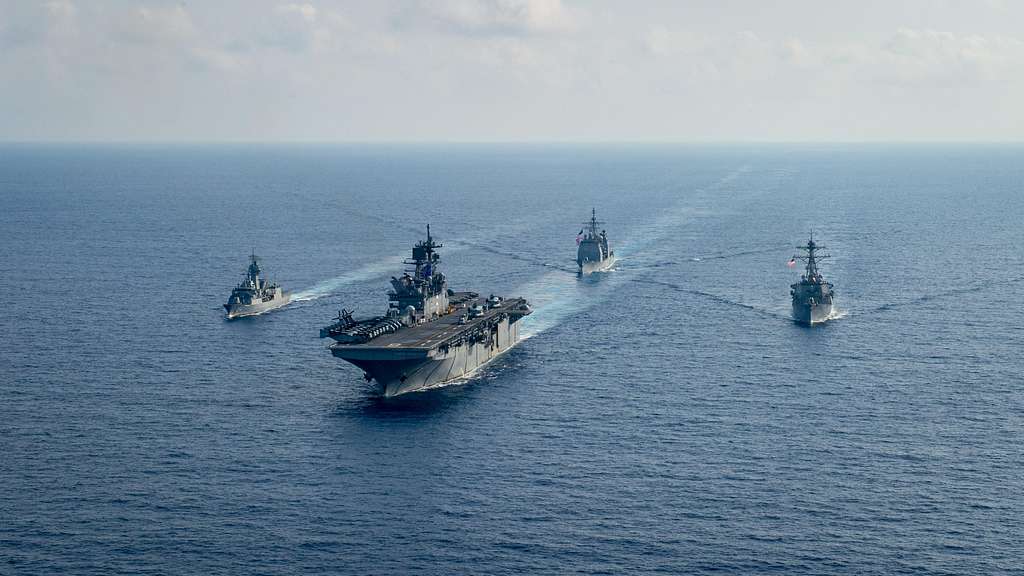
For a country responsible for patrolling one of the world’s largest exclusive economic zones (EEZs), including five strategic maritime lanes—the South China Sea, Malacca Strait, Makassar Strait, and Arafura Sea and over 7.7 million square kilometres of airspace—the procurement of this new frigate represents continuing development in naval capability. In the last five years, Indonesia has procured new naval assets from Italy, Turkey, and France amid repeated maritime incursions by China. The question, however, remains on how Jakarta maintains the logistics and readiness of its wide variety of naval vessels across three main sources.
Another development worth watching is the exploration of a trilateral security framework among Indonesia, Australia, and Japan. In March 2026, Indonesia and Australia announced they would establish a security framework with Japan. Indonesia has traditionally resisted formal military alliances, viewing the non-binding consensus model as more compatible with its bebas dan aktif principle. That Jakarta is now seeking to elevate a security partnership to a more institutionalised framework is a meaningful departure, reflecting a shift in Indonesia’s strategic thinking in an increasingly uncertain region.
The Indonesia-Australia-Japan trilateral framework aligns with Indonesia’s aspiration for strategic autonomy, as it does not entail formal alliance obligations. Its stated focus—maritime security, humanitarian assistance, joint exercise, and capacity building—is precisely the kind of functionally specific, norm-based cooperation that Indonesia can embrace without compromising its non-aligned posture. As Sebastian Strangio noted, this architecture is “a clear response to the fraying of the international order amid the increasingly assertive China and a distant, mercurial, and increasingly unreliable United States based on its ‘America First’ policy.”
The Trump administration’s second term has brought an explicitly transactional approach to trade, treating allies and key partners with the same hostility as adversaries. Japan offers something the United States cannot: a partnership without pressure. Tokyo does not ask Indonesia to take sides in a superpower rivalry. It asks only for deeper bilateral engagement on terms that respect Indonesian strategic culture and are grounded in the strategic autonomy embedded in the bebas dan aktif principle.
For decades, Japan has established a reputation as a dependable and genuinely reciprocal partner in Southeast Asia. Its Official Development Assistance (ODA) has significantly contributed to Indonesia’s economic growth, including substantial funding for Jakarta Mass Rapid Transit, electricity generation, and other vital infrastructure, for over $3.8 billion in 2024. This new defence partnership under Prime Minister Sanae Takaichi marks an expansion into a new sector: Japan is no longer just building roads and ports in Indonesia; it is now offering to help build warships and is committed to a broader regional security framework.
This illustrates Japan’s evolving strategic posture. Tokyo’s updated defence export controls now allow the export of lethal capabilities, and Japan is actively establishing a network of interoperable defence partners throughout the Indo-Pacific. For Indonesia, this provides access to advanced naval technology and defence capacity-building from a partner that does not require political alignment in return. Furthermore, Japan’s regional interests—such as freedom of navigation and a rules-based maritime order—align closely with those of Jakarta.
One should realise that Indonesia will not anchor itself to Japan any more than to any other key partners, as it seeks to maintain its autonomy as its core interest. But in Tokyo, Jakarta has found a defence partner that respects its strategic culture, shares its maritime interests, and strengthens Indonesian sovereignty without demanding alignment. In an era of genuine great-power uncertainty, that is a partnership worth watching.
Alfin Febrian Basundoro is a junior lecturer in the Department of International Relations at Universitas Airlangga.
This article is published under a Creative Commons License and may be republished with attribution.