Critical minerals have become a frontline of great-power competition, with U.S. dependence on China exposing deep supply-chain vulnerabilities despite a flurry of domestic orders and allied deals. If Washington wants real resilience, it must look beyond familiar partners and move decisively into Africa, where China’s entrenched mineral footprint is already reshaping the geopolitics of the clean-energy transition.
Beyond military strength and economic influence, the competition among global powers is increasingly being shaped by the quest for critical minerals. The U.S. Energy Act of 2020 defines a critical mineral as “any non-fuel mineral, element, substance, or material that faces a high risk of supply chain disruption and plays an essential role in energy technologies, including those involved in producing, transmitting, storing, and conserving energy.” In today’s digital and clean energy era, minerals like cobalt, lithium, and rare earth elements are vital to modern economies. Despite its global influence, the U.S. remains heavily reliant on imports of critical minerals from China, a strategic rival that controls about 70% of the world’s supply and processes roughly 90% of the rare-earth ore. This dependence has historically and recently allowed China to leverage the supply chain, especially against the U.S., by imposing export restrictions and limiting the transfer of mineral-processing technologies.
Since assuming office in January 2025, the Trump administration has taken various steps to tackle U.S. vulnerabilities related to critical minerals. These include executive orders such as the Immediate Measures to Increase American Mineral Production and Bolstering America’s Critical Minerals Future, which aim to reduce U.S. reliance on foreign critical minerals and to accelerate domestic extraction and processing. While these domestic-focused executive orders are politically attractive, they face significant feasibility hurdles, mostly due to structural, regulatory, and logistical challenges of operating mines in the U.S. For instance, the U.S. National Strategic and Critical Minerals Production Act of 2021 acknowledges that the mining permitting process can take 7 to 10 years or more, a major affront to a practical, self-reliant solution for the U.S.
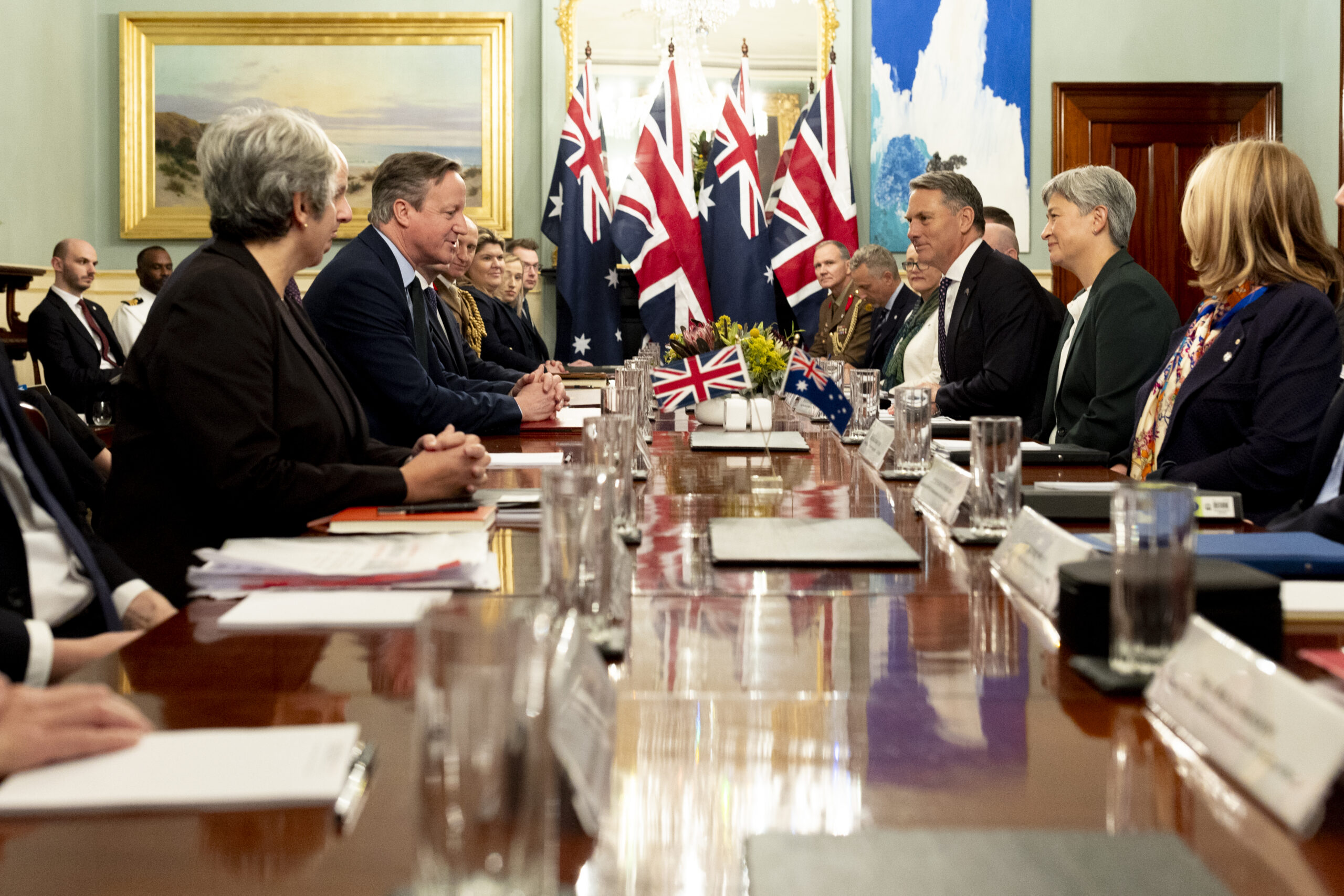
The U.S. Strategic Minerals Act and the Finding Opportunities for Resource Exploration (ORE) Act, proposed by U.S. Congress members between February and April 2025, aim to go beyond domestic sources by ensuring a dependable supply of critical minerals through international cooperation and strategic partnerships with allied nations. A significant indicator of these proposed strategies was the recent U.S.-Australia strategic partnership, which urges the U.S. and Australia to strengthen collaboration to accelerate the supply of critical minerals. This includes investing in mining and processing, implementing measures to accelerate, streamline, and deregulate permitting procedures, committing to invest in mineral recycling technologies, and supporting geological mapping efforts. Ahead of the 2025 Asia-Pacific Economic Cooperation (APEC), President Trump signed an additional critical minerals deal with Malaysia, Japan, and Thailand as a strategic measure to counter China.
Although these collaborations are essential, if Washington genuinely aims to establish a highly resilient critical mineral supply chain capable of withstanding China’s threat, it must pursue broader diversification and forge partnerships with resource-endowed nations in Africa. Under the Minerals Security Partnership (MSP) framework, the United States, along with fourteen key partners including Australia, Canada, Estonia, Finland, France, Germany, India, Italy, Japan, Norway, the Republic of Korea, Sweden, the United Kingdom, and the European Union, seeks to speed up the development of diverse and sustainable supply chains for critical energy minerals. Although Africa has extensive critical mineral deposits, most heavily endowed African countries are not major partners in the MSP framework.
A recent mineral resource evaluation by the Brookings Institute and the U.S. Chamber of Commerce highlights Africa as one of the most endowed continents, with numerous mineral resources, making it a potential additional option that can help sustain the global critical minerals supply and, most importantly, help the U.S. address its critical minerals needs. A 2022 Mo Ibrahim Foundation report indicated that Africa controls about 30% of the world’s mineral reserves, which is critical to renewable and low-carbon technologies. According to the report, South Africa accounts for about 90% of the world’s platinum group metals, including iridium, rhodium, platinum, ruthenium, and palladium. Guinea also controls about one quarter of the global bauxite reserves, while DR Congo accounts for over 70% of global cobalt production.
The critical mineral resources in these nations, along with other resource-rich African countries not listed here, clearly establish the continent as a strategic partner for the U.S. China, as the U.S.’s main strategic rival, controls the majority of global critical mineral supply chains and most of Africa’s mining reserves. The sooner the U.S. and its allies form partnerships, the better their chances to stay competitive in the critical minerals race. China has increased its influence in Africa through its strong economic statecraft, like the Belt and Road Initiative, while the U.S. and Western allies have, to some extent, lost their economic influence and leverage by falling behind in trade and partnership efforts. Gaining control over critical minerals represents a new phase in Great Power Competition, emphasizing the importance for the U.S. to actively seek influence beyond recent major deals with Australia, Japan, Malaysia, and Thailand.
Africa’s rich mineral resources have long served as a major power base for China’s dominance over critical minerals. A significant U.S. investment in Africa’s critical minerals extraction and processing would not only diminish China’s control but also establish a secure supply chain. Recently, America’s influence in Africa has slightly waned, mainly due to the effects of President Trump’s earlier, widespread tariffs and uncertainties regarding the renewal of the Africa Growth Opportunity Act (AGOA) following its expiry in September 2025.
A U.S. comprehensive critical mineral strategy that brings on board most resource-endowed countries in Africa will not only expand supply chains through existing initiatives like the Lobito corrido, which sets out to provide viable alternative partnerships to China’s growing influence in the region, but also re-emphasize trust in the U.S. as a reliable partner and global leader. Africa is open for business under the African Continental Free Trade Area (AfCFTA) and the African Union’s Green Minerals Strategy, but the U.S. must act swiftly to invest in additional ‘corridors’ that help sustain its critical mineral demands in the interim, while putting in place the necessary measures to start mass domestic production in the long term. Africa is becoming the new battleground for critical minerals, and China’s extensive investment and direct sourcing of these resources on the continent have shifted the current geopolitics slightly in its favour. The current U.S. administration’s stance toward Africa does not look promising and could ultimately cede the continent to China if U.S. policy is not reimagined in the near term. While Africa might not seem to be a priority now, the continent holds valuable minerals that could alter the race for critical minerals in favour of the U.S. if it engages and invests deeply.
Baffour Agyeman Prempeh Boakye is a PhD student in the Department of Political Science and International Relations at the University of Delaware. His research interests include broad topics related to Democracy, US-Africa relations, and the politics of Critical Minerals. He can be reached at baffour@udel.edu.