The post-war global order is now in doubt as the world’s superpowers behave aggressively and unpredictably. As such, the old liberal alliances strain under the weight of realist imperialism. Yet, despite realism’s growing dominance, we must hold strong belief in cooperation.
While listening to Canadian Prime Minister Carney’s speech in Davos, I was reminded of Plato’s seminal work, ‘The Republic.’ In this piece, we are introduced to the character Thrasymachus, who counters Socrates’s notion that cooperation is necessary for all endeavours of a state. Here Thrasymachus defiantly proclaims, “might is right, justice the interest of the stronger: now praise me!” What better metaphor for the state of the current world order than this literary battle between philosophers? For decades, the international order rested on a Socratic renunciation of “might is right”, at least in theory. We operated on (what appeared to be) a shared respect for international law and the dignity inherent in humanity. This system had its flaws and hypocrisies, but, in its most basic sense, liberalism had bested realism in shaping the global political landscape through institutions such as the World Bank, the United Nations, the Pax Americana, and the European Union. Through these guiderails, the international order remained stable, prosperous and relatively peaceful. We were all Socrates, calmly putting the defiant Thrasymachus in his place. But has the realist Thrasymachus truly been bested? Have our Socratic institutions overcome the brutality of his ideology?
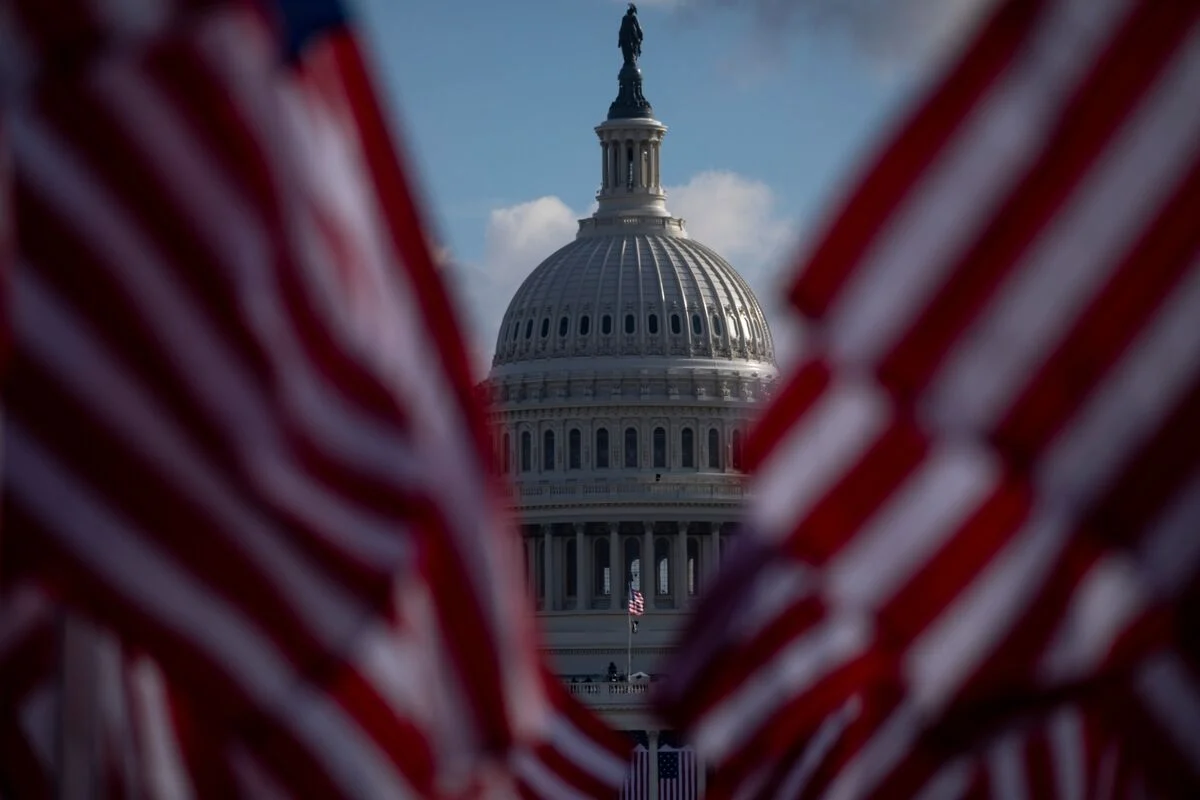
As of the 23rd of January 2026, US President Donald Trump has walked back his recent tariff threats to European allies and withdrawn his recent tariff threats against European allies. These tariffs were an escalation of an already volatile situation in response to threats of a US annexation of Greenland. After significant pushback from leaders around the world, Trump has instead asked for discussions of a new NATO “framework” that would grant the United States “total access” to territory. While this sudden de-escalation on the American side may have temporarily eased fears of armed conflict, world leaders have made it clear that catastrophic damage to the post-war status quo has already been done.
Simply put: the world is waking up to the possibility that Thrasymachus may have been correct.
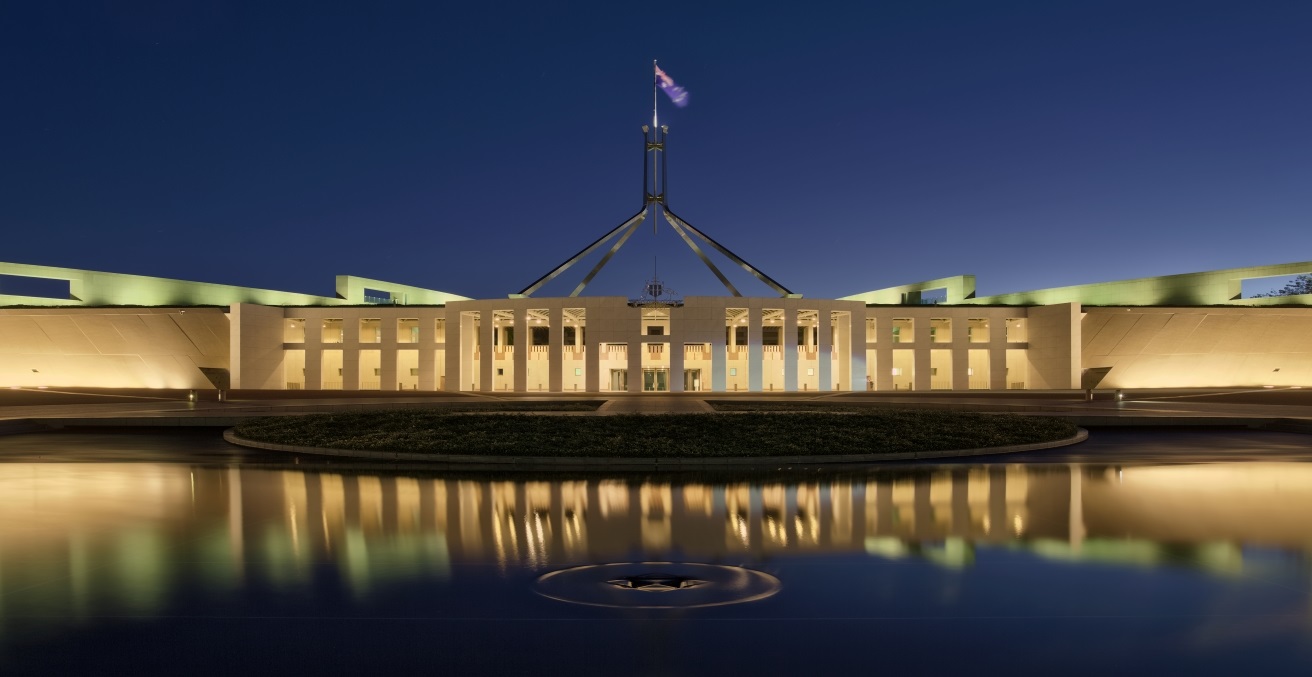
Just 20 years ago, this notion would have been unthinkable to many in the world of mainstream international relations. This is a renunciation of faith, a heretical questioning of our basic operational principles. And yet here we stand on the precipice of history, fearfully gazing down at the chasm below, terrified of its gnawing maw full of war, imperialism, xenophobia, and naked Darwinism. Signs show that Australia is aware of this fracturing of the global status quo. Treasurer Jim Chalmers has said that Carney’s speech was “widely shared and discussed” within the Australian government, and that new trade talks between the EU and Australia point to interest in new alliances.
The illusion of liberalism has been shattered. Realism, as its name implies, is the cold, hard truth of reality – it is raw power. Liberalism and cooperation are, by contrast, constructions. They can exist only if individuals and global powers recognise their value. And to this, I say we must continue to believe, despite the shattering of our old hopes.
The world is now at a crossroads where collapsing entirely into a realism framework may feel attractive. However, doing so would be to give up one of the greatest and most prosperous experiments in human history. It was the cooperative liberal post-war era that gave many Western countries one of the longest periods of relative peace and prosperity in recent history. We must not allow ourselves to throw away this spirit of cooperation, along with all its abundance, when strong powers preach of its supposed inevitable decline. If we find our Socrates to be weak and incoherent in his old age, we must resist the urge to run into the welcoming arms of the realist Thrasymachus. The truth is that a return to realism will benefit only the global superpowers. Smaller states will be forced to hedge or bandwagon, regardless of whether such capitulation serves their interests.
If Australia is to avoid this fate, it must strengthen ties with nations that still uphold the cooperative spirit by forging closer ties with the European Union, Commonwealth nations, and regional states. This will, of course, be a shock to the system. Australian foreign policy has relied on the security and economic guarantees of the United States and the post-war order for decades. Indeed, it can be somewhat difficult to find an analysis of Australian foreign policy that does not hinge entirely on American hegemony. However, as uncomfortable as it may seem and as daunting as it sounds, this new world necessitates that Australia forge ahead without the permanent aid of America and the post-war order. Those old systems have collapsed, and new ones must be created.
Australia’s sovereignty and wellbeing are at stake. Protecting them will require belief in the cooperative spirit, which, now fragile, must be carefully nurtured. Canberra, Brussels, London, members of the Commonwealth, and nations in the Indo-Pacific now need each other more than at any other point in the last 80 years. Mutual defence treaties and free trade agreements should thus be a priority. If the superpowers return to realist imperialism, smaller and medium-sized states must form stronger bonds to protect their sovereignty and interests.
The world must tread carefully now. The Titans have been released from Tartarus, and without careful action going forward, we may doom ourselves to gaze out fearfully as the Powerful gleefully bellow the echoing words of Thrasymachus: “Might is right, justice the interest of the stronger: now praise me!”
Alexandra Desailly is an Australian Outlook Intern at the Australian Institute of International Affairs National Office. She is one of thirty selected for the Young Australians in International Affairs (YAIA) Emerging Leaders Dialogues and the winner of the YAIA Policy Pitch Competition. She holds a Bachelor of International Studies with Distinction from UNSW; her work focuses on European current affairs, national security, and diplomacy.
This article is published under a Creative Commons License and may be republished with attribution.