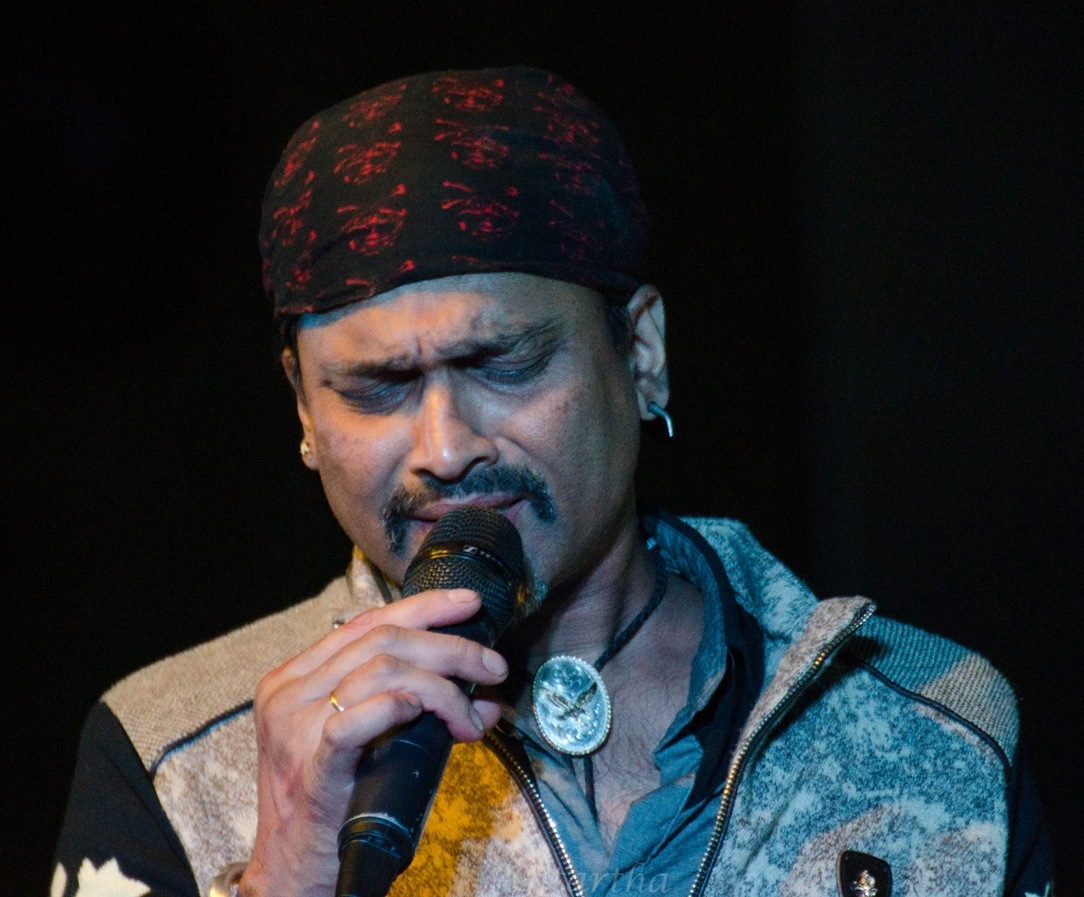
When Indian artist Zubeen Garg died in September 2025, his funeral in Guwahati drew hundreds of thousands of mourners in what became the fourth-largest public gathering in history. It’s a testament to how a regional musician from Northeast India transcended borders to become a unifying cultural force.
In the annals of global cultural mourning, few farewells have matched the scale of Indian artist Zubeen Garg’s funeral in Guwahati on September 23, 2025. Drawing hundreds of thousands of devotees, the procession swelled into what the Limca Book of Records has reportedly enshrined as the fourth-largest public gathering in history, trailing only the obsequies for Michael Jackson, Pope Francis, and Queen Elizabeth II. The unprecedented convergence – mourners filling the streets, songs echoing in the rain, and digital streams connecting expatriates from New York to Sydney – highlighted not only the loss of a musician but also the fading of a rare unifying force in one of Asia’s most divided frontiers. The fact that Bhutan’s King Jigme Khesar Namgyel Wangchuck sent a special envoy to his last rites, poignantly confirmed his geographical transcendence. For international observers, especially in nations grappling with multicultural reconciliation, Garg’s story illuminates how a regional star from Northeast India can transcend borders and build connections strong enough to endure insurgency and alienation. More than a biography, his life illustrates how art can serve as a form of cultural diplomacy—bridging ethnic divides, easing social fractures, and offering lessons in peacebuilding that resonate far beyond India’s Northeast.
Tucked away in India’s far east, Assam—cradled by the Himalayas, flanked by Bangladesh, and facing Southeast Asia’s tapestry—serves as a geopolitical pivot where Northeast India’s ethnic diversity and historical volatility converge. The state has long struggled with the paradoxes of postcolonial nation-building. In the 1990s, Assam descended into unrest, as the United Liberation Front of Asom (ULFA) waged a guerrilla war for sovereign independence, unleashing bombings, extortions, and abductions that claimed thousands of lives. ULFA’s socialist-separatist ideology, fuelled by grievances over economic neglect and unchecked illegal cross-border immigration, resonated amid Delhi’s indifference. Governance stagnated under bureaucratic inertia, political neglect, and systemic inefficiencies, failing to address structural inequities or quell the unrest, leaving youth adrift in identity’s ruins, swelling militant ranks. The situation worsened as ethnic tensions between Assamese and non-Assamese communities escalated into violent confrontations, drawing indigenous populations into recurring cycles of retribution. The conflicts, culminating in waves of targeted violence towards the end of the decade, instilled fear in daily life.
Into this cauldron of alienation and violence, Zubeen Garg emerged as an unlikely source of healing. He was born Zubeen Borthakur in Tura, Meghalaya, in 1972, and grew up in Jorhat, Assam. Garg made his debut in 1992 with the album Anamika and reached greater height two years later with Maya (1994). Soon he started experimenting with Assam’s folk songs and modernised Bihu rhythms without sacrificing their earthly roots. Unlike the 90’s militant songs, Garg’s music focused on love and longing—tunes of monsoon-soaked romance or the ache of separation, mirroring the Brahmaputra’s flow. Beneath this surface, his work carried a quiet rebellion: singing in Assamese, Bodo, Bengali, Hindi, and dozens of other languages, he broke down linguistic barriers that fuelled ethnic divides. Garg’s authenticity—raw, defiant, yet tender—struck a chord with the youth of Northeast India, as he represented their struggles and aspirations. His concerts served as spaces where a Bodo farmer, a Bengali migrant, and a Khilonjia could all sing in unison, momentarily dissolving linguistic and ethnic barriers. This echoed global examples—Bob Marley’s unification of Jamaica’s factions or Fela Kuti’s anti-colonial anthems in Nigeria—showing art’s power to heal fractured communities.
What made Garg distinctive was the way he normalised this unity. In a region where political leaders often spoke in the language of grievance or confrontation, his songs created everyday moments of coexistence. By choosing to sing across languages, he offered an alternative narrative: that cultural identity need not be exclusive, and that belonging could be shared. For young listeners growing up in the shadow of insurgency and ethnic conflict, this was not just entertainment but a subtle education in pluralism. In this sense, Garg’s work can be understood as a form of “everyday diplomacy”—small but repeated acts of bridge-building that helped soften divisions and foster trust across communities.
Beyond his music, Garg also emerged as a civic voice who was unafraid to engage with Assam’s pressing concerns. Through philanthropy—supporting wildlife conservation or assisting flood victims—he demonstrated a commitment to his community that reinforced his credibility among ordinary people. He also intervened in contentious national debates, most notably by opposing the 2019 Citizenship Amendment Act, which he believed threatened the region’s delicate social balance. In doing so, Garg articulated regional anxieties, helping ensure that Northeast India’s concerns were heard within India’s larger political conversation. Today, Assam itself reflects a measure of stability unthinkable in the 1990s: ULFA ranks are depleted, multiple peace accords have softened ethnic divides, and infrastructure projects are binding the Northeast more firmly to the Indian core—a transformation in which Garg’s voice remains inseparable from the story of the region’s renewal.
Garg’s legacy, rooted in music and unity, ultimately speaks to a broader truth: that cultural figures can shape the moral imagination of societies in ways institutions rarely achieve. His career reminds us that the work of reconciliation is not confined to political settlements or peace accords but is also carried forward in the quieter spaces of culture, where identities are reshaped and solidarities rebuilt. Scholars such as Cynthia Schneider and John Paul Lederach help us understand why this matters: because art can open channels of dialogue where politics hardens into stalemate. In today’s world, from Israel–Palestine to Myanmar, Sudan, and Yemen, the fractures of language, religion, and ethnicity continue to fuel division. Garg’s life shows how those very markers of identity can be reworked into tools of connection, allowing communities to imagine coexistence even in the shadow of conflict. That lesson gives his story significance far beyond Assam. As both a regional memory and a global resource for thinking about how peace can be nurtured through culture.
Anubhav Shankar Goswami is a Doctoral Candidate of Politics and International Relations at the School of Humanities, Arts and Social Science, Murdoch University, Perth. His doctoral research is based on the field of nuclear strategy with a particular focus on nuclear brinkmanship. Anubhav is the author of the book, ‘Deterrence from Depth: SSBNs in India’s Nuclear Strategy’.
This article is published under a Creative Commons Licence and may be republished with attribution.