Australian legislative policy and uranium regulations are increasingly anachronous with national clean energy goals, failing to propel nuclear ambitions while facilitating continual foreign uranium exports. The growing energy demands and US nuclear fuel autonomy goals solidify Australia’s uranium as the link for powering AI technology.
Introduction
As US nuclear demand propels forward, Australia, a nation that holds one-third of the world’s uranium supplies, is well-positioned to meet US energy demands and strengthen the credibility of Australian uranium exports. In 2021, Australian uranium provided 15% of US imports, accounting for half of total Australian exports. Revitalizing this crucial energy supply chain, Trump’s planned $500 Billion Stargate AI Infrastructure project plans the construction of data centers and infrastructure to support the power solution for AI processing power expansion.
This comes one year since Trump passed Executive Order 14156 on January 20, 2025, to “reform nuclear reactor testing at the Department of Energy,” an order which indicated the United States needs “reliable, diversified, and affordable energy to drive development of advanced technologies.” The Trump Administration additionally wants to increase US Nuclear Capacity to 400 Gigawatts by 2050, from 100 gigawatts today. In 2025, 20 metric tons of “high-assay low-enriched” uranium (HALEU) was slated to be released into a fuel bank for the US AI infrastructure.
Reviewing Australia’s Cyclical Nuclear Relationship
Spearheading the AI boom and subsequent data center development is Sam Altman, the CEO of OpenAI, who has a side startup on nuclear fusion for powering AI data centers. By 2030, the consumption of data centers for AI models is set to double, consuming a total of 9% of US power. Energy ambitions by US companies like OpenAI drive significant leverage in US lobbying to secure an optimized US nuclear process in the tech race against China.
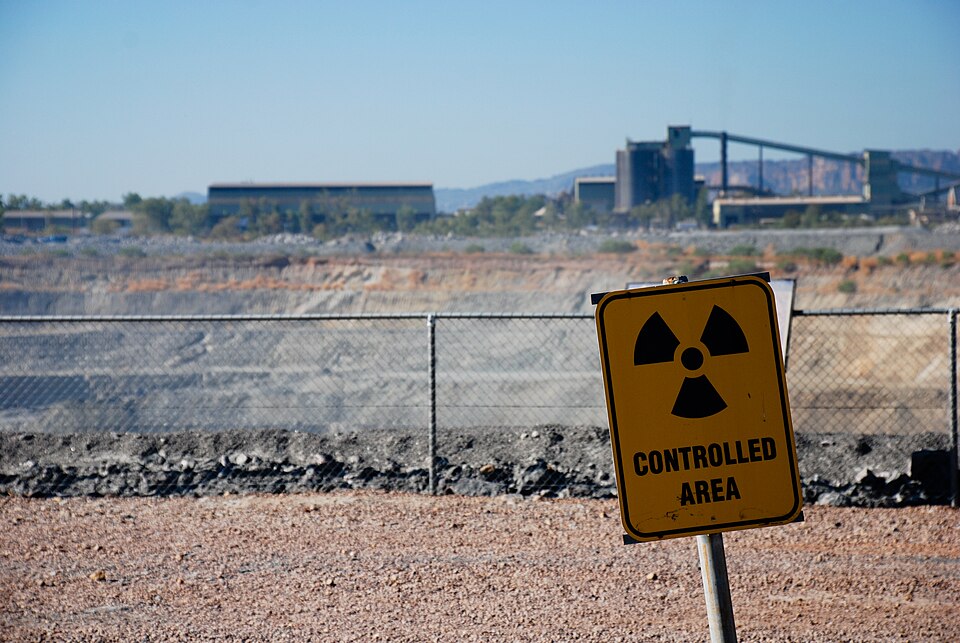
Concerning nuclear exports, Australia’s large Uranium and Thorium reserves are well positioned to supply the “Five Eyes” nations (AUS, CAN, NZ, UK, US) with critical minerals, due to their democratically aligned governments, a strategic maneuver for US energy demands, and critical mineral security. However, Australia’s nuclear energy development remains heavily restricted. During the 2025 national election, the Liberal Party advocated for nuclear energy as a more sustainable alternative to green energy, while Labor argued that nuclear power is “too vague,” and supported burning fossil fuels until 2050, with a transfer to “renewable energy.” Additionally, growth in the Australian uranium export sector hinges on extraneous regulations in national environmental safeguards, such as the EBPC Act.
Legislative barriers to nuclear energy
Despite the economic benefits of increased trade between the US and Australia, Australian uranium is regulated under a strict system of institutional bureaucracy. Australia has been a member of the Organization for Economic Co-operation and Development (OECD) since 1971, as part of an international standard-setting initiative for economic and social well-being.
Subsequently, under the 1977 Non-Proliferation Treaty, assurances must be guaranteed that exported uranium doesn’t benefit the development of nuclear weapons or be used in military programs. This is monitored as Australian-Obligated Nuclear Material (AONM) with coverage from IAEA safeguards, security requirements, and consent to transfer AONM to third parties with enrichment beyond 20% of U-235, to monitor where mined Australian nuclear material is used, and AONM compliance is adhered to for peaceful proliferation.
Australia, under the policy, retains the right to be selective with the export of AONM to nations and further tighten export policy as per the IAEA protocol, alongside strengthened safeguards. Focused on managing Australian nuclear minerals, the Minerals Council of Australia (MCA) forum ensures transparency and efficiency with the supply of Australian uranium. While maintaining the policing of Australian nuclear material overseas, the MCA supports an amendment to the Environmental Protection and Biodiversity Conservation Act 1999., (EPBC), that radiological impact regulations in paragraphs (1A)(a) to (1A)(f), applying “only to actions that are part of the Nuclear Fuel Cycle as defined by the International Atomic Energy Agency.”
The MCA argues that “while the definition of ‘nuclear’ is very clear within the International Atomic Energy Agency’s (IAEA) Nuclear Safety and Security Glossary, there is no recognised international standard for a ‘radiological exposure action’. This will lead to the EPBC Act capturing a range of actions well beyond those linked to nuclear fission or fusion. Further, the MCA argues that the Environmental Offset Policy under EPBC adds administrative complexity to mineral industry development and fails to guarantee environmental outcomes, calling for a redefinition of the “net gain test” in environmental offset as a whole, rather than individual actions in the industry.
This support is consistent with a 2023 defense legislation amendment to support an Australian acquisition of US Virginia-class nuclear submarines under the AUKUS agreement, poised to restore Australian domestic energy capacity. In 2019, the Parliamentary Committee investigated the potential for nuclear energy in Australia. Ted O’Brien, the chair of the opposition energy spokesman, called for the Federal moratorium on Generation III, Generation IV reactors, and small modular reactors (SMRs). This effort culminated in the Uranium Mining and Nuclear Facilities Repeal Bill in 2019, which was terminated in the 2025 State Election. As nuclear energy mobilization continues to be obstructed, the Australian energy sector will continue to be surpassed by allies and non-allied nations.
Significant potential exists for the Australian energy sector, especially with the rise of energy-hungry AI models and tools; however, it must be realized in the mining, enrichment, and application of our most valuable energy export, uranium. Canberra should refocus on streamlining restrictions of the Nuclear Energy Ban of 1998 to accommodate the expansion of private reactors in Australia, under a defined framework for domestic energy production, while adhering to environmental regulations. The modification of EBPC offers a pragmatic and scalable approach to meeting exploding global power demands and investment in peaceful nuclear energy proliferation.
James Fraser is currently pursuing a degree in International Relations at George Mason University. His academic focus lies in security and intelligence issues within the South Pacific region.
This article is published under a Creative Commons License and may be republished with attribution.