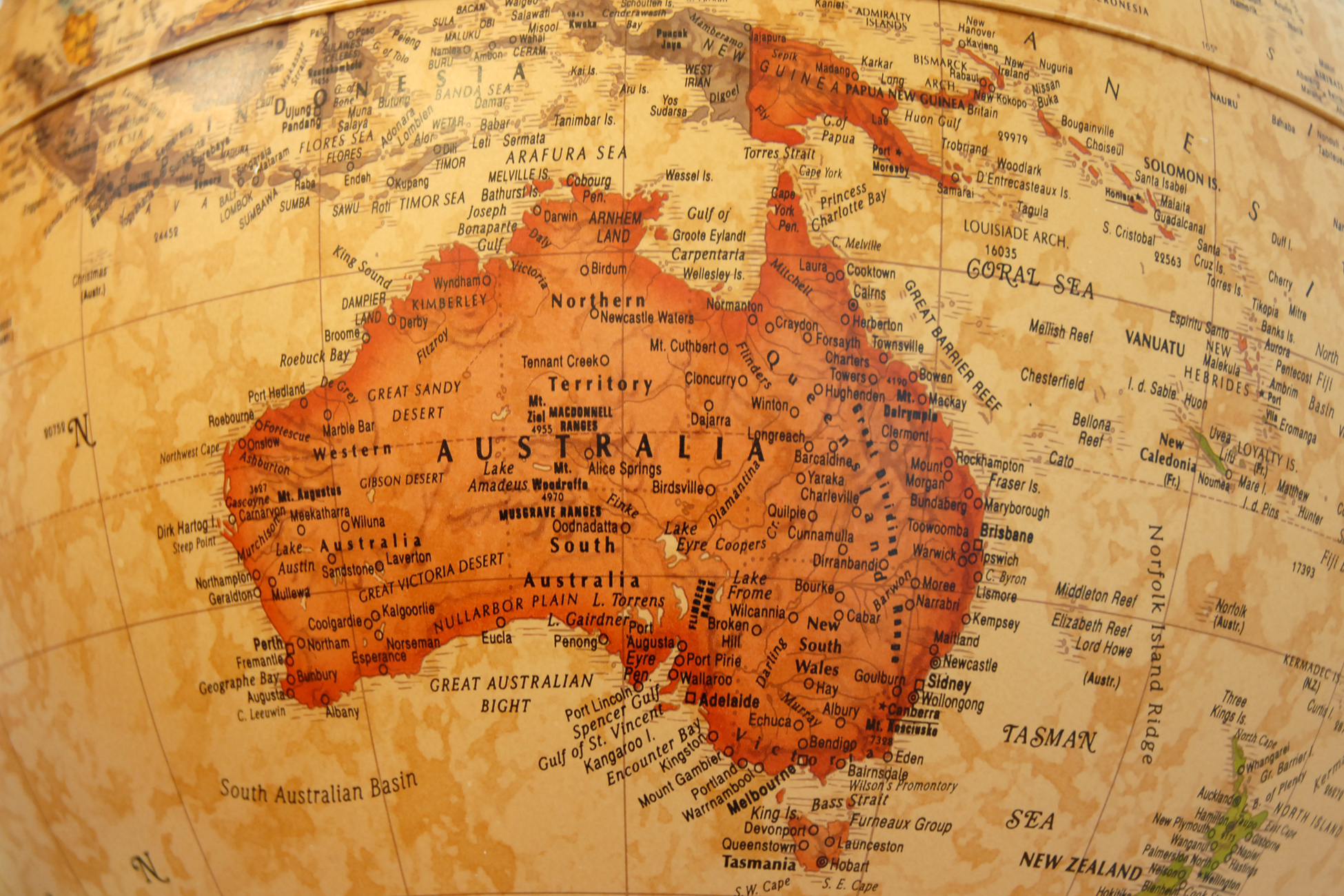
Australia faces a strategic opportunity to deepen ties with its three most important neighbours. With these countries on Australia’s doorstep and regional stability increasingly uncertain, the case for establishing a high-level Australia-Indonesia-PNG-Timor Leste quadrilateral partnership has never been stronger.
Australia’s 2023 Defence Strategic Review identified the country’s “primary area of military interest” as the Pacific and maritime Southeast Asia (its immediate region). Consequently, good relations with Papua New Guinea, Indonesia, and Timor-Leste are both a strategic and diplomatic imperative for a safe and secure Australia. This is especially the case since regional cohesion falters under the weight of U.S.–China strategic competition, and security challenges such as territorial disputes in the South China Sea, the Myanmar civil war, civil unrest in New Caledonia, and the on-again, off-again Thailand-Cambodia border conflict.
Strengthening bilateral ties among the four countries is an ideal moment for the Albanese government to build momentum for the formation of a “Quadrilateral Partnership.” Last year, the Australia-Indonesia-PNG trilateral was concluded at the level of defence ministers. Furthermore, the Australia-Indonesia-Timor-Leste trilateral is well established at the foreign ministerial level.
As part of such an arrangement, annual quadrilateral leaders’ and ministerial-level summits should be held. The quadrilateral meetings could focus on shared interests and challenges, such as border security, cybersecurity, policing, disaster relief, climate change, transnational crime, defence infrastructure development, illegal fishing, and maritime security.
For instance, they could jointly enhance their maritime security capabilities by conducting regular maritime patrols, holding annual joint military exercises, training together, and visiting naval ports. Joint maritime training and patrols would be particularly beneficial for both Timor-Leste’s and PNG’s small navies, which continue to struggle to combat illegal, unreported, and unregulated fishing in their maritime waters. Timor-Leste loses approximately $300 million per year due to illegal fishing in the Timor Sea. PNG loses PGK$1 billion (US$260 million) annually due to illegal, unreported, and unregulated fishing (IUU).
In 2023, Australia provided four Guardian-class patrol boats to PNG to help protect its territorial waters from transnational crime and IUU fishing. Since 2020, through the Lombrum Joint Initiative, Australia has been supporting PNG in its efforts to redevelop the Lombrum Naval Base on Manus Island, off PNG’s northern coast. Bilateral defence ties were further boosted by the recent and historic Mutual Defence Treaty (the Pukpuk Treaty). The agreement aims to establish a recruitment pathway for PNG citizens into the Australian Defence Force. The treaty is Australia’s first new formal security alliance since the 1951 ANZUS Treaty between Australia, the US, and New Zealand.
The 2022 Australia-Timor-Leste Reciprocal Defence Cooperation Agreement seeks to address these security challenges by increasing bilateral security cooperation, especially in the maritime domain. As part of the deal, Timorese defence personnel operating or training in Australia will receive the same protections, responsibilities, and privileges as Australian personnel will receive in Timor-Leste. In 2023, Australia committed to donating two Guardian-class patrol boats to Timor-Leste by 2024. Nonetheless, the Timor-Leste navy is yet to receive the vessels due to the inadequate condition of the Port Hera Naval base.
Australia shares its longest maritime boundary with Indonesia. In the 2006 Lombok treaty, Jakarta and Canberra recognised each other’s territorial integrity. In November 2025, Australia and Indonesia announced a landmark bilateral Common Security Treaty, expanding their long-standing defence partnership. The treaty builds on the 1995 Australia–Indonesia Security Agreement and will enable regular consultations at the leader and ministerial levels on shared security issues. The two countries will also consult each other in cases of unfavourable challenges to either country and, where appropriate, consider measures that might be taken individually or jointly.
Until 1999, East Timor was an Indonesian province following its forcible incorporation in 1976. Today, however, Timor-Leste maintains cordial relations with Indonesia, its largest trading partner. Citizens of Timor-Leste also enjoy visa-free access to Indonesia. Without Indonesia’s support, Dili’s aspiration to become ASEAN’s newest member last year would likely have been far more difficult to realise. The Indonesian National Armed Forces provides military education and training to personnel from the Timor-Leste Defence Force. The two neighbours maintain a joint border security task force that regularly conducts patrols along the Indonesia-Timor-Leste border. Most land boundary segments have been resolved and demarcated, although the Naktuka area remains disputed. Indonesia shares a land border with only one Pacific country: Papua New Guinea. For decades, Indonesia has faced a low level of insurgency in West Papua. Nevertheless, the PNG government unequivocally recognises Indonesia’s sovereignty over West Papua.
In 2023, the two neighbours ratified an agreement governing their border, and last year Jakarta and Port Moresby ratified and expanded their existing defence cooperation agreement. PNG hopes that the new deal will expand and strengthen bilateral security cooperation in the areas of “joint border patrols and military exercises.” Joint exercises at sea, on land, and in the air are central pillars of the security agreement. At present, PNG has observer status in ASEAN and is seeking accession to the grouping. Indonesia supports PNG’s long-proposed bid to join the bloc.
PNG and Timor-Leste maintain a cordial and developing bilateral relationship. The two nations collaborate in regional organisations such as the Pacific Islands Forum (PIF) and the Melanesian Spearhead Group, in which Timor-Leste is an observer in both.
The quadrilateral partnership should also reaffirm ASEAN’s “centrality “in the Indo-Pacific. Australian foreign policy places ASEAN at the centre of a peaceful, stable, and prosperous region where sovereignty is respected, and all countries benefit from a strategic balance. In 1974, Australia became the grouping’s first dialogue partner.
Since its humble beginnings over 50 years ago, the ASEAN-Australia partnership has gained in strength. In 2010, the ASEAN-Australia-New Zealand Free Trade Agreement came into effect. And, in 2021, the ASEAN-Australia relationship was elevated to a Strategic Comprehensive Partnership.
Overall, Australia prioritises a strong relationship with its northern neighbours. Amid growing unpredictability in the regional order, now is the time for Australia to pursue a high-level quadrilateral partnership with its three most important neighbours.
Ridvan Kilic holds a Master’s degree in International Relations from La Trobe University. His research interests include Australian and Indonesian foreign policy, the Australia-Indonesia bilateral relationship, and ASEAN regionalism. Ridvan’s work has been published in the Lowy Institute Interpreter, The ASPI Strategist, Australian Outlook, The Diplomat, Indonesia at Melbourne, the East Asia Forum, South Asian Voices, 9DashLine and the ISEAS Yusof Ishak Institute Library.
This article is published under a Creative Commons License and may be republished with attribution.