Indonesia came away from Vladivostok with a signed fertiliser agreement, yet the moment that went viral was a pen spinning in the Cabinet Secretary’s fingers. It is a small lapse with a larger lesson for a nation that wants to be taken seriously.
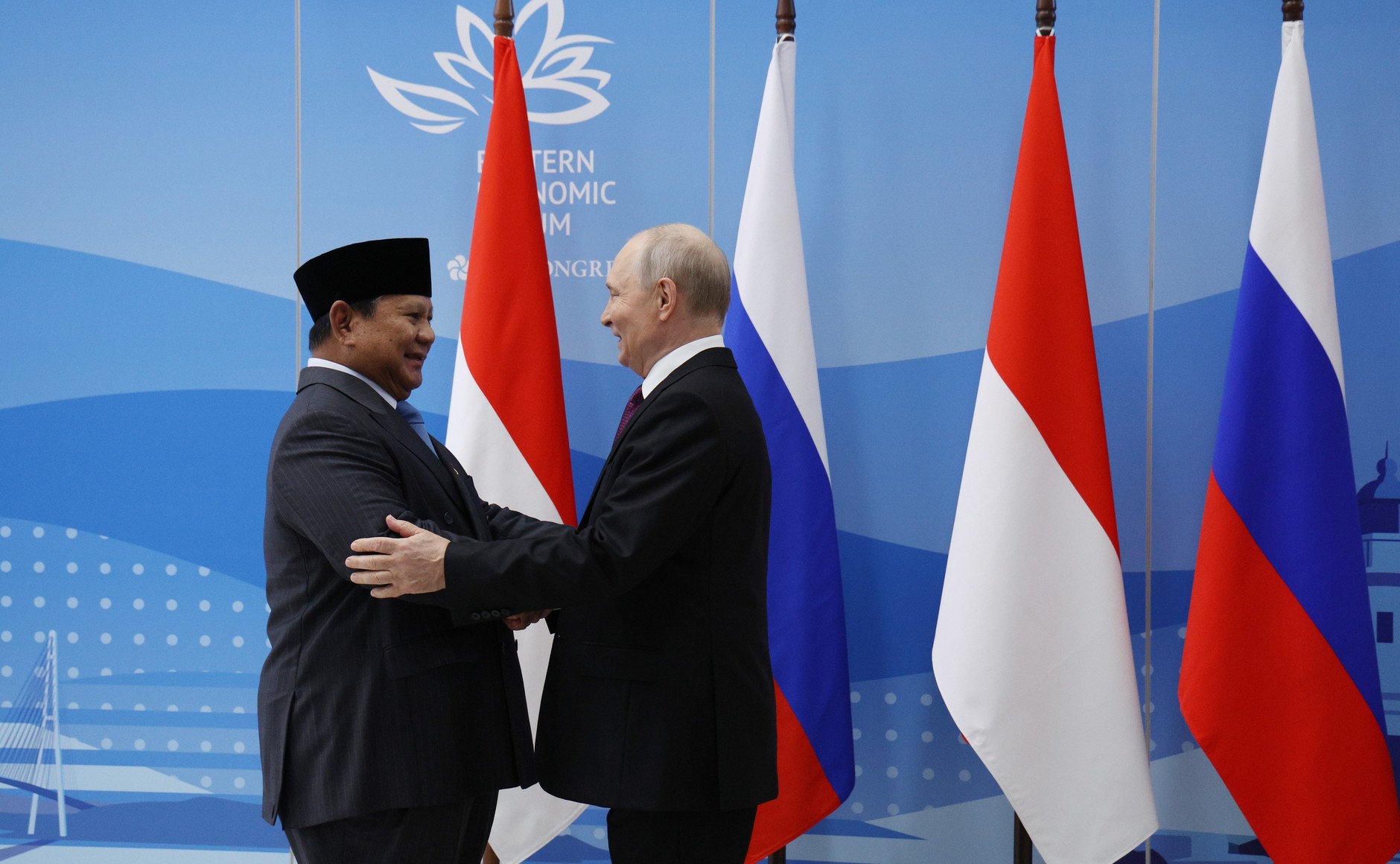
There is a particular kind of embarrassment that does not come from scandal or corruption, but from something far smaller: a fidgeting hand, caught on camera, at exactly the wrong moment. That is what happened to Cabinet Secretary Teddy Indra Wijaya on 3 September, when footage from Vladivostok showed him twirling a pen while President Vladimir Putin addressed the Indonesian delegation during President Prabowo Subianto’s visit to the Eastern Economic Forum.
Within a day, the clip had spread widely enough that Indonesian outlets were reporting on the reaction, with commentary ranging from ordinary social media users to former State-Owned Enterprises Ministry official Said Didu, who summarised the mood in a single, drawn-out word: “Rusaaaakkkk” — meaning “broken,” or “ruined.” It would be easy to dismiss this as internet noise or tabloid journalism, the kind of viral moment that burns brightly for 48 hours and vanishes. But diplomatic etiquette experts argue these moments are worth taking seriously precisely because governments invest so heavily in avoiding them: chiefs of protocol exist, in part, to prevent exactly this kind of unscripted embarrassment, and history shows that when they fail, the fallout can outlast the visit itself.
Consider the 2005 handshake between then-U.S. President George W. Bush and the President of Slovakia, in which Bush neglected to remove his gloves. As protocol consultant Shelby Scarbrough later observed, the breach “quickly overshadowed the larger fact that Bush was the first American president to visit Slovakia since it gained independence.” A minor lapse in etiquette eclipsed a genuinely significant diplomatic milestone in public memory — which is exactly the risk Jakarta now runs with the pen-twirling clip threatening to outlast the substance of the Vladivostok trip.
Diplomacy is, above all, a language of restraint. Heads of state and their aides are watched constantly, and every gesture is read as a signal, whether intended or not. This is precisely why protocol offices exist and why, as Pamela Eyring, director of the Protocol School of Washington, has put it, protocol officers function as a country’s “frontline, goodwill ambassadors” — professionals trained to keep the small, human habits of officials from being misread as disrespect or incompetence in front of a foreign head of state. Mr. Teddy is a career Indonesian Army officer, currently serving as an active-duty Lieutenant Colonel even while holding the civilian post of Cabinet Secretary — an arrangement made possible by a 2024 presidential decree placing the role under the Presidential Military Secretariat. Military and diplomatic settings each carry their own codes of conduct, and this episode is a reminder that expertise in one does not automatically carry over to the other.
To be fair, the reaction has at times run further than the evidence supports. Some social media accounts claimed Mr. Putin’s demeanour visibly soured because of the gesture — a claim that remains pure conjecture, unsupported by any confirmed account of the meeting and impossible to verify from a few seconds of video. The footage alone cannot reveal what lay behind Mr. Teddy’s gesture, or whether it was deliberate at all, and it would be just as unfair to assume the worst about his intentions as it is to assume the worst about Mr. Putin’s reaction. There is no official indication that Russian officials registered any offense at all. The bilateral meeting proceeded as planned, it was Mr. Teddy himself who later briefed the press on its outcomes, and the criticism remained largely confined to domestic discourse. Overreading the moment risks manufacturing a diplomatic controversy where none exists.
But there is a difference between excusing the gesture and pretending it does not matter. Indonesia is trying to position itself as a serious, self-assured actor in an increasingly multipolar world — courting relationships with Moscow, Washington and Beijing alike, hosting international forums, and asking to be treated as more than a bystander to great-power politics. Officials who appear inattentive to even the most minor details during diplomatic meetings risk distracting from that ambition. There is also an added domestic element to all of this, where Indonesians should feel confident in their government’s ability to represent and pursue national interests on an international stage. Even if, as the Slovakia example shows, the underlying substance of a visit is often more consequential than any single gesture. A nation that wants to be taken seriously cannot afford a reputation, however unfair, of carelessness in the rooms where it matters most.
This is not really a story about one pen, or one man’s nervous habit. It is a reminder that the people who stand behind a president in these encounters are extensions of how the country wants to be perceived. The Cabinet Secretariat would do well to use this moment not for punishment or public humiliation, which Mr. Teddy does not deserve, but for a proportionate response: folding a brief protocol reminder into the standard pre-trip briefings that delegations already receive, alongside substantive talking points, rather than treating this as a crisis requiring a special intervention.
At the end of the day, Indonesia’s diplomats did secure concrete results from the Vladivostok meeting. Investment Minister Rosan Roeslani confirmed that state fertiliser company Pupuk Indonesia signed a joint feasibility study with its Russian counterpart to explore a urea plant investment near Vladivostok — a genuine, concluded agreement. Broader ambitions raised in the same meeting, including possible cooperation on nuclear energy and Russia’s offer of advanced fishing-vessel technology, remain at the discussion stage rather than signed commitments.
Nevertheless, it would be a shame if the lasting image from that visit is not the fertiliser deal actually signed, but a pen spinning in a delegate’s fingers. The next time a state visit calls for reserve, Jakarta should make sure everyone in the room — not just the president — remembers that the whole world is, quite literally, watching.
Dr Muhammad Zulfikar Rakhmat is a researcher focusing on China-Indonesia-Middle East relations. He holds a B.A. in International Affairs from Qatar University and a M.A. and Ph.D. in Politics from the University of Manchester.
This article is published under a Creative Commons Licence and may be republished with attribution.
Photo: Kremlin.ru (CC BY 4.0)